
I always wanted to explore jazz but feared getting lost in the rabbit hole of endlessly collecting records with no end in sight. The COVID pandemic lockdown in 2020 coincided with several labels putting out excellent music at great prices. Series like Blue Note’s Classic Vinyl Reissue became my gateway. Priced at $25, it unlocked iconic albums by jazz legends like Art Blalkey, Herbie Hancock, Wayne Shorter and many others. I bought most of them! The Tone Poet Blue Note series and the Blue Note 80 Vinyl series, along with Verve’s Acoustic Sound Verve Series, further fueled the temptation, making the jazz exploration more accessible during these unique times.
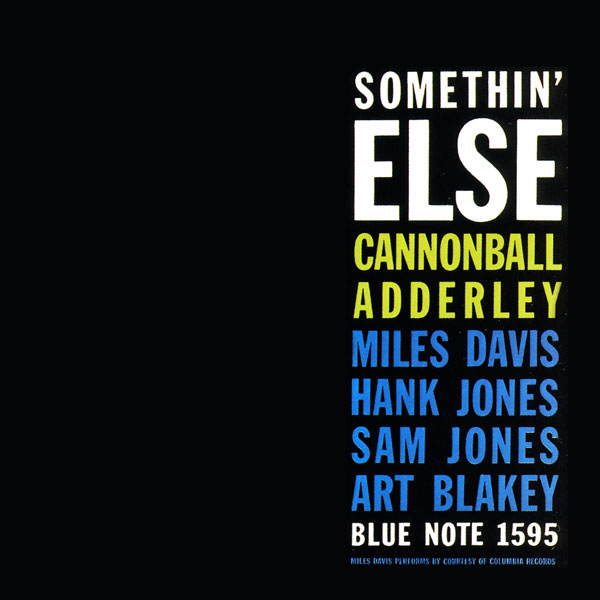
Today, I will delve into the intricate details of an album that stands as a pinnacle in the vast landscape of jazz—Cannonball Adderley’s “Somethin’ Else.” The cover art, a visual overture to the sonic journey within, serves as a gateway to an exploration of jazz mastery that goes beyond the ordinary. The tracklist, meticulously composed, takes listeners on a captivating journey through standards and originals, where each note becomes a chapter in a musical narrative.
“Autumn Leaves,” the album’s opening track, unfolds as Miles Davis and Cannonball Adderley weave intricate tapestries of sound. This standard becomes a canvas for their improvisational genius, setting the tone for the remarkable journey ahead.
The opening track, “Autumn Leaves,” unfolds as a captivating journey into the heart of jazz, setting the stage for the brilliance that awaits in Cannonball Adderley’s “Something’ Else.” This timeless standard, composed by Johnny Mercer and Joseph Kosma, takes on new life in the hands of the ensemble. Cannonball Adderley’s alto saxophone introduces the melody with a soulful richness that immediately draws the listener in. Miles Davis, with his trumpet, adds a layer of complexity, engaging in a musical dialogue with Adderley that echoes the changing hues of autumn leaves. The discovery of “Autumn Leaves” takes on a personal resonance, as it mirrors the diverse paths through which individuals connect with jazz. The beauty of this piece lies not just in its musical intricacies but also in its ability to resonate across different interpretations, creating a tapestry of connections that span time and genres. In the context of “Something’ Else,” “Autumn Leaves” serves as an evocative opening chapter, inviting listeners into the rich, improvisational world of jazz.
Following suit, “Love for Sale,” the second track on Side A, stands as a vibrant testament to the versatility and daring spirit of Cannonball Adderley’s “Something’ Else.” Penned by the legendary Cole Porter, “Love for Sale” is a playful rendezvous of musical minds, showcasing the dexterity of the ensemble. The track opens with a rhythmic fervor, immediately setting a dynamic tone. Cannonball Adderley’s alto saxophone takes center stage, delivering a playful and spirited interpretation of the melody. Miles Davis, with his trumpet, engages in a musical conversation, injecting the composition with a sense of improvisational spontaneity. The choice of Cole Porter’s “Love for Sale” adds a layer of sophistication to the album, as the musicians navigate through its intricate harmonic structure and rhythmic nuances. The rhythm section, led by Hank Jones on piano, Sam Jones on bass, and Art Blakey on drums, contributes to the infectious groove, creating a lively atmosphere that encapsulates the essence of a jazz ensemble in its prime. The title itself, “Love for Sale,” hints at the audacious and provocative themes that jazz often explores. The musicians’ interpretation of Porter’s composition goes beyond the surface, delving into the complexities of love and desire. The interplay between the instruments showcases the ensemble’s tight-knit cohesion, each member contributing to the collective brilliance of the piece. As “Love for Sale” unfolds, it becomes a captivating journey, a musical escapade that captures the zeitgeist of the era while pushing the boundaries of conventional jazz. In the grand tapestry of “Something’ Else,” this track becomes a shining example of the album’s ability to seamlessly blend tradition with innovation, offering listeners a sonic experience that transcends time.
“Something Else,” the eponymous track that opens Side B of Cannonball Adderley’s album, emerges as a captivating showcase of both innovation and intimacy. Penned by the trumpet virtuoso himself, Miles Davis, the composition serves as a testament to Davis’s multifaceted genius. The track unfurls with a contemplative ambiance, drawing the listener into a world of musical introspection. Cannonball Adderley’s alto saxophone weaves melodic tapestries that resonate with a sense of searching and discovery. Miles Davis, with his trumpet, paints sonic landscapes that oscillate between restraint and exuberance, creating a nuanced dialogue between the two instruments. “Something Else” stands as a departure from the more standard repertoire on the album, introducing an original composition that delves into uncharted sonic territories. The rhythm section, anchored by Hank Jones on piano, Sam Jones on bass, and Art Blakey on drums, provides a solid foundation for the exploratory nature of the piece. The track unfolds with a sense of unpredictability, reflecting the improvisational spirit inherent in jazz. As the musicians navigate the twists and turns of “Something Else,” there’s a palpable sense of collaboration and shared exploration. The title itself becomes a fitting descriptor for the track, inviting listeners into a realm where the familiar meets the novel. This composition, with its intricate melodies and daring improvisations, epitomizes the essence of the album— a fusion of tradition and innovation that defines the timeless allure of jazz. In the narrative of “Something’ Else,” this track on Side B serves as a pivotal chapter, a sonic odyssey that reaffirms the album’s place as a masterwork in the jazz canon.
“One for Daddy-O” is a standout composition that adds a distinct flavor to the album. Written by the talented bassist Sam Jones, the track showcases a laid-back, bluesy vibe that stands in contrast to the more energetic and exploratory nature of the previous tracks. The title itself carries a sense of camaraderie and familiarity, hinting at a personal connection or dedication. As the track unfolds, the listener is enveloped in a smoky atmosphere, reminiscent of a dimly lit jazz club. Cannonball Adderley’s alto saxophone takes center stage, weaving soulful and emotive phrases that evoke a sense of cool sophistication. Miles Davis, true to his form, provides masterful trumpet accents, adding layers of depth and character to the composition. Hank Jones’ piano work and Art Blakey’s drumming contribute to the laid-back groove, creating a perfect backdrop for the expressive solos. Sam Jones’ bass lines anchor the piece, providing a steady foundation for the improvisational conversations between the musicians. The ensemble’s chemistry is palpable, and each member’s contribution enhances the overall richness of the track. “One for Daddy-O” serves as a testament to the versatility of the ensemble and their ability to seamlessly navigate different moods within the same album. It’s a gem that showcases the collaborative spirit of jazz, where each musician’s voice is integral to the collective storytelling. In the grand tapestry of “Something’ Else,” “One for Daddy-O” adds a layer of depth and diversity, solidifying the album’s status as a multifaceted masterpiece. This track, with its cool allure and soulful expressions, further cements the album’s place in the pantheon of jazz classics.
As the final notes of “Something’ Else” draw near, the album leaves an indelible mark with the hauntingly beautiful rendition of “Dancing in the Dark.” Authored by the prolific duo Arthur Schwartz and Howard Dietz, this track brings a poignant and reflective atmosphere to the conclusion of the musical journey. Cannonball Adderley’s alto saxophone takes on a mellower tone, weaving a tapestry of emotions that resonates with the listener. The title itself suggests a subtle invitation to explore the shadows and nuances of the human experience through the art of dance. Miles Davis, with his trumpet, adds a touch of melancholy, creating a bittersweet ambiance. The interplay between the musicians becomes a delicate dance, each instrument conversing in a language that transcends words. Hank Jones’ piano work on “Dancing in the Dark” is particularly noteworthy, adding a layer of elegance and sophistication. The rhythm section, led by the steady pulse of Art Blakey’s drums and Sam Jones’ bass, provides a foundation for the emotional exploration within the piece. As the final notes linger, “Dancing in the Dark” serves as a contemplative outro to the album. It’s a reminder that jazz, at its core, is not just about the technical brilliance of musicians but also about the emotional depth and storytelling woven into each composition. In the context of “Something’ Else,” this closing track completes the narrative, leaving the listener with a sense of introspection and a lingering appreciation for the artistry that defines this timeless jazz masterpiece.
As we delve into the ensemble shaping the enchantment of this album, the collective artistry of Cannonball Adderley on alto saxophone, Miles Davis on trumpet, Hank Jones on piano, Sam Jones on bass, and Art Blakey on drums unfolds into a harmonious tapestry. The rhythm section, anchored by the rhythmic mastery of Hank Jones, whose piano work provides not just a foundation but a dynamic pulse, complemented by the steady and resonant bass lines of Sam Jones. Art Blakey, the iconic drummer, adds a layer of rhythmic complexity, infusing each track with a pulsating energy that propels the music forward.
Miles Davis, transcending the physical constraints of his trumpet, emerges as a master storyteller within the ensemble. His notes, like strokes of a painter’s brush, craft vivid and evocative landscapes within each track. Cannonball Adderley’s alto saxophone, with its soulful and expressive tones, becomes a guiding voice, navigating the intricate melodies with a finesse that reflects his mastery of the instrument.
Each musician contributes not just technical brilliance but a distinctive voice, creating a synergy that defines the heartbeat of the album. The interplay between these jazz luminaries becomes a conversation, a dialogue where each instrument adds a layer of complexity and depth to the sonic narrative. In understanding the musicians behind the magic, we unravel the individual brilliance that collectively elevates Cannonball Adderley’s “Something’ Else” into a timeless masterpiece within the jazz pantheon.
The historical significance of “Something’ Else” reverberates through the corridors of jazz history, leaving an indelible mark on the genre’s evolution. Miles Davis, reigning at the zenith of his artistic prowess, bestowed his brilliance upon an album that transcends temporal boundaries, etching itself as a cornerstone in the annals of jazz. The significance of this masterpiece extends beyond its immediate impact, influencing a generation of musicians and shaping the trajectory of jazz.
Future luminaries such as John Coltrane and Wayne Shorter, both profoundly influenced by the innovative spirit of “Something’ Else,” went on to redefine the jazz landscape. Coltrane, in particular, acknowledged the album’s impact on his artistic journey, stating, “Miles’ playing on ‘Something’ Else’ was a revelation. It opened my eyes and ears to possibilities in music I never knew existed.”
The dynamics between the musicians on the album, exemplified by the synergy of their improvisations, became a blueprint for collaborative excellence. Cannonball Adderley’s inventive approach to the alto saxophone and Miles Davis’ groundbreaking trumpet work set a standard that resonates in the improvisational language of countless jazz artists.
Beyond the realm of musicians, influential figures have expressed their admiration for “Something’ Else.” Renowned jazz critic Nat Hentoff lauded the album, noting, “This session has that elusive, unpredictable, and indispensable quality of all truly classic jazz. It’s spontaneous.” The spontaneity and innovation embedded in the album’s DNA have garnered praise from critics and listeners alike, solidifying its status as a timeless gem.
In the grand tapestry of jazz history, “Something’ Else” stands not only as an album but as a catalyst that propelled the genre forward. Its echoes can be heard in the groundbreaking work of later jazz icons, and its influence remains palpable in the evolution of improvisational jazz. As Miles Davis and his ensemble created this masterpiece, they unwittingly sculpted the future soundscape of jazz, leaving an enduring legacy that continues to captivate and inspire generations of musicians and enthusiasts alike.
In the grand tapestry of jazz, “Something’ Else” is a masterpiece, a reflection of the genre’s ability to elevate the human experience. The improvisational spirit of jazz, exemplified in this album, is not just a musical language; it’s a conversation, a dialogue that extends beyond the confines of instruments and resonates with the listener.
As the needle glides through the grooves of these jazz vinyls, it’s more than a collection; it’s a communion with the soul of music. Jazz, with its myriad expressions and infinite possibilities, becomes a reflection of life’s complexities. In its peculiarities lies its charm— the spontaneity, the unpredictability, the ability to find order in chaos.
In conclusion, jazz is more than a genre; it’s a journey, a conversation, and an exploration of the soul and a celebration of the boundless creativity of the human spirit. The intricacies of “Something’ Else” and the broader jazz landscape exemplify the richness and diversity of this art form. In the ever-expanding catalog of jazz vinyls, each album, each note, is a testament to the profound impact this genre has on the human experience. Jazz is not just a collection of notes; it’s a celebration of life’s complexities and a testament to the boundless creativity of the human spirit. So, let the jazz collection grow, let the vinyls spin, and let the music continue to make life not just worth living but extraordinary.
© Francesc Borrull, 2023
 Francesc Borrull