
By Francesc Borrull · January 19, 2024
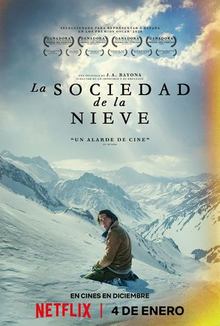
WARNING: THIS ARTICLE CONTAINS MOVIE SPOILERS. PROCEED WITH CAUTION IF YOU HAVE NOT YET WATCHED “LA SOCIEDAD DE LA NIEVE” AND WISH TO AVOID REVEALING PLOT DETAILS.
In 1972, the Uruguayan Air Force flight 571, chartered to transport a rugby team to Chile, faced an unexpected incident that led to a catastrophic crash into a glacier in the heart of the Andes. This real-life tragedy, detailed in the book “La sociedad de la nieve” by Pablo Vierci, forms the backdrop of J.A. Bayona’s film, “La sociedad de la nieve.” Of the 45 passengers on board, only 16 managed to survive, setting the stage for a harrowing tale of resilience, desperation, and the moral dilemmas that arise in the face of extreme circumstances.
Released on Netflix on January 4, 2024, the movie thrusts its audience into one of the most inaccessible and hostile environments on the planet, where the survivors are forced to confront the limits of their endurance. Stranded in the unforgiving snow, the characters grapple not only with the physical challenges of hunger, extreme cold, and the treacherous terrain but also with the haunting moral question that will define their desperate struggle for survival.
As the narrative unfolds, viewers are drawn into the psychological and emotional landscape of the survivors, each decision becoming a matter of life and death. The plot revolves around the necessity for the group to take extreme measures, including the controversial choice of resorting to cannibalism. “La sociedad de la nieve” stands as a testament to storytelling prowess, delivering a compelling and impactful tale with gusto. Filmed brilliantly, the movie captivates audiences with its intense portrayal of the survivors’ struggle for existence. In this dire situation, where the boundary between right and wrong blurs, the film not only grips audiences with its disturbing theme but also prompts us to reflect on the profound philosophical implications that arise when individuals are pushed to the edge of survival. It is a cinematic masterpiece, a story told with depth and nuance, and a film I highly recommend to all, albeit with the obvious reservations its disturbing theme may evoke.
Navigating the Ethical Abyss: Moral Dilemmas in the Andean Wilderness
In the unforgiving wilderness of the Andes, the characters in “La sociedad de la nieve” find themselves ensnared not only by the physical challenges of survival but also by the profound moral struggles that accompany their desperate circumstances. Faced with the stark reality of dwindling resources and the constant threat of death, the survivors grapple with ethical dilemmas that transcend the ordinary boundaries of morality. The film navigates the delicate nuances of the human psyche as the characters confront the harrowing decision to resort to cannibalism in order to sustain themselves. Each choice becomes a poignant reflection of the characters’ inner turmoil, testing the limits of their moral compass and raising profound questions about the value of life, the preservation of one’s humanity, and the sacrifices individuals are willing to make in the name of survival. As the story unfolds, the audience is compelled to empathize with the characters’ moral quandaries, challenging preconceived notions and prompting contemplation on the intricate interplay between desperation and the preservation of ethical principles in the face of unimaginable adversity.
Echoes of Survival: A Historical Tapestry of Moral Dilemmas
While “La sociedad de la nieve” unfolds a gripping tale of survival in the Andes, it finds resonance in the annals of history where individuals, under extraordinary circumstances, were compelled to confront similar moral quandaries. This narrative is reminiscent of historical events such as the infamous Donner Party expedition, where pioneers stranded in the Sierra Nevada resorted to cannibalism for survival. Moreover, the maritime disaster of the Essex, which inspired Herman Melville’s “Moby-Dick,” saw sailors compelled to make ethically challenging decisions amidst the vastness of the Pacific. By drawing parallels with these historical instances, the film invites contemplation on the universality of human responses to extreme adversity and prompts questions about the enduring nature of moral struggles when confronted with the stark realities of life and death.
Utilitarian Reflections: The Moral Dilemma in ‘La sociedad de la nieve’
In the frosty expanse of the Andes, the characters in “La sociedad de la nieve” are thrust into a moral quandary that resonates with the ethical theory of utilitarianism. The decisions to resort to cannibalism, driven by the imperative of survival, invite scrutiny through the lens of utilitarian principles. As the characters grapple with the stark reality of limited resources and the constant specter of death, their choices become intertwined with the pursuit of the greater good for the collective. Utilitarianism, emphasizing the maximization of overall happiness, prompts an exploration of whether the morally contentious act of cannibalism can be justified in the desperate pursuit of survival for the greater number. The film invites viewers to reflect on the complexities of utilitarian reasoning in extreme circumstances, where the calculus of happiness and well-being clashes with the inherent moral challenges of sacrificing individual principles for the sake of the collective’s survival. This philosophical lens opens avenues for a nuanced examination of the characters’ moral struggles and the profound implications of their decisions in the unforgiving terrain of the Andes.

Faith Amidst Survival: A Clash of Values
In the chilling saga of survival depicted in “La sociedad de la nieve,” the clash between faith and utilitarian principles emerges prominently through a character who, staunchly Catholic, grapples with the moral dilemma of resorting to cannibalism. As the group faces the dire necessity of extreme measures for survival, this character’s unwavering religious convictions become a focal point of tension. For him, the tenets of Catholicism vehemently clash with the utilitarian perspective that underscores the greater good. While utilitarianism might justify the act for the survival of the collective, the character’s religious beliefs serve as a moral anchor, prohibiting him from partaking in the consumption of human flesh. This collision of values within the group introduces a profound layer of complexity to the moral discourse, raising questions about the interplay between personal faith, societal ethics, and the exigencies of survival. The film navigates this clash with sensitivity, adding a dimension that prompts viewers to contemplate the intricate relationship between faith, morality, and the harsh reality of survival.
Survival’s Ethical Odyssey: Concluding Reflections
In the icy crucible of the Andes, “La sociedad de la nieve” transcends the boundaries of cinematic storytelling to delve into the profound ethical quandaries that arise in the face of survival’s relentless grip. The narrative unfolds with cinematic brilliance, immersing viewers in the harrowing struggle of the characters as they navigate the treacherous terrain of the human condition. From the historical tragedy that inspired the film to the characters’ moral dilemmas framed through the lens of utilitarianism, the movie becomes a philosophical exploration of humanity’s response to extremity. The clash of faith and utilitarian principles introduces an additional layer, questioning the very essence of morality in dire circumstances. As the characters confront the unthinkable, the film prompts a visceral reflection on the boundaries between right and wrong, the complexities of faith, and the relentless pursuit of survival. “La sociedad de la nieve” stands not only as a gripping cinematic achievement but also as a poignant exploration of the human spirit in the face of unfathomable challenges. It is a haunting journey that reverberates long after the credits roll—a testament to the enduring power of storytelling to unravel the intricacies of morality, resilience, and the indomitable will to survive.
© Francesc Borrull, 2024
PS: Watch the compelling trailer of “La sociedad de la nieve” on YouTube: in Spanish here, in English here.
 Francesc Borrull