
By Francesc Borrull · March 1, 2024
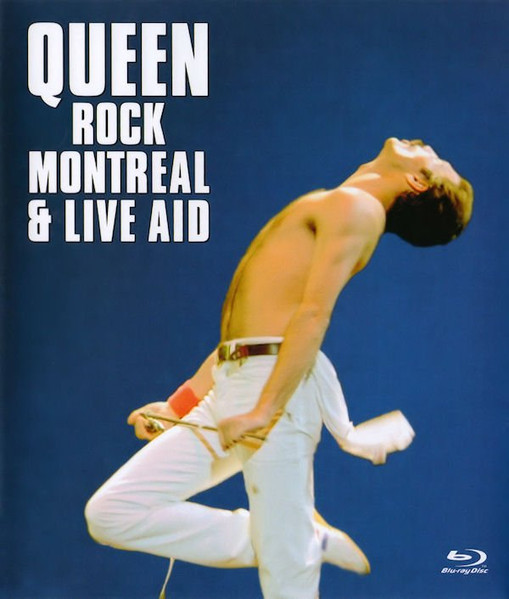
I recently watched a Queen concert on TV, live from Montreal (Canada) in 1981. Queen is one of those rock bands that people don’t fully appreciate, as if what they did was easy. Freddie Mercury, who studied opera singing as a young man, not only composed, sang, and played the piano but also the guitar (as seen in “Crazy Little Thing Called Love”). Brian May, the man responsible for the band’s formation, is a guitarist who has established a unique tone and an aggressive yet pioneering attack technique. Besides the guitar, he plays the piano, sings, and composes. Roger Taylor is an excellent percussionist, not limited to drums but also proficient with other percussion instruments. He also sings and composes. The shy John Deacon plays bass and contributes to compositions. In the studio, Queen employs a complex production involving multiple elements and multi-instrumentation that’s challenging to reproduce in concert. Surprisingly, live performances closely mirror the studio versions. Mercury energetically moves across the stage, switching between the microphone and the piano, engaging with Taylor and May, proving himself as a leading showman in the rock ‘n’ roll scene. May is equally dynamic on stage, displaying a notable physical presence and dedicating his talent to the audience. Taylor exudes incredible energy, reminiscent of Lars Ulrich, the drummer for Metallica. Yet, Taylor predates Ulrich, earning credit for a distinctive style. Deacon, though reserved, plays bass and contributes compositions. However, his onstage presence remains minimal.
I don’t recall the first Queen song I heard, but I distinctly remember a cassette tape circulating around the house with Queen’s music when I was very young, perhaps before turning 10. This was in the ’80s, likely featuring music from Queen’s early days. As rock became an inseparable part of my life, I grew to understand and appreciate Queen’s music more. I acquired their two Greatest Hits volumes and the recently released album “A Kind of Magic” (1986). I also obtained the sheet music book for Greatest Hits II, attempting to emulate Brian May’s virtues to the best of my abilities. I managed to play “Innuendo” quite well. Every song in these two Hits volumes resonates with me, maintaining a consistently high level, and I never tire of listening to them. Notably, the second volume features songs from the band’s later period, especially poignant considering Mercury’s advanced illness. Watching the video clips for “The Miracle,” “The Invisible Man,” and, most notably, “The Show Must Go On,” always brings tears to my eyes. The imminent end is evident in the references, and it never ceases to amaze me that until the very last moment, Freddie – and the band – gave their all.
In Baltimore on November 24, 1991, a sad piece of news reached me: my brother informed me that Freddie Mercury had succumbed to AIDS. On April 20, 1992, at 6 p.m., Roger Taylor, Brian May, and John Deacon, the surviving members of Queen, took the stage at the legendary Wembley Stadium in London, announcing the start of the concert in memory of Freddie Mercury. I watched the concert live on television, broadcast in 76 different countries, with all proceeds going to the Mercury Phoenix Trust Foundation dedicated to aiding AIDS patients globally. Queen had invited some of the most significant talents in the music world at that time: Elton John, David Bowie, Annie Lennox, Metallica, George Michael, Extreme, Guns ‘N Roses, etc. The concert served not only as a tribute to the great Freddie but also as a means to raise awareness about the AIDS epidemic affecting many. Emotion and sadness were palpable both on stage and among the audience. I recall seeing many symbols in the audience with messages like ‘Freddie, we will always remember you,’ ‘Thank you, Freddie,’ ‘Freddie, we love you,’ moving me to tears. It was unjust that a disease would claim the talent of someone like Freddie and prematurely end the artistic journey of the great rock band Queen!
A Night at the Opera
“A Night at the Opera,” released on November 21, 1975, stands as a cornerstone in the annals of rock history, often hailed as a ‘must-have’ masterpiece. Its multifaceted brilliance earned it widespread acclaim, reaching the summit of musical achievement. The album’s global success is evident in its impressive chart performances: securing the number 1 spot in Australia, Finland, the Netherlands, and the United Kingdom, while earning platinum status in these regions. In Spain, it clinched the second position, and its international resonance continued with rankings of #4 in Norway and the US, where it attained triple platinum status. The album further achieved notable chart positions, reaching #5 in Germany, and #9 in Austria and Japan.
What sets “A Night at the Opera” apart is not just its commercial success but also the profound impact of its eclectic and innovative musical compositions. The album’s songs, a testament to Queen’s creative brilliance, showcase a range of genres and styles. From the energetic and anthemic “Bohemian Rhapsody,” with its operatic influences and groundbreaking structure, to the melodic and soulful “Love of My Life,” each track is a masterpiece in its own right.
“Death on Two Legs (Dedicated to…)” introduces the album with a powerful and theatrical flair, setting the tone for the musical journey ahead. The whimsical “Lazing on a Sunday Afternoon” contrasts with the heavy rock stylings of “I’m in Love with My Car,” a track that highlights the band’s versatility. The infectious “You’re My Best Friend” showcases John Deacon’s songwriting prowess, and Brian May’s acoustic masterpiece, “’39,” takes listeners on a cosmic voyage with its science fiction narrative.
The album further unfolds with the guitar-driven “Sweet Lady” and the whimsical “Seaside Rendezvous,” featuring Freddie Mercury’s playful vocals. The magnum opus, “Bohemian Rhapsody,” a groundbreaking six-minute epic, defies convention and weaves together various musical genres, from opera to hard rock. The profound “The Prophet’s Song” captivates with its intricate arrangements, and “Love of My Life” showcases Mercury’s emotive vocals against a backdrop of acoustic beauty.
“Good Company” features Brian May’s signature guitar work, while “Bohemian Rhapsody” reprises in all its grandeur. The album concludes with the iconic “God Save the Queen,” a fitting finale to a musical journey that forever altered the landscape of rock music.
“A Night at the Opera” remains a timeless work of art, a testament to Queen’s unrivaled creativity and musical virtuosity. Its enduring legacy lies not only in its chart-topping success but in the groundbreaking fusion of genres and the sheer artistic brilliance that continues to captivate audiences worldwide.
Track listing::
- “Death on Two Legs (Dedicated to…)” (Mercury) – 3:43
- “Lazing on a Sunday Afternoon” (Mercury) – 1:07
- “I’m in Love with My Car” (Taylor) – 3:05
- “You’re My Best Friend” (Deacon) – 2:52
- “’39” (May) – 3:31
- “Sweet Lady” (May) – 4:03
- “Seaside Rendezvous” (Mercury) – 2:15
- “The Prophet’s Song” (May) – 8:21
- “Love of My Life” (Mercury) – 3:39
- “Good Company” (May) – 3:23
- “Bohemian Rhapsody” (Mercury) – 5:55
- “God Save the Queen” (trad.; Arr. May) – 1:18
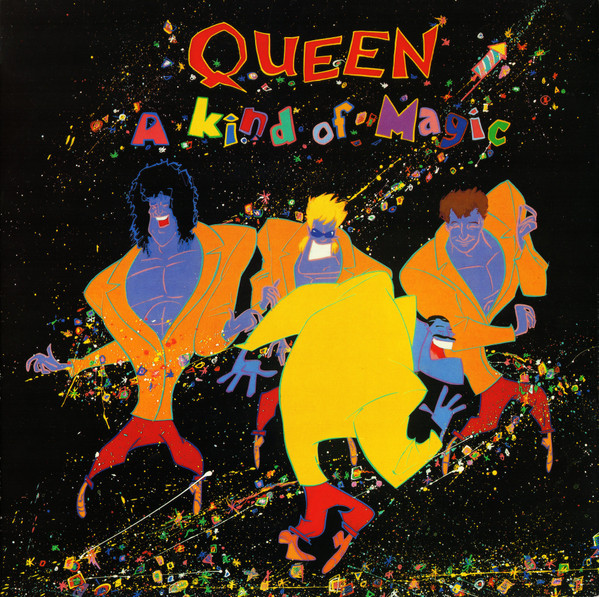
A Kind of Magic
“A Kind of Magic,” the band’s twelfth studio album, possesses a unique and enchanting origin as it serves as the soundtrack for the film Highlander. This cinematic connection adds an extra layer of depth and narrative to the album, intertwining Queen’s musical prowess with the visual storytelling of the movie. One standout track, “Who Wants to Live Forever,” has become an iconic anthem, forever linked with the Highlander saga and etching its place in the collective memory of fans.
The album’s cinematic influence is palpable throughout, creating a sonic landscape that complements the epic and immortal themes of the Highlander storyline. Each track feels like a musical vignette, contributing to the overall atmosphere of the film. “Who Wants to Live Forever,” in particular, captures the essence of eternal love and the poignant consequences of immortality, making it a haunting and timeless piece.
Among the album’s tracks, “One Year of Love” holds a personal significance for me, resonating with a romantic relationship I experienced in the early ’90s. The song’s soulful melody and heartfelt lyrics struck a chord, serving as a soundtrack to moments of love and reflection. Its emotive power and Queen’s ability to evoke a range of emotions through their music make “One Year of Love” a timeless reminder of the band’s impact on personal experiences.
As I listen to “A Kind of Magic,” the album transcends its role as a mere soundtrack and becomes a journey through time, love, and the immortal echoes of Queen’s musical legacy. Each note, each lyric, becomes a part of a larger narrative, weaving together the magic of Queen’s sound with the visual tapestry of Highlander. The album, with its cinematic origins and personal connections, stands as a testament to the enduring power of music to shape and enrich our lives.
Track listing:
- “One Vision” (Queen) – 5:10
- “A Kind of Magic” (Taylor) – 4:24
- “One Year of Love” (Deacon) – 4:26
- “Pain Is So Close to Pleasure” (Deacon/Mercury) – 4:21
- “Friends Will Be Friends” (Mercury/Deacon) – 4:07
- “Who Wants to Live Forever” (May) – 5:15
- “Gimme the Prize” (May) – 4:34
- “Don’t Lose Your Head” (Taylor) – 4:38
- “Princes of the Universe” (Mercury) – 3:32
Live at Montreal
“Live at Montreal” is a captivating live DVD that showcases the legendary rock band Queen at the height of their performance prowess. Recorded during a concert in Montreal, Canada in 1981, the DVD offers an intimate and electrifying experience, allowing fans to witness the magic of Queen’s iconic stage presence. Freddie Mercury’s dynamic vocals, Brian May’s masterful guitar work, Roger Taylor’s powerhouse drumming, and John Deacon’s solid bass lines collectively create an unforgettable musical spectacle. This concert captures the essence of Queen’s live performances, featuring a mix of their greatest hits and deep cuts, demonstrating the band’s ability to engage and captivate audiences. “Live at Montreal” serves as a timeless testament to Queen’s unparalleled showmanship and their enduring legacy in the world of rock music.
Track listing:
Intro
We Will Rock You
Let Me Entertain You
Play the Game
Somebody to Love
Killer Queen
I’m In Love With My Car
Get Down Make Love
Save Me
Now I’m Here
Dragon Attack
Love of My Life
Under Pressure
Keep Yourself Alive
Roger’s Drum and Tympani Solo
Brian’s Guitar Solo
Crazy Little Thing Called Love
Jailhouse Rock
Bohemian Rhapsody
Tie Your Mother Down
Encore:
Another One Bites the Dust
Sheer Heart Attack
We Will Rock You
We Are the Champions
Band leaves and God Save the Queen plays over the PA
© Francesc Borrull, 2007-2024
Note: This piece was originally penned in Catalan back in 2007. The version you just read is my translation, with a slight adjustment in style, created for the purpose of sharing it on this blog.
P.S. If you’d like to dive deeper into Queen’s iconic music, consider exploring their live performance in “Live at Montreal” on DVD, along with their timeless albums “A Kind of Magic” and “A Night at the Opera.” Additionally, the compilation of their greatest hits in volumes I and II is a fantastic tribute to their musical brilliance. Clicking the links below won’t generate any income for me. They are merely provided for your convenience.
- Rock Montreal & Live Aid (two concerts in one package)
- A Night at the Opera
- Greatest Hits I
- A Kind of Magic
- Greatest Hits II
Enjoy the music!
 Francesc Borrull