
By Francesc Borrull · March 18, 2024
September 1986 marked the beginning of my high school journey at the tender age of 13. In my homeland, your grade level aligns with your birth year, placing me among the youngest in the class. Academic hunger fueled my freshman year, and luck had it that I found myself in a great neighborhood school. Public education was our steadfast ally, the only option besides private schools.
My senior brother, a prodigious nerd albeit popular, had set the bar high as the school’s academic ace. I, too, was expected to uphold the family tradition, a feat made interesting by other circumstances. Still, the pressure to be a ‘smart cookie’ lingered.
My brother’s path in humanities led him to Art History during his senior year. An accomplished artist himself, he had his sights set on a Fine Arts school, eager to become a painter. While I had an appreciation for art, my talents leaned more towards reading and writing, lacking the finesse for drawing or painting. Fate, however, intervened when my brother’s art class planned a field trip to an exhibition in downtown Barcelona.
The prestigious Fundació Caixa de Pensions Centre Cultural at the Passeig Sant Joan hosted the exhibition titled “Munch 1863-1944.” Munch’s name meant nothing to me, and his art was an uncharted territory. Undeterred, I expressed my desire to tag along on the field trip. My brother, initially resistant due to my freshman status, eventually secured permission from the teacher.
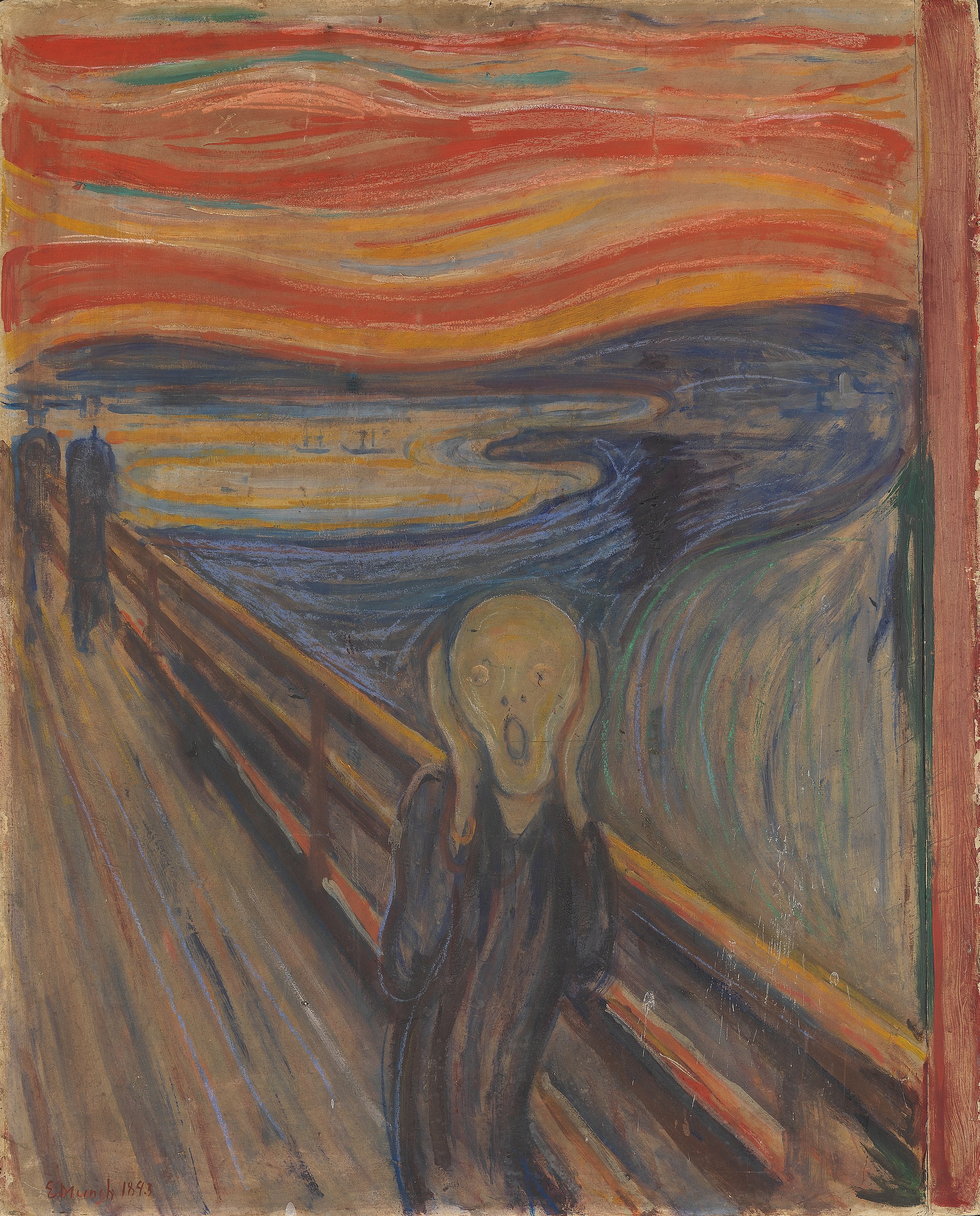
Thus began my initiation into the world of art exhibitions. It was a day that would alter the course of my life. Amidst the myriad of spectacular paintings, one stood out—the one that would leave an indelible mark on my soul—the iconic piece known as “The Scream.”
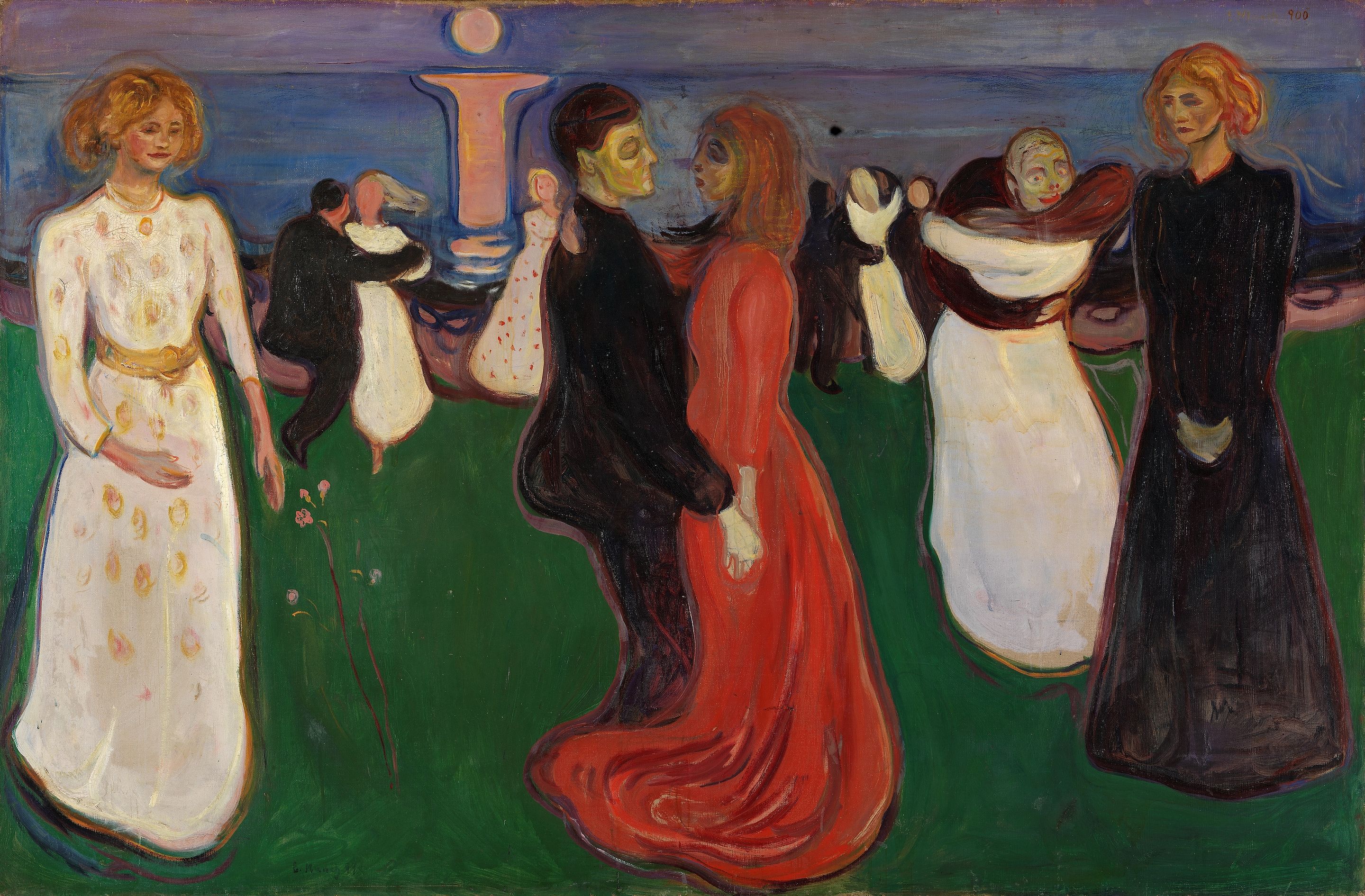
Stepping into the Fundació Caixa de Pensions Centre Cultural that day, I was oblivious to the profound impact Munch’s art would have on me. The exhibition unfolded, revealing a chronological journey through the Norwegian maestro’s life and works. Among the vivid canvases that left an indelible mark, “The Dance of Life” stood out as another masterpiece. Its brilliance has stayed with me to this day, a testament to the enduring genius of Munch’s artistic expression.
Our high school’s art teacher, serving as the tour guide, added layers of insight to the experience. I vividly recall her elucidation of “The Dance of Life,” where she explained how the intricacies of the three women’s hair represented the distinct stages of a woman’s life. This added narrative deepened my appreciation for Munch’s ability to infuse profound meaning into every stroke of his brush, making the art not just visually captivating but intellectually enriching.
Munch’s canvases, a testament to the turbulent currents of his existence, spoke to me in ways I hadn’t anticipated. Each stroke, every hue, resonated with an emotion so raw, it bordered on visceral. His exploration of love, anxiety, death, and existential dread was both captivating and disquieting.
As I meandered through the gallery, one piece seemed to beckon me from across the room—the harbinger of my artistic awakening. “The Scream,” an iconic representation of Munch’s inner turmoil, hung before me like a portal into the artist’s tortured psyche.
The painting, with its swirling, distorted figures against a blood-red sky, was an evocative expression of existential dread. The figure at the forefront, its face contorted into a silent scream, struck a chord within me. The brushstrokes conveyed an overwhelming sense of isolation and anguish, transcending the canvas to evoke a shared, universal vulnerability.
Munch’s use of color and form was masterful. The vivid palette, dominated by bold reds and yellows, intensified the emotional impact. The distorted shapes and lines added a surreal quality, blurring the boundaries between reality and nightmare. It was as if Munch had tapped into the very essence of the human experience, distilling it into a visual symphony that reverberated through the ages.
The juxtaposition of the serene landscape and distant cityscape against the tumultuous foreground created a sense of existential contrast. The silent scream echoed through the composition, an eloquent commentary on the human condition—a stark reminder that, despite the serene backdrop of life, an undercurrent of anxiety persists.
“The Scream” transcended its status as a mere painting; it became a mirror reflecting the viewer’s own anxieties and fears. In that gallery, surrounded by Munch’s visceral creations, I felt a profound connection to the artist and a newfound appreciation for the transformative power of art.
As I left the exhibition, the echoes of Munch’s silent scream lingered in my mind. The experience had etched itself into my consciousness, sparking a fascination with art that would endure and evolve throughout my life. The first art exhibition of my 14-year-old self had not only exposed me to the brilliance of Edward Munch but had also opened a gateway to the endless possibilities of artistic expression and interpretation.
About four decades have passed since that fateful day in the art-filled halls of Fundació Caixa de Pensions Centre Cultural, and the imprint left by Edward Munch’s “The Scream” endures as a guiding force in my life.
Munch’s art, a reflection of his own tumultuous journey, encapsulates the human experience in its myriad forms. His ability to translate the complexities of existence onto canvas resonates with a timeless universality. “The Scream,” with its silent wail echoing through the ages, serves as a poignant metaphor for the existential angst that we, as individuals, often grapple with.
In the years that followed that transformative exhibition, Munch’s influence has been a silent companion, shaping my understanding of the world. The vibrant colors and distorted forms that characterize his work have become a lens through which I view the ebbs and flows of life. Much like the figure in “The Scream,” I have navigated moments of isolation, anxiety, and introspection, finding solace in the realization that these emotions are not solitary, but rather shared threads woven into the fabric of the human condition.
Munch’s legacy extends beyond the confines of a canvas; it is a testament to the power of art to transcend time and connect individuals across generations. As I reflect on that first encounter with “The Scream” and the broader spectrum of Munch’s oeuvre, I recognize the profound impact it has had on my existence.
The painting, with its stark portrayal of vulnerability, serves as a reminder to confront life’s uncertainties head-on. It invites us to acknowledge our fears, to scream silently in the face of the unknown, and to find strength in embracing the shared struggles that define us as a collective humanity.
As a man standing at the crossroads of the past and the present, Munch’s art remains a compass guiding me through the complexities of life. It has fostered a deep appreciation for the power of expression, whether through visual art, words, or the silent screams within our hearts. In this ongoing journey, “The Scream” stands not only as a masterpiece of artistic brilliance but as a profound statement on the human experience—a timeless echo reverberating through the corridors of existence.
© Francesc Borrull, 2024
P.S. The exhibition took place from January 27th to March 22nd, 1987. For further details, this and this is all the information I could find online about that specific exhibition. Also, you may visit “La Caixa” Foundation’s website here.
 Francesc Borrull