
By Francesc Borrull · April 19, 2024
Introduction
As an educator, I frequently engage in conversations with parents seeking guidance in navigating the complex landscape of education. Drawing from these interactions and my expertise in the field, I’ve crafted this article as an introductory guide for parents. It offers insights into the fundamental concepts that shape effective education and outlines the essential skills our children should develop over time.
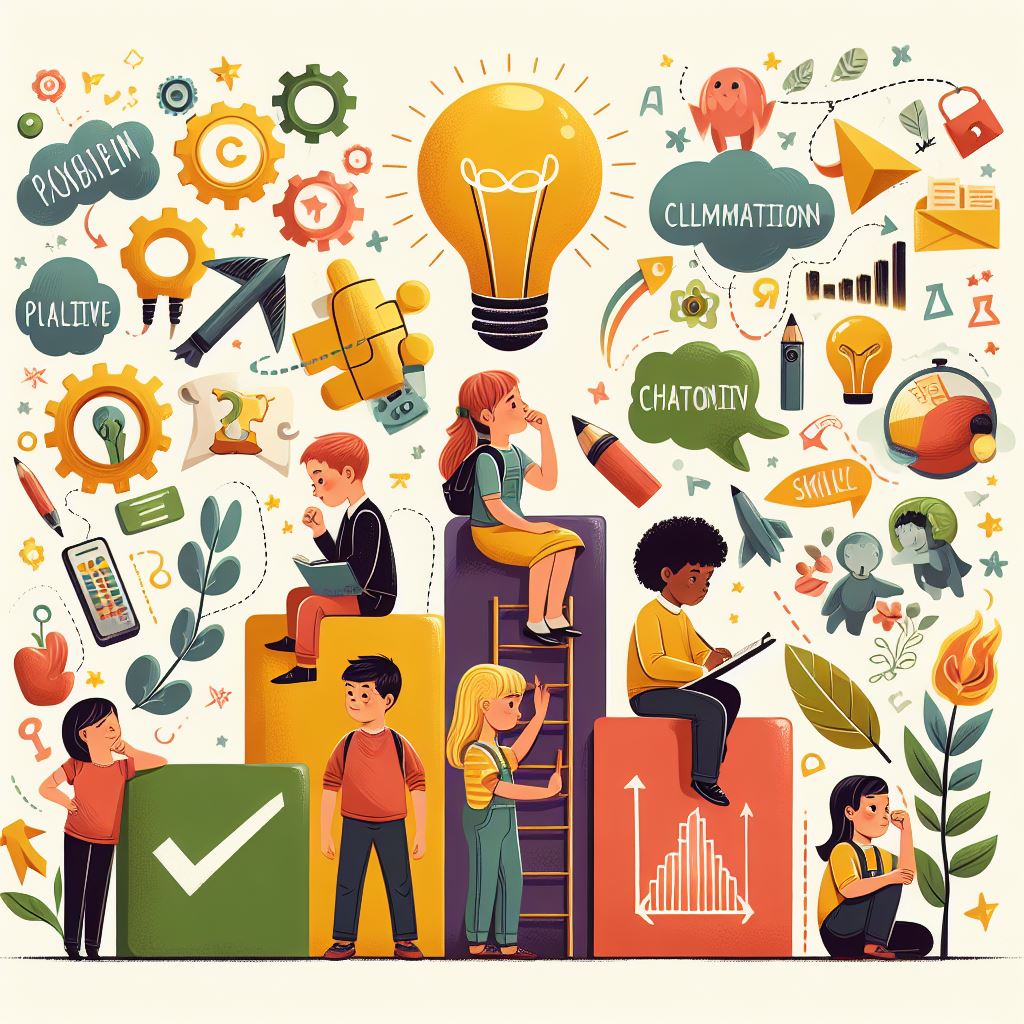
In my role, I’ve witnessed firsthand the genuine concerns and inquiries from parents eager to understand what education should be, which goals should be prioritized, and the essential skills their children need to thrive in the 21st century. Our rapidly changing world demands a unique set of skills for navigating challenges and contributing meaningfully to society. As parents, it is imperative to focus not only on what our children learn academically but also on the skills that will empower them to thrive. Let’s explore the key skills that educational institutions and parents should prioritize—fostering the development of problem-solving, critical thinking, creativity, collaboration, and communication. By understanding and embracing these concepts, we empower ourselves to guide the next generation towards a future filled with possibilities, resilience, and the confidence to meet the challenges of our ever-evolving world head-on.
Problem-Solving Skills
Life presents us with an array of challenges, and the first step towards success lies in our ability to solve problems effectively. Fostering a growth mindset in your child, emphasizing the belief that abilities can be developed through dedication and hard work, is essential for building resilience and persistence. A growth mindset contrasts with a fixed mindset and enables individuals to embrace challenges and view failures as opportunities to learn and grow. Educational institutions and parents alike play crucial roles in instilling problem-solving skills. Schools can incorporate real-world scenarios and hands-on experiences, while parents can reinforce the growth mindset at home by encouraging their children to tackle challenges with determination and view setbacks as stepping stones toward improvement.
Critical Thinking
In tackling the complex problems of today’s world, critical thinking becomes a guiding force. Educational institutions play a crucial role in nurturing critical thinking skills by incorporating inquiry-based learning, research projects, and activities that require students to analyze and evaluate information. Parents can further encourage critical thinking at home by engaging in discussions that prompt their children to question, analyze, and think critically about the world around them.
Creativity
As we encounter new and unique challenges, creativity becomes a driving force for innovative solutions. Fostering creativity in your child involves encouraging them to think outside the box, explore their imagination, and find unique perspectives to address problems. Parents can play an active role in promoting creativity at home by providing open-ended activities, exposing children to diverse experiences, and celebrating their imaginative endeavors. Whether through arts and crafts, exploring nature, or engaging in imaginative play, parents create an environment that encourages creative expression. Educational institutions can further support creativity by incorporating project-based learning, arts education, and activities that encourage students to explore and express their unique ideas.
Collaboration
The interconnected challenges we face in the world cannot be solved in isolation. Collaboration is key to driving meaningful change. Educational institutions should emphasize teamwork, group projects, and cooperative learning experiences that prepare students for effective collaboration. Parents can reinforce a collaborative spirit by encouraging their children to participate in team sports, group activities, and community service.
Communication
In a globalized world, effective communication is paramount. The ability to express ideas clearly and collaborate with others, locally and globally, is a skill that transcends individual success. Educational institutions should focus on developing communication skills in various languages and contexts. Parents can further enhance these skills by encouraging their children to engage in diverse communication experiences, ensuring they can effectively convey their ideas to a wide audience.
Conclusion
By reshaping the educational narrative to prioritize problem-solving, critical thinking, creativity, collaboration, and communication, we empower our children to become versatile, compassionate leaders of tomorrow. This holistic approach goes beyond traditional academic learning, preparing our youth to face the challenges and opportunities of a dynamic world with confidence and resilience.
© Francesc Borrull, 2023-2024
 Francesc Borrull