
By Francesc Borrull · October 21, 2024
Introduction
In an ever-connected world, love often transcends the boundaries of race, culture, religion, and language. As we delve into the intricate tapestry of human relationships, exploring the dynamics of interracial, intercultural, interreligious, and interlanguage marriages becomes an enlightening journey. This paper aims to uncover the challenges faced by couples navigating these diverse intersections, shed light on the resources available to them, explore strategies for success, and share the inspiring stories of those who have defied the odds.
Love, as they say, knows no bounds, yet the reality of merging lives that come from different backgrounds is not without its complexities. From cultural clashes to linguistic nuances, couples in these marriages encounter a unique set of challenges that demand resilience, understanding, and a commitment to growth. However, within these challenges lie opportunities for personal and relational development, fostering a richer and more nuanced understanding of what it means to build a life together.
As we embark on this exploration, we will navigate the realms of compromise, acceptance, and the delicate dance of raising children in environments shaped by multiple influences. By examining the diverse strategies employed by couples and drawing on the wealth of resources available, we aim to uncover the keys to not just surviving but thriving in the intricate tapestry of diverse love.
Challenges
Interracial, intercultural, interreligious, and interlanguage marriages, while enriching, come with their unique set of challenges. One of the foremost hurdles is the negotiation of differing cultural norms and traditions. Couples may find themselves at the intersection of contrasting customs, leading to potential misunderstandings and conflicts. Additionally, navigating societal perceptions and prejudices can add external pressure, requiring couples to build resilience against external judgments.
Language, a beautiful tool for communication, can sometimes become a barrier. The nuances of expression, humor, and even fundamental understanding may vary when partners come from different linguistic backgrounds. This linguistic diversity can lead to miscommunications, requiring couples to develop effective communication strategies that transcend language barriers.
The blending of religious beliefs is another area demanding thoughtful navigation. Couples may encounter challenges in harmonizing differing faiths, rituals, and expectations. Striking a balance that respects individual beliefs while fostering unity in the family becomes a delicate but vital task.
Raising children in such diverse environments introduces a unique layer of challenges. Parents must consider how to pass on cultural, religious, and linguistic heritage while allowing space for the child’s own exploration and identity formation. The need for open communication and mutual understanding between partners becomes even more crucial in shaping a supportive and inclusive family environment.
Resources
Successfully navigating the complexities of interracial, intercultural, interreligious, and interlanguage marriages often requires a robust set of resources. Thankfully, in our interconnected world, couples can access a wealth of tools and support networks to aid them on their journey.
Counseling and Support Groups: Seeking professional counseling or joining support groups specifically tailored to diverse couples can provide a safe space to discuss challenges, share experiences, and gain insights from others on a similar journey.
Educational Programs: Many organizations offer educational programs focused on intercultural relationships, providing couples with the knowledge and skills needed to navigate cultural, linguistic, and religious differences effectively.
Language Classes: Investing in language classes for both partners can foster better communication and understanding. Learning each other’s languages not only breaks down linguistic barriers but also deepens the connection by showing a commitment to mutual understanding.
Interfaith Resources: For couples navigating differences in religious beliefs, there are various interfaith resources available, including books, workshops, and online platforms, offering guidance on fostering understanding and respect in mixed-faith households.
Parenting Support: Resources focused on multicultural parenting can offer valuable insights into raising children in diverse households. Books, seminars, and online forums can provide practical advice on blending cultural, religious, and linguistic influences in a way that enriches the child’s identity.
Strategies
While challenges may abound, successful couples in interracial, intercultural, interreligious, and interlanguage marriages often employ various strategies to strengthen their bond and overcome obstacles.
Effective Communication: The cornerstone of any successful relationship, effective communication becomes even more crucial in diverse marriages. Open, honest, and empathetic communication allows partners to navigate differences, express concerns, and foster a deep understanding of each other’s perspectives.
Cultural Exchange and Exploration: Actively engaging in each other’s cultures through travel, celebrations, and shared experiences promotes a sense of unity. Embracing and celebrating cultural diversity within the relationship fosters a rich and inclusive environment.
Compromise and Flexibility: Flexibility is key when merging different backgrounds. Couples who can find common ground, make compromises, and adapt to each other’s needs and expectations often build stronger, more resilient relationships.
Continuous Learning: A commitment to ongoing learning about each other’s backgrounds, traditions, and languages demonstrates a dedication to mutual growth. This curiosity can create a foundation for shared values and a deeper connection.
Parenting Agreement: Establishing a clear and respectful parenting agreement is vital for couples raising children in diverse households. This involves discussing and aligning on approaches to language exposure, religious education, and cultural practices within the family.
These strategies, when employed thoughtfully, contribute to the success and longevity of diverse marriages.
Success Stories
Amidst the challenges and strategic navigation, numerous couples in interracial, intercultural, interreligious, and interlanguage marriages have forged paths of resilience and triumph. Their stories serve as beacons of inspiration, demonstrating that not only is it possible to overcome differences, but it’s also possible to thrive in the embrace of diversity.
The Power of Love: Many successful couples attribute their longevity to a profound love that transcends external differences. This deep emotional connection becomes the anchor that sustains them through challenges, allowing them to appreciate and celebrate each other’s uniqueness.
Cultural Fusion: Couples who embrace a fusion of their cultural backgrounds often find a harmonious balance. The blending of traditions, cuisines, and celebrations becomes a testament to the richness that diversity brings to their lives.
Language as a Bond: Partners who invest in learning and using each other’s languages not only break down communication barriers but also create a unique bond. Shared linguistic experiences contribute to a deeper understanding of each other’s perspectives and emotions.
Joint Exploration: Couples who actively explore each other’s worlds—whether through travel, participation in cultural events, or religious ceremonies—find joy in the shared experience of discovery. This joint exploration becomes a foundation for mutual growth.
Raising Global Citizens: Successfully raising children in diverse households is a testament to a couple’s ability to create an inclusive and supportive environment. Children who grow up navigating multiple cultural, religious, and linguistic influences often become open-minded, adaptable individuals with a rich sense of identity.
In these success stories, we find not only tales of overcoming challenges but also narratives of thriving in the beauty of diversity. Each couple’s journey is unique, yet collectively, they contribute to a broader narrative that celebrates the strength and resilience of love that knows no bounds.
Conclusion
In the intricate tapestry of human relationships, interracial, intercultural, interreligious, and interlanguage marriages stand as living embodiments of the beauty found in diversity. As we’ve navigated the challenges, explored the resources, delved into strategies, and celebrated success stories, it becomes evident that these unions are not just a convergence of individuals but a fusion of worlds, creating something truly extraordinary.
Compromise, effective communication, cultural exploration, and a commitment to continuous learning emerge as the pillars that support the resilience of these relationships. The challenges faced by couples in these unions are not insurmountable obstacles but rather opportunities for growth, understanding, and the forging of a unique bond that goes beyond societal boundaries.
The resources available, ranging from counseling to educational programs, provide couples with the tools to navigate the complexities they encounter. These resources serve as guideposts, helping couples not only survive but thrive in the face of differences.
Strategies such as effective communication, cultural exchange, compromise, and continuous learning become the compass that guides couples through the labyrinth of diverse backgrounds. These strategies transform challenges into building blocks, creating a foundation for lasting and meaningful connections.
Finally, the success stories of couples who have not only weathered storms but flourished in the embrace of diversity serve as beacons of hope. Love, when nurtured with understanding, respect, and a celebration of differences, becomes a powerful force that transcends the boundaries that may attempt to divide.
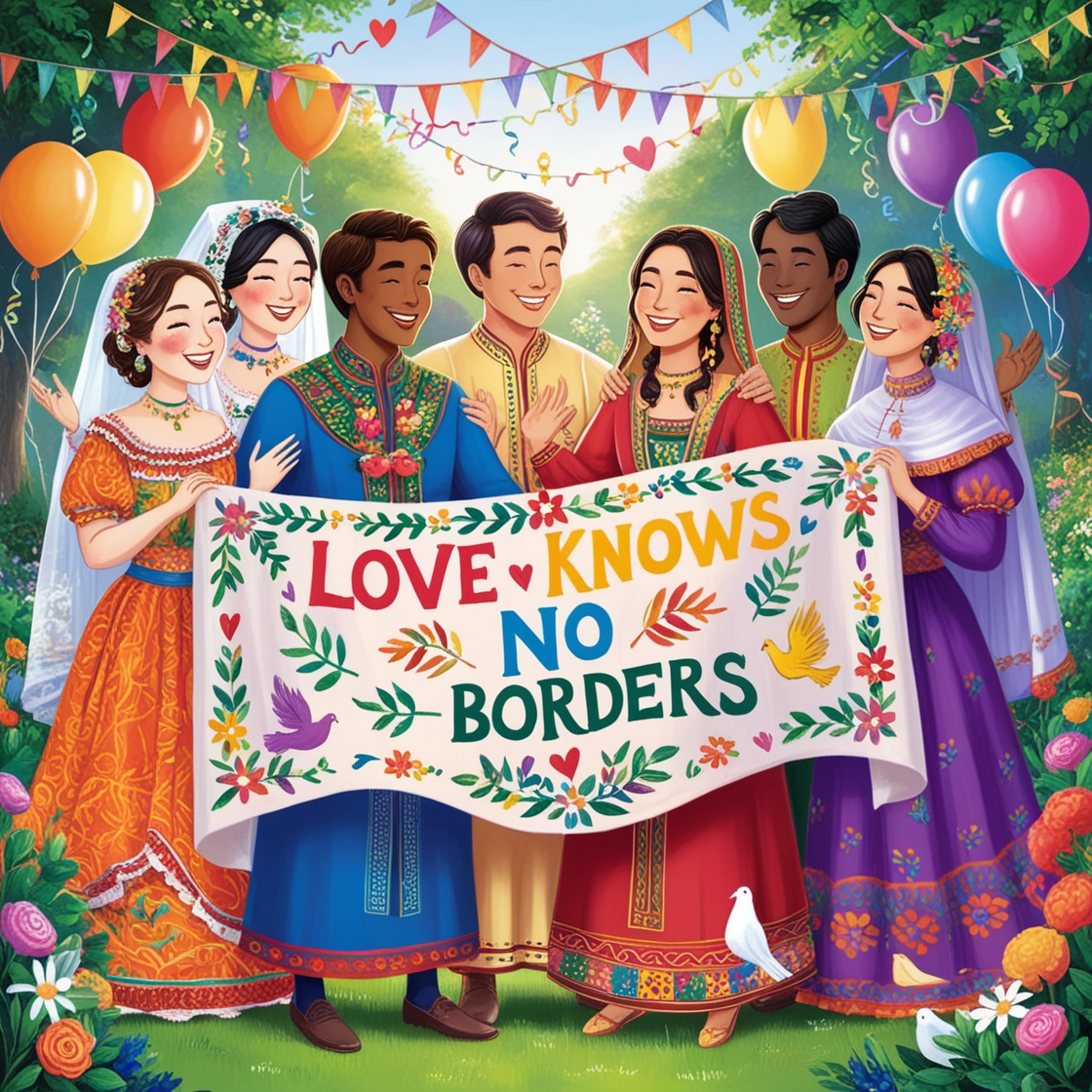
In conclusion, interracial, intercultural, interreligious, and interlanguage marriages exemplify the boundless potential of love that knows no borders. Through the willingness to navigate differences, learn from one another, and create a shared narrative, these unions become a testament to the richness that diversity brings to our collective human experience.
As we reflect on the stories shared and the lessons learned, may we continue to celebrate the vibrant mosaic of love that flourishes when hearts embrace the beauty of the world’s diversity.
© Francesc Borrull, 2024
 Francesc Borrull