
By Francesc Borrull · November 4, 2024
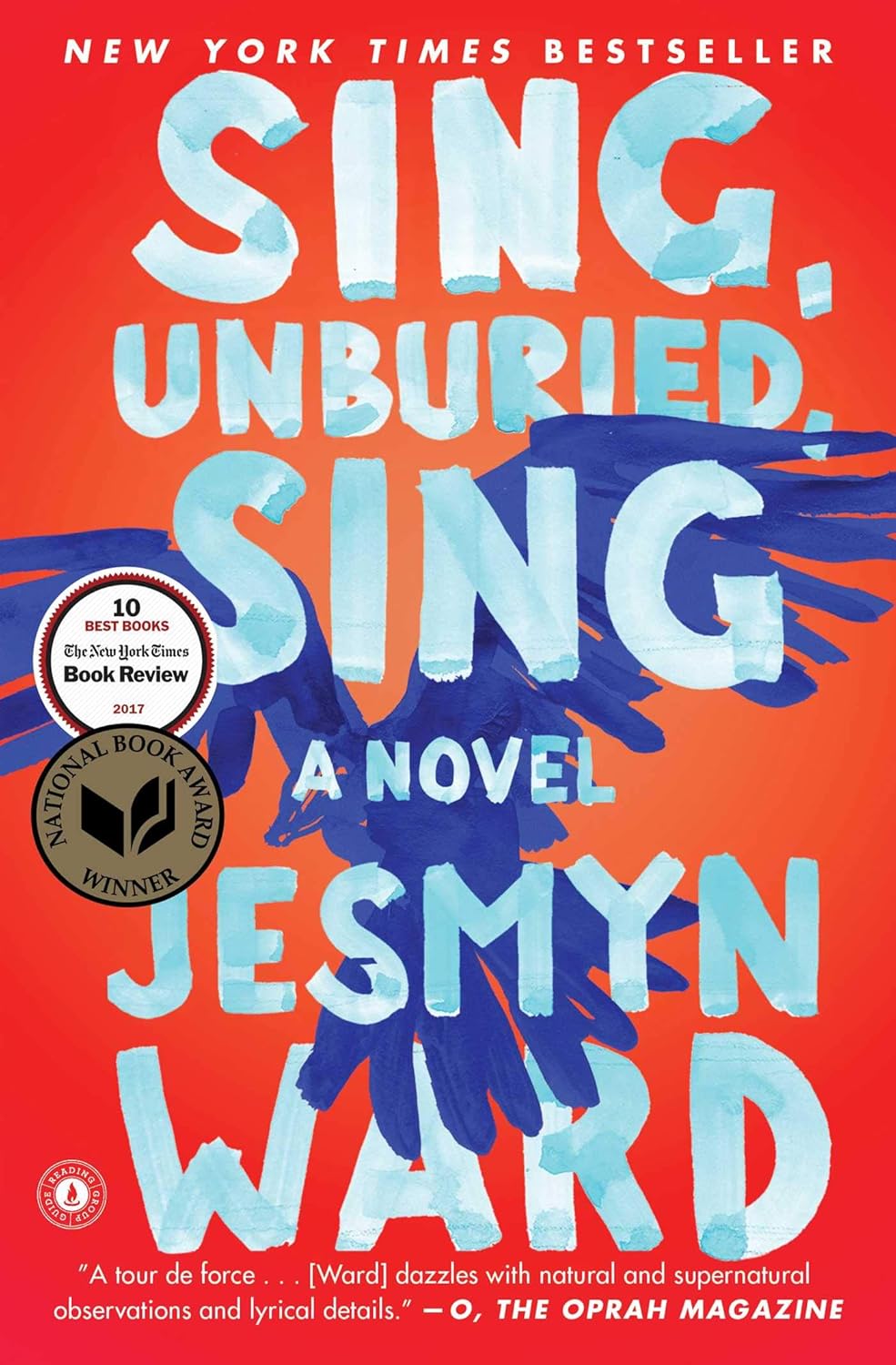
I read Sing, Unburied, Sing as part of a book club, a space where kindred spirits gather around the shared love of literature. Book clubs are more than just places to discuss plot points or themes—they’re communities that bring people together, uniting us in the joy of reading. There’s something powerful about sharing a story with others, about exchanging perspectives and experiences that might differ yet are bound by the same text. In America, book clubs have become a cultural cornerstone, with some intimate gatherings among close friends and others, like Oprah’s Book Club, creating a national sensation. When Oprah selects a book for her club, it becomes an instant bestseller, as readers across the country rush to dive into a shared literary experience.
Through this communal reading, a novel like Sing, Unburied, Sing doesn’t just live in the solitary mind—it resonates, grows, and shifts through conversation. Discussing it with others, you feel the weight of Ward’s words as they echo between readers, deepening the impact of the novel’s themes of suffering, resilience, and the unburied past. It’s in this exchange, this collective reflection, that the power of a book club truly shines.
Jesmyn Ward’s Sing, Unburied, Sing is a novel that throbs with the pulse of the South—both its beauty and its cruelty. Set in a Mississippi soaked in memory and shadowed by ghosts, it confronts the reader with a landscape haunted by the past, where pain and love tangle like the roots of a stubborn tree. Ward crafts a story that reminds me of the deep, disturbing style of Cormac McCarthy and William Faulkner, yet it hums with a different rhythm, a modern, more intimate song of the 21st century—a song not only of suffering but of resilience and hope.
In one of the most telling moments of the novel, Ward writes:
“Goddamnit sonofabitch,” Leonie says, and a dark skinny boy with a patchy afro and a long neck is standing on my side of the car, looking at Kayla and then looking at me. Kayla cries and whines.
“The bird, the bird,” she says.
The boy leans into the window and blurs at the edges. He says: “I’m going home.”
This passage encapsulates the novel’s delicate balance between the visible and the unseen, the living and the dead. The boy, who blurs at the edges, feels as fleeting as memory itself, reminding us of the spirits that linger, unburied. But the line “I’m going home” is particularly poignant—it’s not just about returning to a physical place, but perhaps about the deeper yearning to find peace, to fly away from the burden of pain. Kayla’s cry, “The bird, the bird,” echoes through the scene like a plea for freedom, aligning with the novel’s powerful metaphor of the bird as a symbol of flight, escape, and the possibility of joy beyond sorrow.
The plot revolves around 13-year-old Jojo and his journey through a fractured family, his father imprisoned, his mother distant and devoured by addiction. Jojo carries the weight of a love that feels too heavy for his young shoulders, nurturing his sister Kayla when their mother cannot. It is through Jojo’s care for his sister that we see the novel’s central theme: the possibility of finding joy amid chaos. For Jojo, loving Kayla becomes his act of flight, his escape from a place that suffocates. The title, Sing, Unburied, Sing, resonates deeply here—like birds, Jojo and Kayla long to soar, to sing beyond the weight of their family’s ghosts and past traumas.
For me, the metaphor of the bird is potent and personal. To fly is to escape, to lift oneself from a toxic environment and taste freedom in the open sky. Ward masterfully employs this metaphor, offering singing as an act of defiance, a way to transform pain into something liberating, something joyous. Singing, here, is not just the echoes of the past but the promise of a future, a way to rise above sorrow and despair.
Ward also weaves the supernatural into her narrative, with the unburied ghosts—figures from the past who hover around the living, demanding attention. These spirits, visible to Jojo and his sister, remind us that history never truly stays buried. But the ghosts are not just the dead; they are the living as well—Leonie, Jojo’s mother, and Michael, his father, are haunted by their own demons. They move through life numb and detached, like birds who have forgotten how to fly, their wings clipped by addiction and sorrow.
This novel aches with that Southern gothic brutality that McCarthy and Faulkner made their own—the blood-soaked soil, the rawness of life and death, the relentless brutality of existence. Yet, Ward’s tale feels different. It is unmistakably contemporary, its pain sharpened by the current realities of racism, poverty, and familial collapse. Her characters are not just relics of a violent history but living embodiments of how that history continues to wound in the present.
And still, there is hope. Jojo, despite the weight of his family’s sins, shows us that love can be a lifeline, a reason to sing. In the end, Sing, Unburied, Sing is not just a lament for those who never had the chance to fly—it is a song for those who, against all odds, still spread their wings.
© Francesc Borrull, 2024
 Francesc Borrull