
By Francesc Borrull · November 25, 2024
Introduction
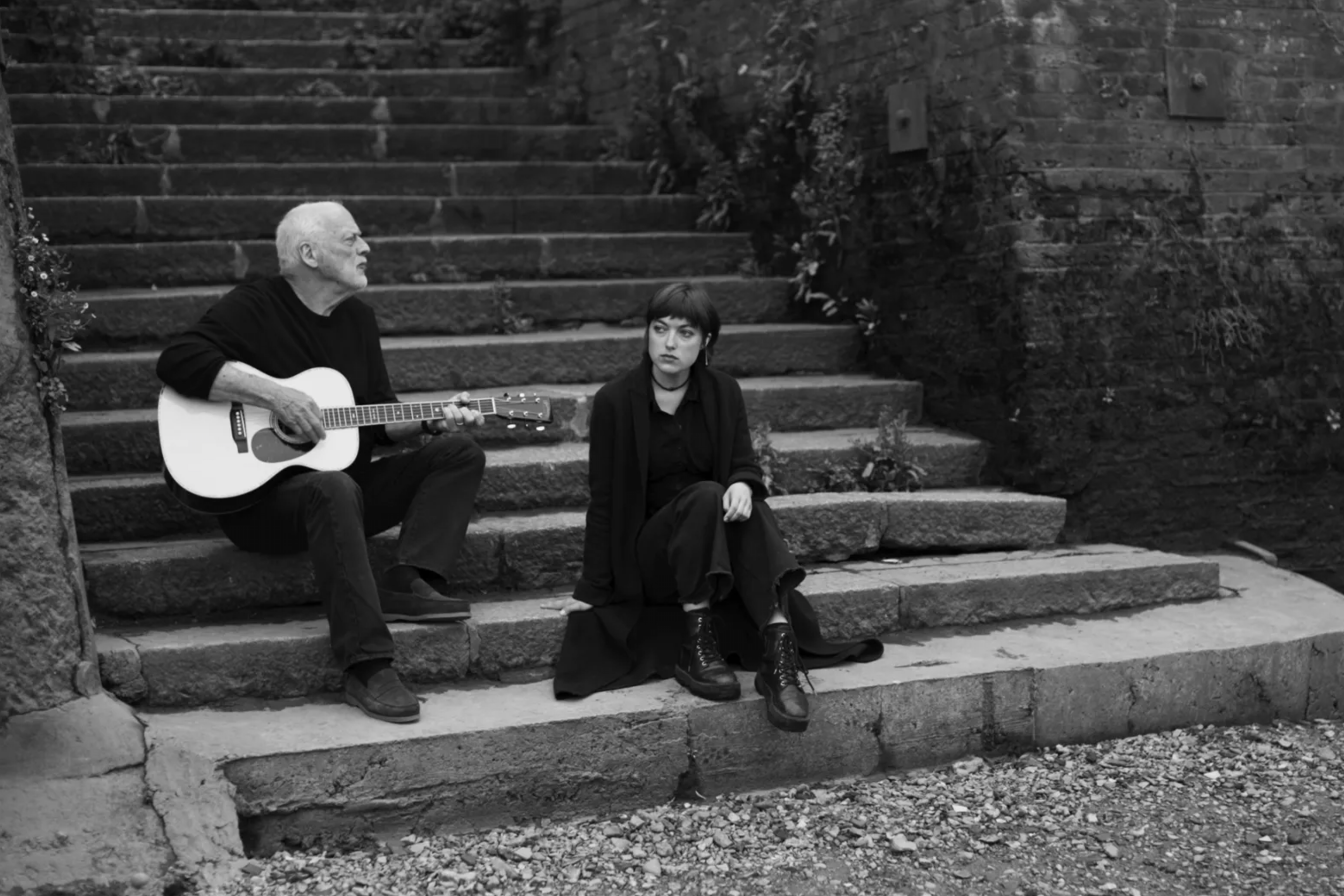
The first time I heard “Between Two Points,” sung by Romany Gilmour on David Gilmour’s Luck and Strange (2024), I was completely captivated. Its delicate beauty and haunting melody have stayed with me since. Interestingly, my daughter, who often shares my musical tastes, commented on how beautiful and tender the song was as we listened to it together. The song, originally written and recorded by the British band the Montgolfier Brothers in 1999, has been a long-time favorite of Gilmour’s. Surprised by its relative obscurity, he reimagined it on his latest album with a minimalistic yet deeply emotional arrangement. This paper explores the differences between the two versions, focusing on the lyrical and musical evolution, while reflecting on how the song’s universal themes connect across time and listeners.
The Context of the Song’s Origins
The Montgolfier Brothers’ original version of “Between Two Points” is a quintessential example of their understated, melancholic indie sound. The 1999 track, with its lush instrumentation and poignant lyrics, captures a sense of introspective longing. David Gilmour, a longtime admirer of the song, described his surprise that it did not receive broader recognition. This admiration led to its inclusion on Luck and Strange, where he enlisted his daughter, Romany, to lend her ethereal vocals and harp playing to the reinterpretation.
While the original has a grounded, indie-chamber feel, Gilmour’s version transforms it into a more atmospheric and intimate piece, stripping back much of the original instrumentation to highlight Romany’s voice and the emotional weight of the lyrics.
Lyrical Analysis
The lyrics of “Between Two Points” are deeply reflective, narrating themes of early disillusionment, quiet acceptance, and the lingering pain of being misunderstood:
“Stopped hoping at an early age / Stopped guessing at an early age / Start accepting things from day one.”
The song’s refrain, “They’re right, you’re wrong,” embodies a sense of resignation and self-doubt, resonating universally with those who have experienced similar struggles.
In the Montgolfier Brothers’ version, these lyrics are delivered with a subdued, contemplative tone, allowing the words to settle into the listener’s mind like a slow-blooming realization. By contrast, Romany Gilmour’s delivery is hauntingly intimate, her voice carrying the fragility of someone who feels each word deeply.
David Gilmour: Between Two Points (featuring Romany Gilmour). Directed by Gavin Elder.
The Musicality and Emotional Resonance
The Montgolfier Brothers’ original arrangement is richly textured, featuring gentle acoustic guitar, subtle string accompaniment, and layered vocals. This creates an enveloping, almost cinematic atmosphere that complements the introspective lyrics.
David and Romany Gilmour’s version, on the other hand, leans into minimalism. Romany’s harp weaves a delicate, shimmering foundation, while David’s signature guitar lines provide an understated but deeply emotive backdrop. This simplicity allows the lyrics and Romany’s voice to take center stage, amplifying their emotional impact.
When I first heard the Gilmour version, I was mesmerized by its beauty. It stayed with me, lingering in my thoughts and emotions long after the music had stopped. The stripped-back arrangement contrasts beautifully with the complexity of its emotions, creating a timeless piece of art.
Personal Connection
Experiencing this song with my daughter added another layer of meaning. Her observation about its delicacy and beauty showed me how music can resonate across generations. Despite her young age, she shares a remarkable appreciation for meaningful music, a connection that brings immense joy to me as a parent.
The themes of “Between Two Points” resonate universally—loss, resilience, and the quiet strength found in acceptance. Both versions of the song evoke this emotional depth, but the Gilmour version feels particularly poignant, perhaps because of the familial collaboration that imbues it with an added layer of intimacy.
Conclusion
“Between Two Points” is a masterpiece of reinterpretation, proving that great music can bridge time, culture, and personal experience. David and Romany Gilmour’s version stands as a testament to the enduring power of a beautiful melody and heartfelt lyrics. My own emotional response—and my daughter’s—highlights the song’s ability to create connections and spark reflection, making it an unforgettable listening experience.
© Francesc Borrull, 2024
David Gilmour – Between Two Points (featuring Romany Gilmour) [Tour Rehearsal].
 Francesc Borrull