
By Francesc Borrull · December 9, 2024
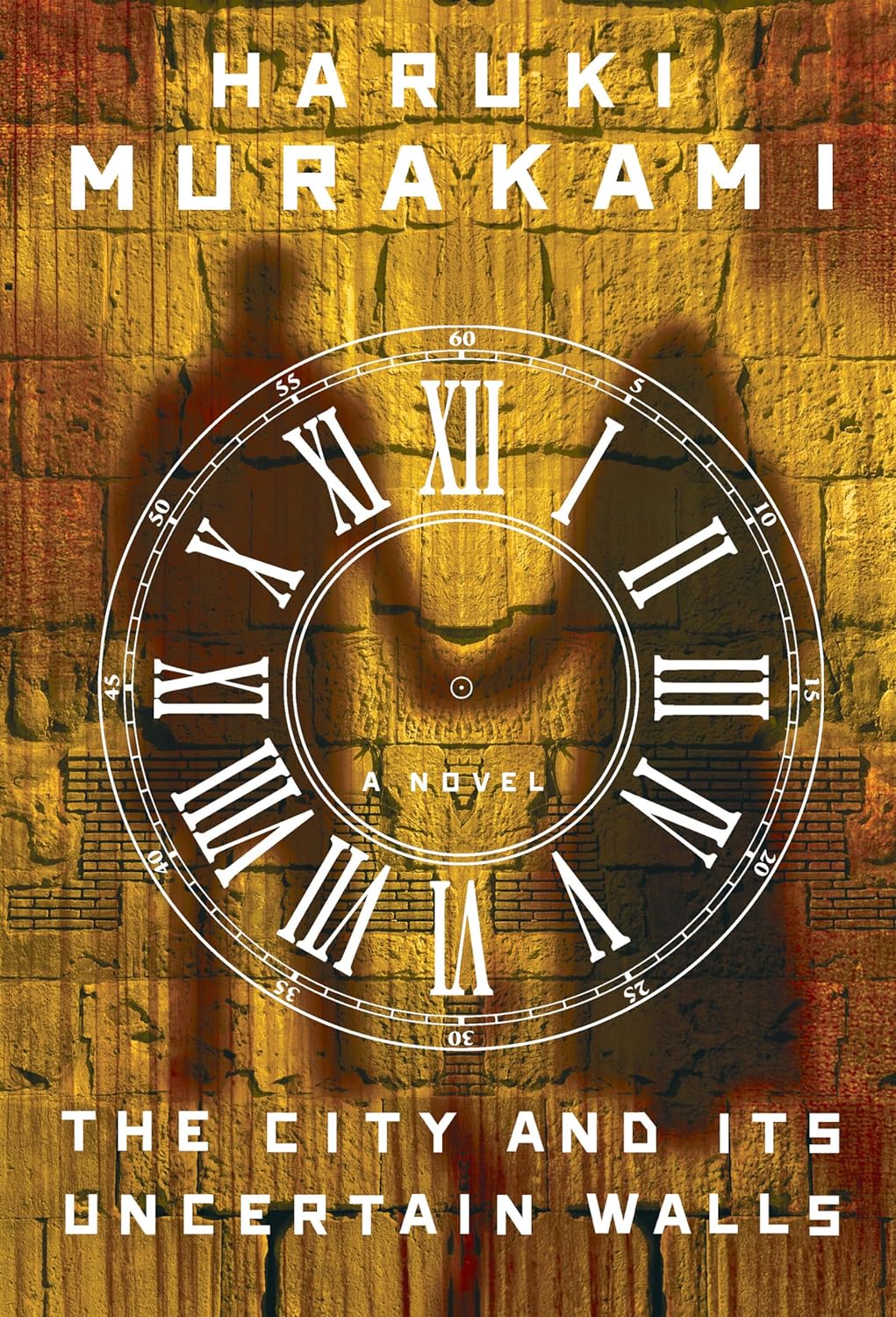
There’s something magnetic about a Murakami novel. They draw you in, as if you’re stepping through an unseen doorway into a world where time bends, shadows whisper, and emotions linger like the faint scent of an unforgotten love. The City and Its Uncertain Walls was no exception. I’ve read every one of Murakami’s novels—from the delicate nostalgia of Norwegian Wood to the sprawling surrealism of 1Q84—mostly while traveling in Thailand, of all places. Something about the country, humid and mysterious, feels as surreal as a Murakami dream and just as alive with inexplicable connections. Each time I opened one of his books there, it felt as if Murakami and I were sharing a quiet secret, his words perfectly attuned to the shade of a banyan tree or the dim glow of a beachside café.
This time, though, I wasn’t in Thailand. I read The City and Its Uncertain Walls during the Thanksgiving holiday, cocooned in the warmth of my home. Wrapped in a blanket, with the cold breath of winter pressing against the windows, I let myself vanish into the pages. And while Murakami’s familiar elements were there—melancholy men, jazz records, and the quiet, persistent pull of the past—this novel left me feeling… uncertain.
A Labyrinth of Walls and Memories: Plot Summary (Contains Spoilers)
Murakami’s tale unfolds in three acts, each like the shifting dreamscapes he so masterfully creates. In Part I, we meet the protagonist as a 17-year-old boy, deeply connected to a 16-year-old girl who speaks of a mysterious city hidden behind an impenetrable wall—a place where her true self resides. Their shared world is a refuge, but their connection is fleeting. One day, the girl vanishes, leaving him haunted by her absence and by the shadowy echoes of a city that might not even exist.
Part II fast-forwards to his life at 45, where he works as a librarian in a remote mountain town, surrounded by solitude and quiet reflection. This section brims with Murakami’s signature elements: the timeless pull of music, the interplay of isolation and companionship, and the quiet gravity of the past. A strange, brilliant boy in a Yellow Submarine hoodie becomes part of his life, as does a woman who runs a café and offers him a fragile thread of connection. Yet, the city behind the walls continues to beckon him, its presence a haunting tether between his present and past selves.
In the brief but surreal Part III, the protagonist returns to the imagined city and takes up the mantle of the “Dream Reader.” Here, dreams manifest as tangible orbs, their meanings enigmatic and profound. In a climactic twist, the man and the boy in the Yellow Submarine hoodie merge identities, their fates inexplicably intertwined. While the man earns his release from the city, it is not a resolution marked by triumph. Instead, the boy remains behind as the city’s new Dream Reader, leaving readers suspended in the ambiguity of loss, memory, and the elusive nature of fulfillment.
The Walls We Build: A Personal Analysis
The novel’s title itself is a puzzle, and like all Murakami titles, it functions as a kind of riddle. The walls in question might be physical, emotional, or metaphysical—or all three. What resonated most with me, particularly in Part II, was the protagonist’s retreat from Tokyo to a quiet library in the mountains. Here was classic Murakami: the interplay of solitude, music, and a deep yearning for connection. I found myself in those pages. I saw myself in the unnamed protagonist, running from the noise of life, longing for something simpler, purer.
The brilliance of this section lies in Murakami’s ability to find poetry in the mundane. The library becomes not just a physical space but a metaphor for memory—a repository for all the books we’ve read, the loves we’ve lost, and the selves we’ve outgrown. Yet, as compelling as this middle section was, I struggled with the later introduction of the Yellow Submarine boy. His role, both as a shadow and as a kind of otherworldly protégé, felt forced. The biting of the protagonist’s ear—an almost absurdist act—disconnected me from the emotional undercurrents I’d been clinging to.
And then there’s the ending. Murakami often leaves us with more questions than answers, but this time, the ambiguity felt hollow rather than profound. The reunion with the protagonist’s teenage love, stripped of romance or resolution, left me longing for the Murakami of old—where lost connections, even if bittersweet, carried weight and tenderness.
A Deep Dive into the City’s Shadows
Murakami’s best works illuminate the hidden corners of human longing, and for much of Part II, The City and Its Uncertain Walls seemed poised to join their ranks. The protagonist’s retreat to the mountains and his quiet life as a librarian are quintessential Murakami. His days are steeped in jazz, whiskey, and the ache of missed connections—a tableau of melancholy that feels both familiar and profound.
Yet, as the narrative shifts toward the fantastical—the merging of identities, the abstract role of the Dream Reader—I found myself longing for more grounding. Murakami’s magic realism often dances on the edge of the believable, but here it felt stretched thin. The boy in the Yellow Submarine hoodie, initially intriguing, became a narrative burden, his role muddled and his resolution unsatisfying. The conclusion, where the protagonist is “freed” to return to the real world, lacked the emotional payoff I had hoped for.
I missed the Murakami of Norwegian Wood or South of the Border, West of the Sun—stories rooted in real people, grappling with real emotions. The city behind the walls was a metaphor that never quite solidified, and its elusive meaning left me more frustrated than enlightened.
An Ode to Reading: My Constant Companion
Despite my mixed feelings about The City and Its Uncertain Walls, the act of reading it was pure joy—a kind of magic that only books can conjure. Over four days, I gave myself entirely to its pages, shutting out the world and immersing myself in Murakami’s universe. The ritual was as comforting as the novel was challenging: the steady turning of pages, the warmth of a blanket, the crackle of a nearby fire. It was the pure, unadulterated happiness of losing yourself in another world.
Reading has always been my lifeline, my oldest and dearest companion. From childhood nights spent under the covers with a flashlight to the quiet hours of my adult life, books have been my refuge in sorrow, my guide through doubt, and my joy in solitude. They ask for nothing but your attention, and in return, they offer you their soul.
Murakami once wrote that “memories warm you from the inside.” That’s how I feel about books and about reading. They are the quiet fire that keeps me going, a light against the uncertainties of life. Even when Murakami’s stories confound or frustrate, they remind us of the immense power of imagination, the pull of the past, and the beauty of simply being alive.
So while The City and Its Uncertain Walls may not rank among my favorite Murakami works, it still gave me what I needed most: an excuse to stay still, to reflect, and to remember that in a world full of noise, the quiet act of reading is the ultimate escape.
For that, I’m grateful—to Murakami and to all the authors who have filled my life with words.
© Francesc Borrull, 2024
P.S. If you’re curious about which of his novels do top my list, check out my blog post, Haruki Murakami: My Top Five Favorite Books, where I delve into the works that have left the deepest mark on me.
 Francesc Borrull