
By Francesc Borrull · June 30, 2025
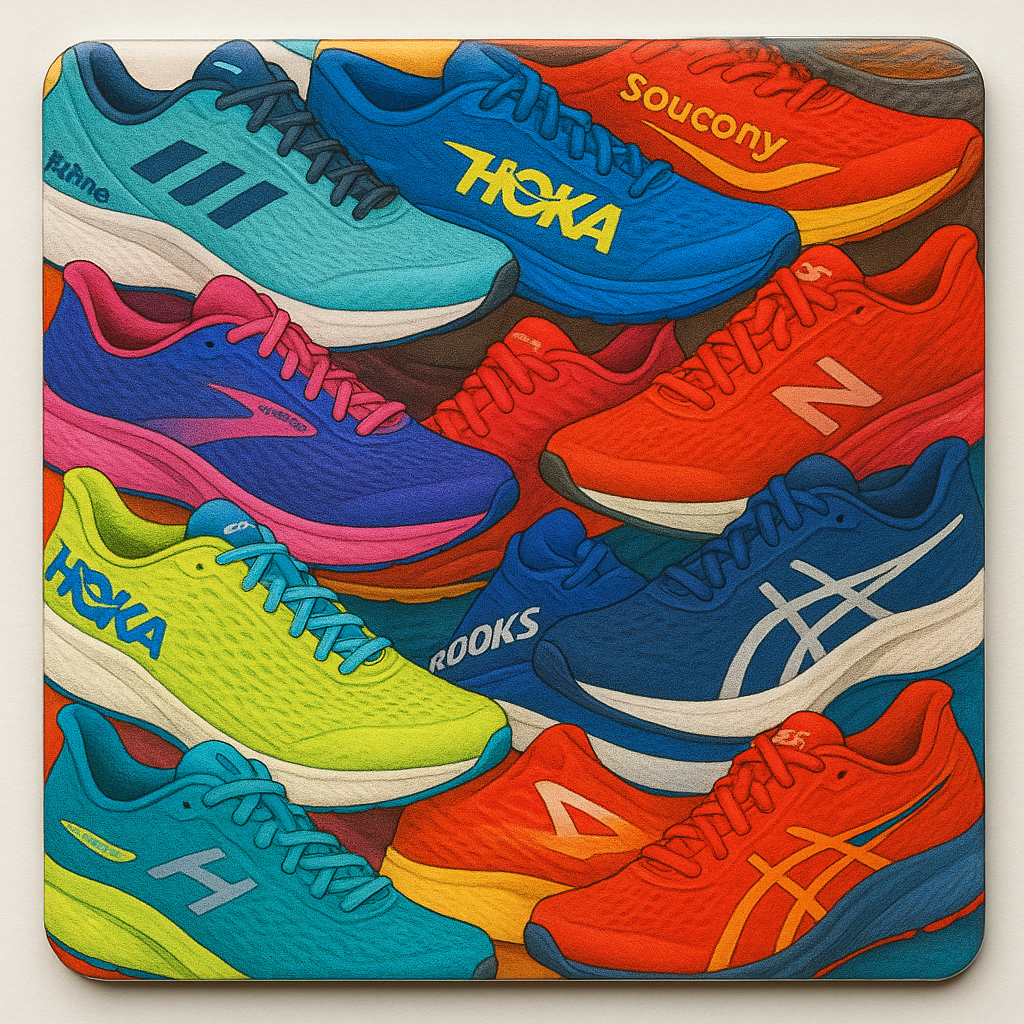
Let’s start with an honest acknowledgment: the running shoe industry is a business, and it exists — rightly so — to make money. It funds innovation, supports elite athletes, keeps local running stores alive, and gives enthusiasts plenty to explore in terms of foams, stacks, and plates.
These days, we’re told we need five different shoes, a separate pair for every type of run, or a $250 super shoe to shave off a few seconds. The marketing is seductive, and the science is often framed to sell, not necessarily to serve. Somewhere along the way, we confuse elite needs with our own.
That 4% improvement often quoted in reference to super shoes? It’s real — under lab conditions, on elite runners with dialed-in form, biomechanics, and training. But those gains are far from guaranteed for the average recreational runner, especially when we’re carrying a few extra pounds or chasing different goals entirely.
The running shoe world has become a maze, full of options, performance promises, and confusing categories. It’s time we step back and simplify.
We Are Not Elites — And That’s the Point
I’ve run three full marathons and currently focus on the Half Marathon. I train seriously — peaking at around 50–60 km per week during racing blocks — and I usually race three to four half marathons per year. My best time is 1:58, and I’m working toward 1:45 (that’s about 5:00 min/km). I know my capabilities and embrace them fully.
That’s the perspective I write from. Not from the front of the pack, but from the real heart of this sport — the middle.
And here’s the truth: most of us are recreational runners. We run for joy, for sanity, for fitness, for connection. Yet, somehow, we’ve been sold the idea that unless we’re using the same shoes as Kipchoge or Clayton Young, we’re missing out.
Let me give you an example. At a recent half marathon race, I stood in the corral next to a man about my age, wearing the ASICS Metaspeed Sky Paris — a $250 elite-level race shoe. He and I finished the race side by side, both clocking in just under two hours. Did he need that shoe? Did I? Probably not.
Or think about this: We obsess over finding a shoe that’s 30 grams lighter — when many of us are carrying 3, 5, or even 10 extra pounds. The impact of that difference? Marginal at best. The impact of good habits, recovery, and mental resilience? Immeasurable.
The sooner we accept that we are not elite — and that this is something to celebrate, not correct — the sooner we can approach shoes, gear, and training with clarity, purpose, and sanity.
My Proposal: The Two-Shoe Rotation
So here’s my philosophy, shaped by years of running, testing, and reflecting:
Most runners only need two shoes. That’s it. Two.
One for the daily work. One for the long run and race day.
We don’t need five shoes. We don’t need to juggle plates, pebax, and polymers. If a “workhorse” is what a daily trainer is supposed to be, then let it work. And because the long run is the most important run of the week, then let’s give it a shoe that respects the distance, one that can also double as our race companion.
This rotation not only gives you the right tool for each job, but also:
- Prolongs the life of each shoe by allowing midsoles to decompress.
- Lets your body adapt to different geometries and stress points.
- Saves money, space, and spares you the decision fatigue.
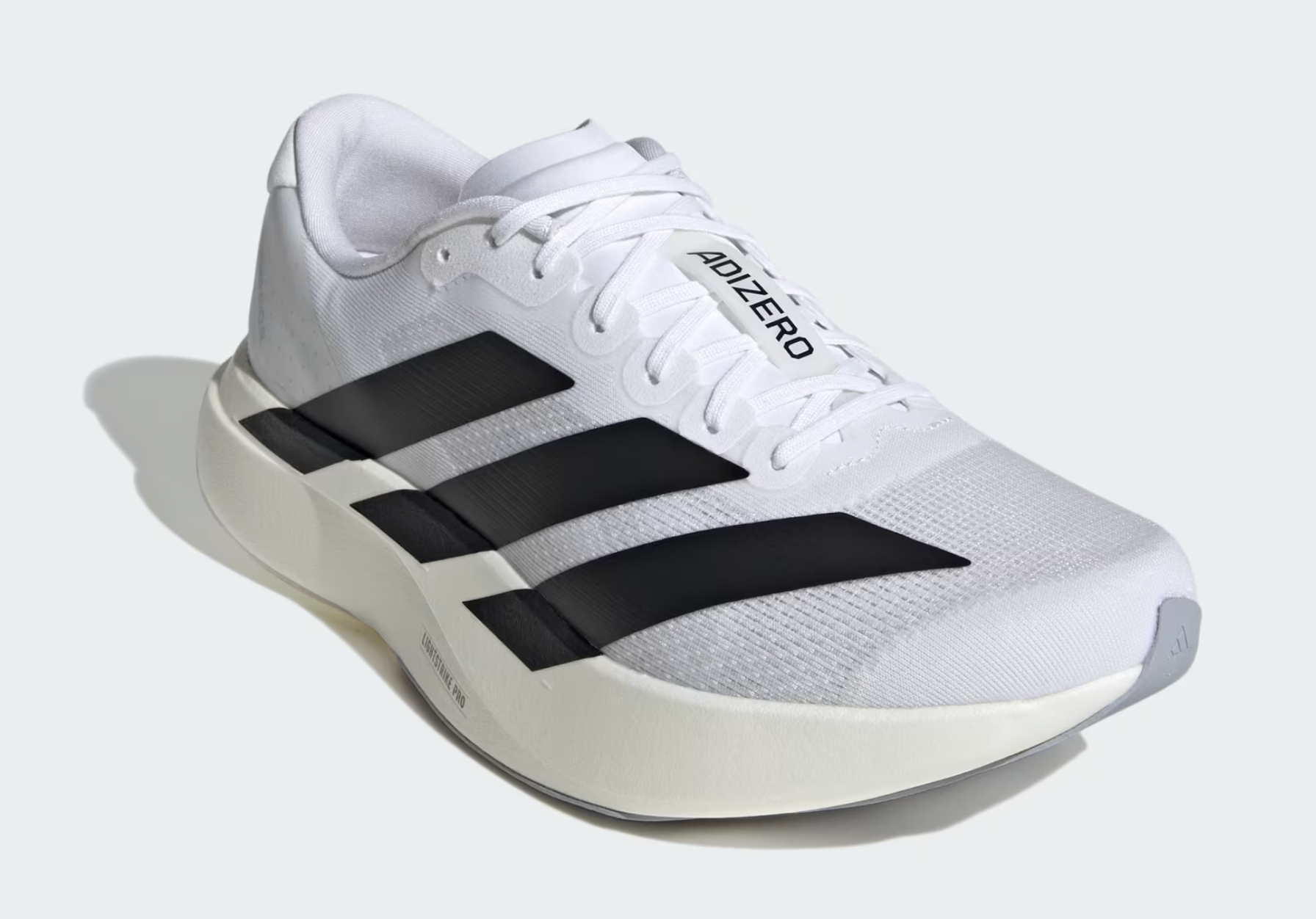
Source: adidas.
Here’s how this looks across popular brands:
ADIDAS:
Daily Trainer: Adizero SL2
Tempo/Long/Race: Adizero EVO SL
→ The SL2 is light, responsive, and forgiving. EVO SL 13 adds a bit of snap and structure for longer miles and race efforts.
ASICS:
Daily Trainer: Novablast 5
Tempo/Long/Race: Superblast 2
→ Lightweight, bouncy, fun. Superblast has enough punch for race day, and Novablast does it all.
BROOKS:
Daily Trainer: Launch 10 or Ghost 17
Tempo/Long/Race: Hyperion Max (or Max 2)
→ Hyperion Max gives you lightweight, race-worthy energy. Ghost/Launch offers comfort and consistency.
HOKA:
Daily Trainer: Mach 6
Tempo/Long/Race: Gap here.
→ Mach 6 is light, snappy, and fun. But HOKA still lacks a truly ideal long run shoe that isn’t plated. Many runners pair the Mach with a Superblast from ASICS or SC Trainer from New Balance.
NEW BALANCE:
Daily Trainer: FuelCell Rebel v5
Tempo/Long/Race: FuelCell SC Trainer v3
→ The Rebel is lightweight, low-profile, and a joy for short and medium runs. SC Trainer is surprisingly nimble and plush for big days and race events.
SAUCONY:
Daily Trainer: Ride 18
Tempo/Long/Race: Endorphin Speed 5
→ The Ride is a dependable daily workhorse, while the Endorphin Speed offers a snappier, more propulsive ride perfect for long efforts and race day without being overly aggressive.
In Conclusion: Run With Heart, Not Hype
Running is not a consumer sport. It’s a passion. It’s not about foams or plates or grams — it’s about showing up.
Every day, across the globe, runners lace up for reasons that have nothing to do with elite status:
- To feel better
- To heal from something
- To stay sane in a noisy world
- To take care of themselves
- To honor someone they love
- To belong
And none of those reasons require five pairs of shoes or a $250 racing flat.
You don’t need the lightest shoe. You don’t need a carbon plate. What you need is consistency. A clear, simple plan. A shoe that works for you.
So to all the recreational runners out there, I salute you. You’re the heart and soul of this sport. Whether you’re logging 5Ks or training for a full marathon, you’re doing the work. The grind. The good stuff. You don’t need complexity. You just need to keep going.
Two shoes. One purpose. Every mile.
Now go run your miles!
© Francesc Borrull, 2025

 Francesc Borrull