
By Francesc Borrull · September 8, 2025
In 2002, I made the decision—completely on my own—to move to the United States. I wasn’t a child being brought here by a parent. I was already an adult, with a job where I was born. But the job wasn’t stable, and something inside me was restless. When a teaching opportunity came up 7,000 miles away, I took it.
Looking back, that choice makes even more sense now than it did back then. Because what I’ve come to realize is that the American mindset—especially when it comes to work and opportunity—is fundamentally different from the mindset I grew up around.
This isn’t a criticism of my home country. It’s a reflection. A personal observation. And one that continues to fascinate me every day I live and work in the United States.
The main difference? In America, people move. They act. They don’t wait around for conditions to be perfect. They just go. If something doesn’t work—whether it’s a job, a city, a lifestyle—they start over. Sometimes immediately.
I call this the “Day After Mentality.” And I admire it deeply.
Americans Move—Quickly, Boldly, Without Waiting
One of the things that first struck me after arriving in the U.S. was how mobile people are. And not just mobile in the physical sense, but mentally ready to take a leap.
I work in a large public school district, and I’ve seen it over and over again: colleagues who pack up and move to a different state at the drop of a hat. One teacher left for Tennessee, another headed to New Hampshire. They left on a Friday and started their new jobs the following Monday.
That’s the American spirit in action. It’s fast, bold, and unapologetically proactive. It’s not that people don’t feel fear or uncertainty—they do. But they move anyway.
Where I come from, things play out very differently. People are born in a town, and many stay there their whole lives. Even when a job becomes available just 10 miles away, some won’t take it—because they don’t want to drive. They want to walk to work. And if that job isn’t within walking distance, they’ll simply remain unemployed.
It’s not necessarily laziness—it’s often habit, comfort, or deep attachment to community. But it creates a kind of paralysis. A waiting game. And in many cases, people get used to being idle, especially because the system allows it.
The Grapes of Wrath and the American Spirit of Reinvention
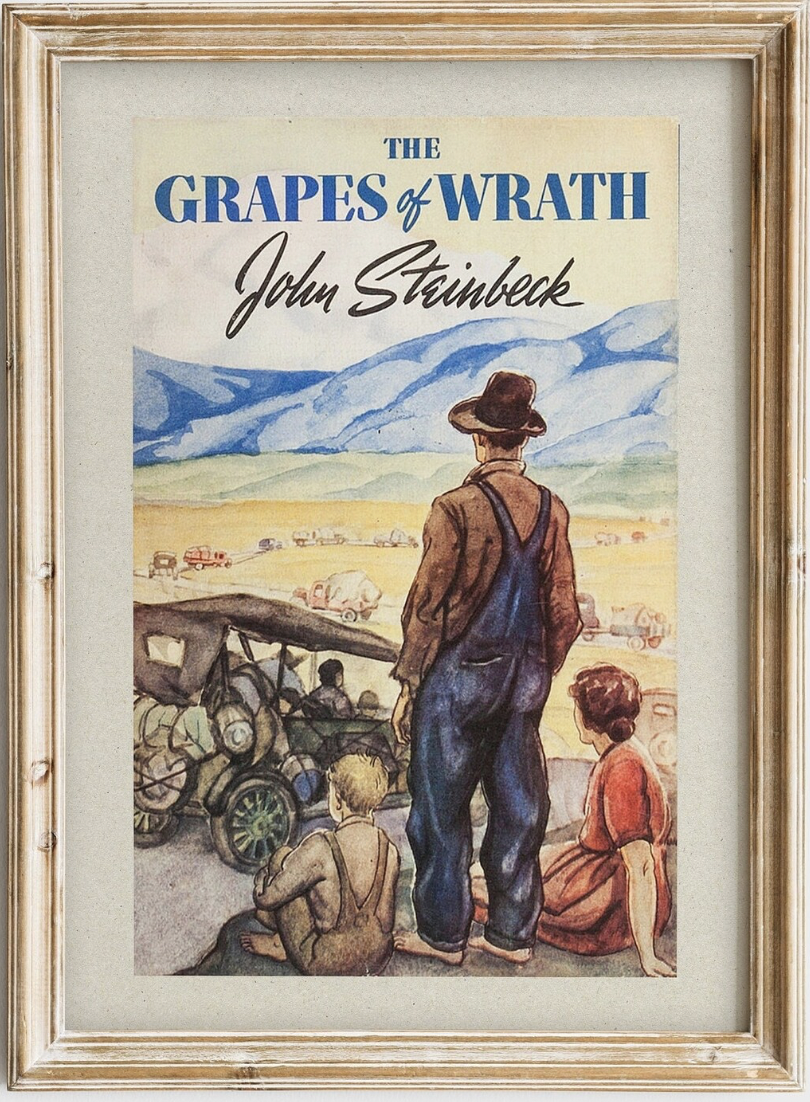
Not long ago, I was talking with a coworker about this very topic, and The Grapes of Wrath came up.
The story of the Joad family, forced to leave everything behind and move West in search of a better future, is not just a literary moment—it’s a mindset. Tom Joad and his family don’t sit around waiting for change to come to them. They pack up and go, even if they don’t know what’s waiting on the other side.
And what’s incredible is that I’ve seen that same determination in people around me—teachers, parents, neighbors—who, when faced with difficulty, move. Not in a month. Not after overthinking it. They act. They respond.
They don’t need the perfect plan. They just need momentum.
Mindset, Incentives, and the Role of the System
Of course, some of this is shaped by how the systems work in each country.
In the United States, if you’re unemployed, you might qualify for benefits—but generally for a very limited time. There’s an expectation that you’ll look for work and get back on your feet.
Where I come from, you can receive unemployment benefits for up to two years. Two full years. That’s a long time to live off public money—and it often dulls the urgency to reenter the workforce. What’s more, some people even supplement those benefits with cash jobs under the table, essentially committing fraud. And here’s the irony: they’re cheating the very system that’s supporting them.
That’s not just about economics—it’s about mentality. It creates a culture where people wait. Where urgency is low. Where personal drive becomes optional.
In contrast, here in the U.S., the system nudges you to act. And culturally, people are wired to want to be productive, to stay in motion, to do something.
Starting a Business? One Country Builds, the Other Blocks
You see the same contrast when it comes to entrepreneurship.
In the U.S., it’s remarkably easy to start a business. In many states, you can file paperwork online and have your company registered in as little as 48 hours. There’s a spirit of encouragement. Take a chance. Try something. If you fail, try again.
Where I come from? It’s a bureaucratic maze. Permits, delays, fees, regulations—you could be waiting months just to open a small operation. And that kills initiative. It punishes the risk-taker and rewards the one who plays it safe.
No wonder the U.S. consistently ranks #1 in global innovation and R&D spending. No wonder it leads the world in GDP, in startup investment, in technological advancement. Because people here are allowed to try.
Meanwhile, where I’m from, the ultimate aspiration for many is to secure a government job. Why? Because once you get that position, you’re set for life—full benefits, guaranteed salary, minimal pressure.
One culture dreams of creating something new. The other dreams of being safe.
I Know Where I Stand
When I moved to the U.S., I was already aligned with this mindset. Otherwise, I wouldn’t have taken a job 7,000 miles away. I had no safety net. No guarantees. Just a belief that I could do more than wait for stability—I could go out and build it.
And even now, over two decades later, I still admire that same fire in others.
The colleagues who say, “This isn’t working—I’m going to change it.”
The people who pack up their lives and move across the country, not out of desperation, but out of possibility.
The students who dream big. The parents who hustle. The small business owners who risk it all for an idea.
This mentality is something I respect deeply. It’s not perfect. It’s not easy. But it’s alive. And it keeps this country moving forward.
What About You?
Have you seen this mindset in action? Have you ever picked up and started over—with little more than a job offer and a suitcase? Have you left comfort for growth?
If you have, I’d love to hear your story. Drop a comment. Let’s keep the conversation going. Because the “Day After Mentality” isn’t just an American trait. It’s a human one we can all learn from.
© Francesc Borrull, 2025
 Francesc Borrull