
By Francesc Borrull · September 22, 2025
Introduction
Jimi Hendrix was, without question, one of the greatest music artists ever to walk this planet. For me, he is not just a legend of rock history, but also one of my favorite artists—someone I got into in my early teens and still cherish to this day. This paper is both a tribute and an exploration: why Hendrix matters, why his music remains alive, and why I continue to hold him close after all these years.
The occasion for writing this is somber yet fitting: on September 18, 2025, it marked fifty-five years since Hendrix’s untimely death. He passed away in London in 1970, at only 27 years old, due to complications after taking sleeping pills. We won’t dwell on his passing here—his story is far too rich and luminous to reduce to tragedy—but it is important to note the brevity of his life. In just a few years, Hendrix changed the course of music forever.
How I Got Into Jimi Hendrix
I owe my earliest encounters with Hendrix to both luck and circumstance. I was already into music as a teenager—thanks in part to having an older brother, three years ahead of me, who opened doors I wouldn’t have walked through on my own. That age gap gave me the advantage of discovering things earlier, of hearing albums that were “for older kids.”
What made it even better was the variety. We didn’t lock ourselves into a single genre or artist. Our household embraced many different sounds, and that open-mindedness shaped me permanently. We lived by a simple principle: if you dig it, you dig it. And when I first heard Hendrix, I dug it immediately.
I think it was my sophomore year of high school when we first got our hands on a Hendrix record. It wasn’t even an official release—just a collection of tracks. I can’t remember the exact title, but I know for sure “Foxey Lady” was on there, and maybe “Fire” too. I remember lending that vinyl to a friend who kept it for what felt like forever—two or three months! I was furious. Books and records are sacred; you don’t lend them out, because people never return them. I harassed him daily until he finally brought it back.
By then, I had already bought Band of Gypsys, Hendrix’s live album with his new band. It was technically born out of contractual obligations, but artistically it was a revelation. “Machine Gun” blew my mind wide open, as did “Power of Soul.” That album was transformative. Around the same time, I picked up a bass guitar and soon transitioned to guitar itself. Hendrix was probably the reason—his sound and energy made me want to chase what he was doing.
From the first album with “those two cats from England” in the Jimi Hendrix Experience, to the experimental jams that trickled out of his Electric Ladyland studio long after his death, I devoured everything. Yes, I know Hendrix himself probably wouldn’t have released half of the posthumous material, but to me it all carried value. Every scrap of tape was a window into his world. If it had Hendrix’s name on it, I bought it.
Official Recordings
During his lifetime, Hendrix released only four official albums, a fact that’s almost unbelievable given the size of his influence. Each one is a universe in itself.
Are You Experienced (1967)
Hendrix’s debut is one of the most explosive first statements in rock history. Released in May 1967, it introduced the world to the Jimi Hendrix Experience and completely rewrote what the electric guitar could do. Critics immediately recognized the magnitude of what they were hearing—Melody Maker declared: “Hendrix is not merely ahead of his rivals, he’s ahead of himself.”
The record fused blues, psychedelia, and hard rock with sheer audacity. “Purple Haze” alone was like a lightning strike: distorted riffs, otherworldly solos, and Hendrix’s voice channeling both menace and charm. Foxey Lady carried the swagger of raw sexuality, while The Wind Cries Mary showed a surprising lyrical tenderness. The title track, Are You Experienced?, invited listeners into an altered state: not just drugs, but a new way of perceiving music itself.
Hendrix himself once said: “We’re trying to turn the sound into colors. You can feel the music, not just hear it.” That ethos is stamped across this album.
Axis: Bold as Love (1967)
Amazingly, Hendrix released his second album in the same year as his debut. If Are You Experienced was a detonation, Axis: Bold as Love was the refinement. Here Hendrix explored texture, melody, and atmosphere with far greater subtlety. Rolling Stone later noted: “Axis showed Hendrix as more than a pyrotechnic guitarist—it revealed him as a composer.”
Songs like Little Wing distilled immense emotion into a short, almost fragile piece—one that countless guitarists have since tried to emulate. Castles Made of Sand reflected Hendrix’s gift for storytelling, with haunting lyrics about impermanence and fate. Spanish Castle Magic leaned back into ferocious rock, but with a playful nod to the Seattle club where Hendrix cut his teeth.
Importantly, Axis also showed Hendrix’s deepening experimentation in the studio. He was beginning to see recording technology not as a means to capture sound, but as an instrument itself. “The studio is my church,” he once said.
Electric Ladyland (1968)
This double album was Hendrix’s masterpiece, and it remains one of the greatest achievements in rock. Released in 1968, it was sprawling, fearless, and kaleidoscopic. It was also the first and only album Hendrix produced entirely on his own, cementing his role as not just performer but visionary architect.
Tracks like Crosstown Traffic packed funk energy into two minutes, while 1983… (A Merman I Should Turn to Be)stretched into a surreal soundscape that blended psychedelia with avant-garde composition. And then there was Voodoo Child (Slight Return)—a storm in six minutes, the electric guitar speaking with volcanic power.
Of course, All Along the Watchtower became the album’s crown jewel. Bob Dylan himself later said: “It overwhelmed me. He took my song and made it something I could never do.” That cover is now the definitive version, the one etched into rock’s DNA.
Critic Robert Christgau once remarked: “Electric Ladyland is where Hendrix proves he wasn’t just the best guitarist alive—he was the most imaginative musician in rock.” I couldn’t agree more.
Band of Gypsys (1970)
Recorded live at the Fillmore East on New Year’s Eve 1969 and released in 1970, Band of Gypsys showed a new side of Hendrix. Gone were Noel Redding and Mitch Mitchell; in came Buddy Miles on drums and Billy Cox on bass. The result was funkier, more groove-driven, but no less revolutionary.
Machine Gun alone stands as one of Hendrix’s greatest achievements. With just guitar, bass, and drums, he recreated the sound of war—gunfire, helicopters, explosions—while also delivering one of the most searing anti-war statements ever made. Power of Soul and Who Knows revealed a Hendrix comfortable in looser, funk-driven jams.
Hendrix told an interviewer at the time: “It’s not just rock anymore. It’s rock, it’s blues, it’s funk, it’s everything mixed together. That’s the Band of Gypsys.” Even under the shadow of contractual obligations, Hendrix pushed forward.
Special Mentions:
Blues (1994)
This compilation of studio outtakes and live tracks was released long after Hendrix’s death, but it remains one of the most important documents of his artistry. For me personally, it was essential. I bought it as soon as it came out and studied it like the Bible. Red House is pure electric blues, while Hear My Train A Comin’ (acoustic) is Hendrix stripped bare—raw, aching, human. Born Under a Bad Sign shows him channeling Albert King but with his own unmistakable twist.
Guitarist John Mayer once said of this release: “Blues is where you see Hendrix not as a rock god but as a bluesman, which is what he always was underneath.” I couldn’t agree more.
The Jimi Hendrix Experience (Box Set, 2000)
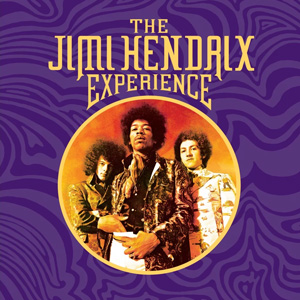
Released September 12, 2000, this four-disc box set is a treasure chest. With its purple cover and wealth of alternate takes, live cuts, and rarities, it was like rediscovering Hendrix all over again. I bought it the very day it came out, and it remains one of the crown jewels of my collection.
Highlights include his fiery live version of Johnny B. Goode—a personal favorite of mine and one of the most electrifying covers in rock history. The set also unearthed live recordings from Monterey, the Royal Albert Hall, and the Isle of Wight, showing Hendrix at the height of his powers.
As one critic wrote in Mojo: “This box set proves that Hendrix’s leftovers are better than most artists’ main courses.”
Jimi Hendrix’s Legacy
Here is where the story becomes myth. Hendrix’s career was short, but his legacy is eternal.
As a guitarist, his evolution was breathtaking: from backing up acts on the chitlin’ circuit, to fronting the Jimi Hendrix Experience, to becoming a global superstar at Monterey and Woodstock. He was an alchemist of sound.
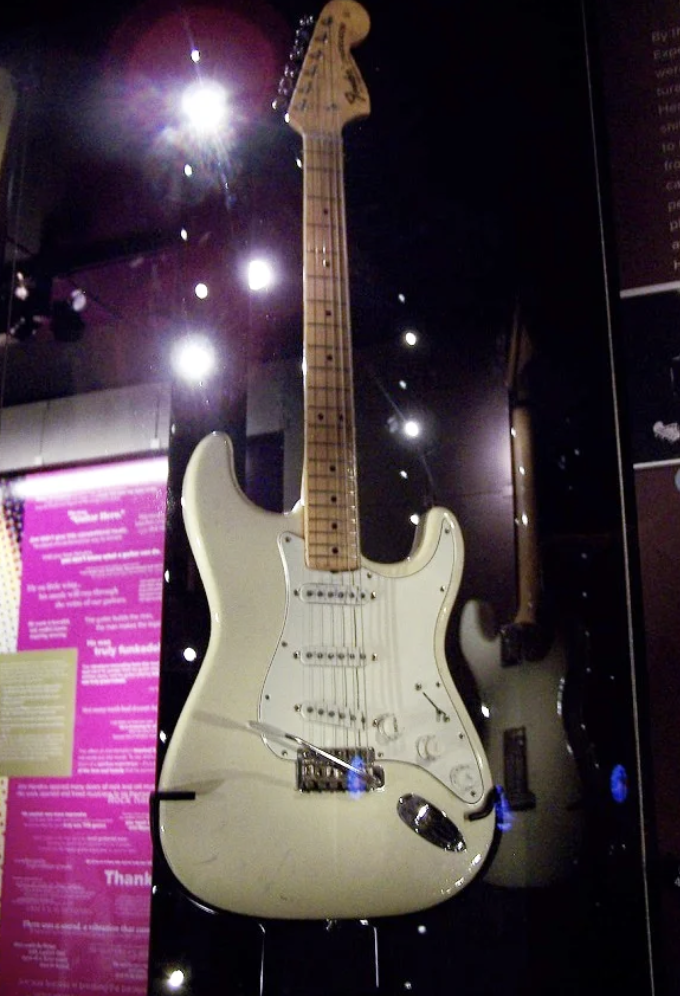
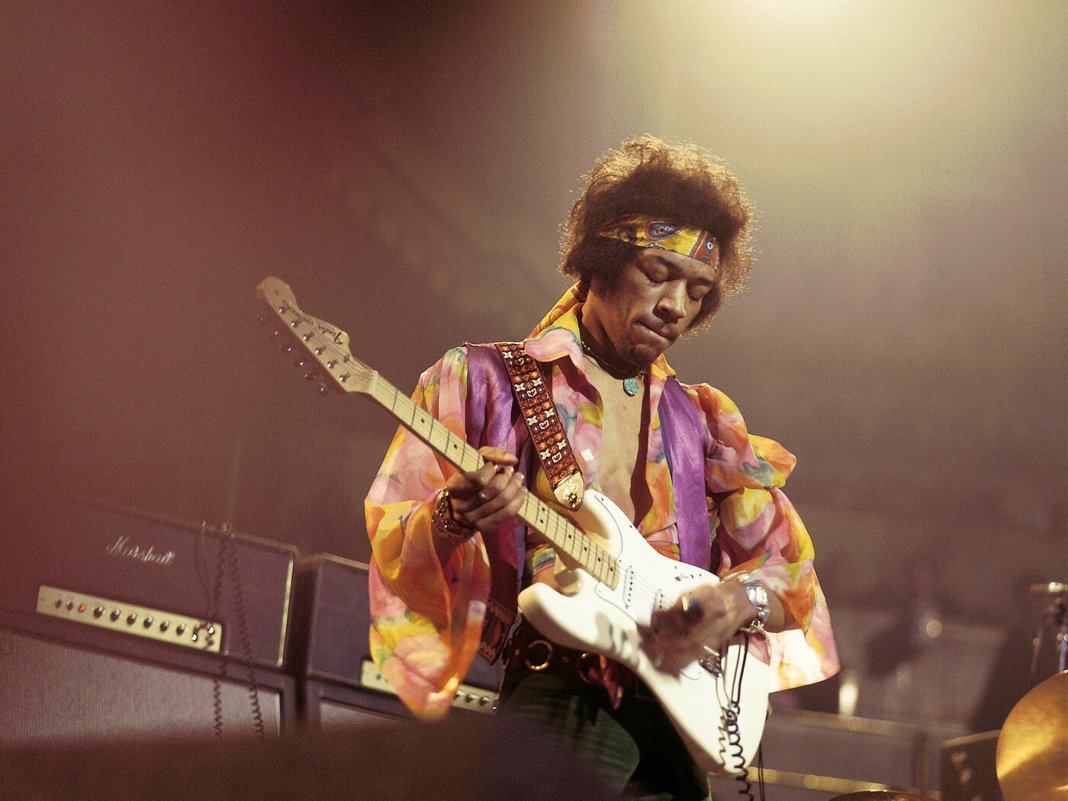
The Tools of the Trade: Hendrix loved the Fender Stratocaster, and he made it his weapon of choice. Pair that with Marshall amps—he didn’t play much else—and you had the foundation of his sonic empire. But tools alone don’t explain him. It was his imagination: feedback as melody, wah-wah pedals as extensions of the voice, playing with his teeth, behind his back, setting guitars ablaze. Onstage, his presence was as massive as his sound.
The Style: His solos weren’t about speed alone; they were about emotion. He blended blues, R&B, rock, and psychedelia in ways nobody had before. Listen to Little Wing—it’s a universe in under three minutes. Listen to Voodoo Child (Slight Return)—it’s the electric guitar becoming a storm.
The Influence: Without Hendrix, whole worlds of music wouldn’t exist. Funkadelic’s Eddie Hazel owed him everything. Stevie Ray Vaughan studied him like a bible. Gary Moore admitted the more he listened to Hendrix, the more he fell in love, even switching from his beloved Les Paul to a Stratocaster. Countless others—Prince, John Frusciante, Vernon Reid—walked the paths Hendrix opened.
The Reverence: His respect for Bob Dylan was profound. Mention Dylan and Hendrix lit up. His cover of All Along the Watchtower didn’t just honor Dylan—it surpassed him, becoming one of the most iconic rock tracks ever recorded.
The Covers: His live take on Sgt. Pepper’s Lonely Hearts Club Band, played in front of Paul McCartney and Eric Clapton just days after the Beatles released it, was boldness incarnate. His Johnny B. Goode cover remains one of my all-time favorite Hendrix tracks—electrifying, visionary, consequential.
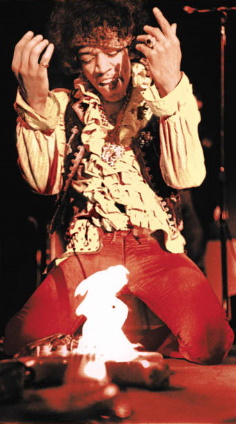
The Image: And of course, there is the unforgettable sight of Hendrix setting his guitar on fire at Monterey. More than spectacle, it became a defining image of rock itself: danger, passion, transcendence. A single act that crystallized a lifetime of rebellion and creativity.
Conclusion
Fifty-five years after his passing, Jimi Hendrix remains not only relevant but essential. His brief time on earth produced four official albums, yet those records—along with the countless live performances, posthumous releases, and compilations—still ripple across the musical universe. From Are You Experienced and its shocking debut of a new electric language, to the lyrical intimacy of Axis: Bold as Love, to the sprawling ambition of Electric Ladyland, and finally to the raw funk and protest of Band of Gypsys, Hendrix charted a course that no one before him had dared. The blues compilations, box sets, and archival treasures that continue to surface are proof that even his unfinished sketches hold value, like fragments of a great painter’s canvas.
But Hendrix’s greatness was never about quantity; it was about transformation. His guitar style—part bluesman, part cosmic explorer—redefined what it meant to play an instrument. His presence on stage made concerts feel like ceremonies, and his audacity in the studio broke open possibilities for generations to come. Artists from Stevie Ray Vaughan to Prince, from Eddie Hazel to Gary Moore, carry his fingerprints in their sound. Bob Dylan himself admitted Hendrix’s version of All Along the Watchtower was the definitive one. Hendrix didn’t just make music; he changed the way we think about music.
For me personally, Hendrix has been a constant companion since my teenage years, when I first stumbled across a vinyl with Foxey Lady and later lost myself in the thunder of Machine Gun. I collected every release I could find, studied his solos, and chased his spirit on the guitar. Decades later, his music still speaks to me with the same urgency. It’s not nostalgia—it’s a living connection.
So why does Hendrix matter? Because his music is timeless. Why does it remain alive? Because every generation of listeners discovers in his songs something daring, something free. And why do I hold him close after all these years? Because in a world overflowing with noise—political noise, cultural noise, meaningless chatter—Hendrix’s noise is the kind worth listening to. At the time, some dismissed his wild distortion and feedback as mere chaos, but in truth it was the sound of liberation, vision, and beauty. His noise wasn’t clutter; it was creation.
Fifty-five years later, I still turn to that noise—not as a distraction from the world, but as a reminder that possibility can be louder than despair. Hendrix gave us that, and for me, he always will.
© Francesc Borrull, 2025
 Francesc Borrull