
By Francesc Borrull · December 15, 2025
Between Thanksgiving and Christmas, the United States enters a peculiar season of contradiction.
It is, on paper, a time devoted to gratitude, reflection, generosity, and—if one takes the name of the holiday seriously—the anticipation of the birth of Christ. Yet in practice, it has become something else entirely: a ritualized frenzy of acquisition. Buy now. Buy more. Buy fast. Buy because others are buying. Buy because it’s discounted. Buy because it’s expected. Buy because it’s Christmas.
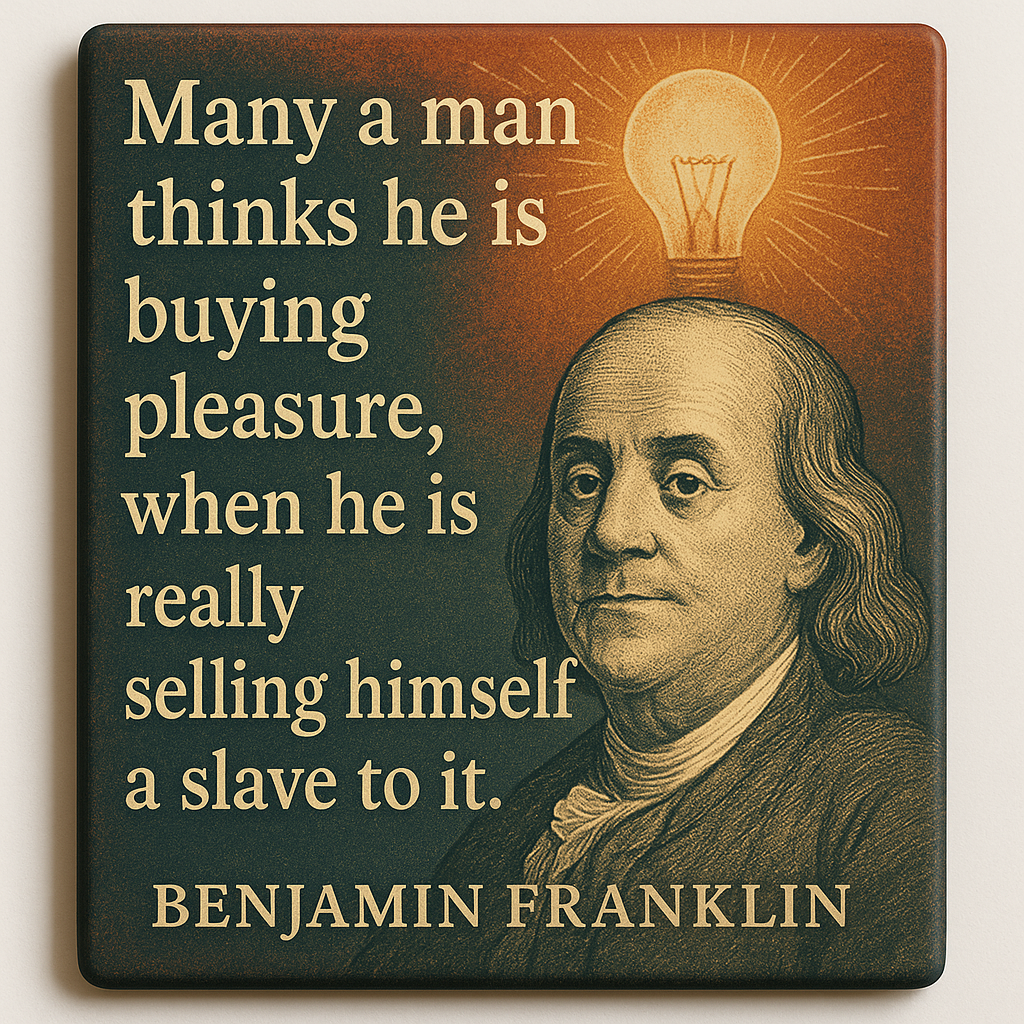
It is within this context that a deceptively simple line from Benjamin Franklin feels not merely relevant, but urgent:
“Many a man thinks he is buying pleasure, when he is really selling himself a slave to it.”
Franklin wrote this in an era without credit cards, algorithms, or targeted advertising. And yet, the psychological mechanism he identified has only intensified. This is not a quote about money alone. It is a quote about freedom.
The Illusion of Choice
Franklin’s brilliance lies in his choice of verbs. We think we are buying pleasure — a word that implies agency, autonomy, control. To buy is to decide. To buy is to choose. To buy is to exercise freedom. But Franklin suggests that this sense of choice is often illusory. What if, instead of buying pleasure, we are being bought by it?
Modern psychology has a name for this: motivated behavior driven by short-term reward systems. Dopamine does not reward fulfillment; it rewards anticipation. The pursuit feels better than the possession. The click, the order, the unboxing — not the ownership — delivers the neurological payoff.
This is why so many objects lose their charm almost immediately after acquisition. The pleasure was never fully in the thing itself — it was in the pursuit.
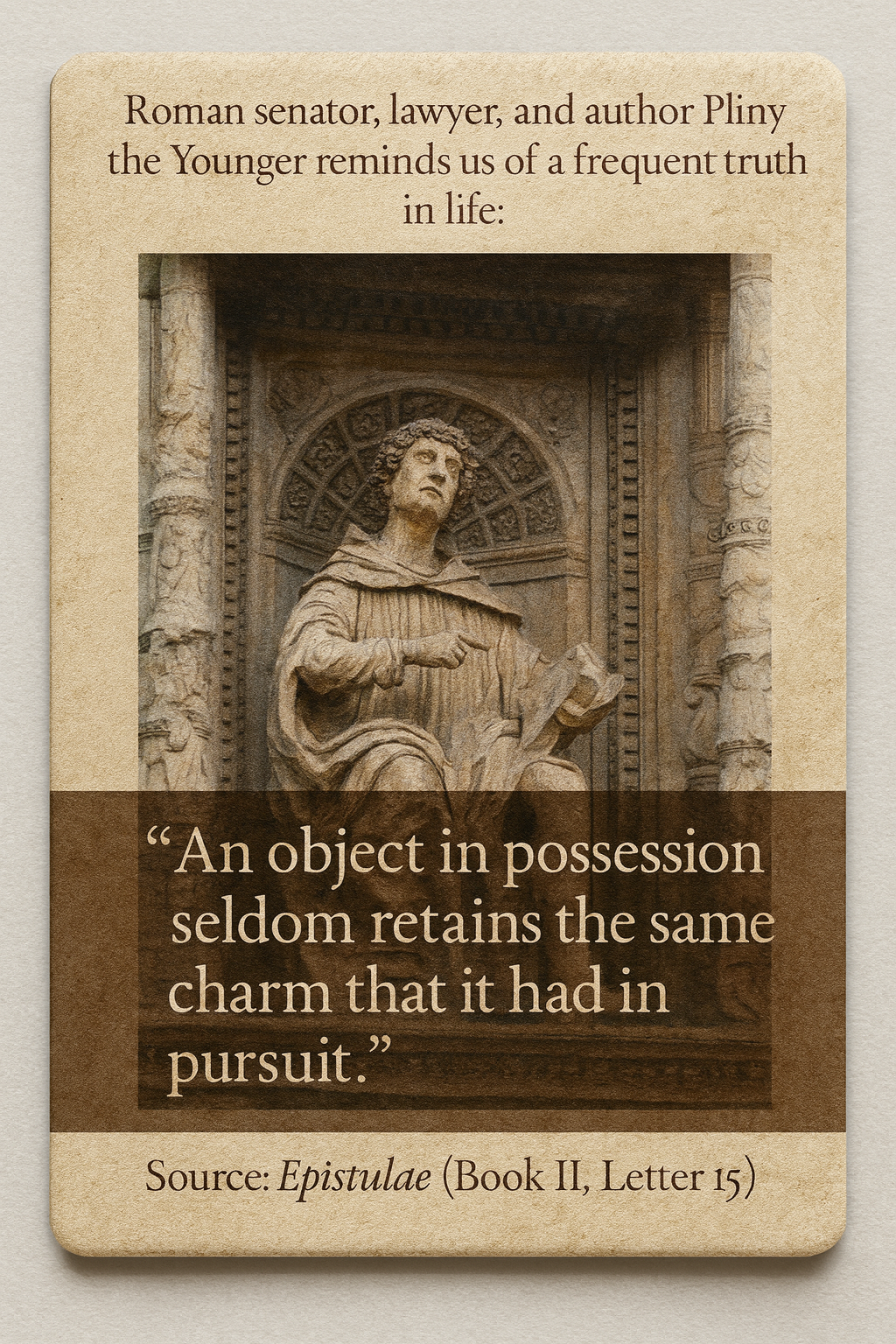
Pliny the Younger captured this with striking clarity nearly two millennia ago when he observed that “an object in possession seldom retains the same charm that it had in pursuit.” The line endures because it names something deeply human: anticipation animates us more than arrival. The movement toward a goal shapes us; the moment of possession rarely does.
Modern psychology confirms what Pliny intuited. Dopamine rewards anticipation, not ownership. The chase feels alive — charged with curiosity, possibility, and momentum. Possession, by contrast, is often quieter, flatter, sometimes even anticlimactic. And yet there is no failure in this. There is honesty.
Franklin understood what happens when this honesty is ignored. He saw that pleasure, when unexamined, does not liberate — it conditions. When the excitement of pursuit fades, we are tempted to repeat the chase, mistaking novelty for meaning and stimulation for fulfillment.
In this sense, Pliny explains the fading of charm; Franklin warns us about our response to it.
From Enjoyment to Enslavement
Franklin’s use of the word slave is not rhetorical excess. He is precise. To be enslaved is not merely to enjoy something often. It is to lose self-rule. Enslavement occurs when:
- Desire overrides intention
- Habit replaces choice
- Consumption dictates behavior
- Abstention feels like deprivation rather than freedom
This is why Franklin does not condemn pleasure itself. He condemns dependence.
The Stoics made the same distinction. Pleasure is not the enemy; attachment is. The problem is not enjoyment, but the erosion of autonomy that occurs when enjoyment becomes compulsory.
Freedom, for Franklin, as for the Stoics, was not political alone — it was psychological.
Frugality Is Not Austerity
There is a persistent misunderstanding in modern culture: that frugality is synonymous with deprivation. It is not. Frugality, properly understood, is a form of respect:
- Respect for one’s labor
- Respect for one’s resources
- Respect for one’s future self
Buying one high-quality item that lasts ten years is not materialism. It is discernment. It is patience. It is resistance to disposability.
Materialism is not measured by price — it is measured by dependence. A cheap object replaced annually enslaves more than a well-made one chosen once. The former creates a cycle; the latter ends one.
And yet, our culture rarely understands this distinction. Quantity masquerades as abundance. Accumulation masquerades as security. Franklin would have recognized the trap instantly.
Children, Contentment, and Cultural Resistance
Perhaps the most revealing indictment of consumer culture is how unnatural it is. Children are not born discontent. They are taught to be. Comparison precedes craving. Advertising precedes dissatisfaction. Envy must be cultivated.
A child who is content with what they have — who does not measure themselves against others, who does not equate worth with acquisition — is not missing something. They are demonstrating psychological health.
This kind of contentment is quietly radical. It resists an entire economic model built on manufactured dissatisfaction. Sociologists have long noted that consumer economies depend not on need, but on perpetual insufficiency. The system requires that “enough” never quite arrives. Franklin’s warning cuts directly against this logic.
The Holiday Paradox
Thanksgiving is meant to orient us toward gratitude. Christmas, toward humility, incarnation, and gift as grace rather than transaction. And yet, for many, the weeks between them become a season of:
- Debt accumulation
- Stress amplification
- Performative generosity
- Moral outsourcing (“I bought something, therefore I cared”)
Credit allows pleasure now and consequence later — the perfect mechanism for enslavement. Buy today, pay tomorrow, worry indefinitely.
From a psychological standpoint, this delays discomfort while guaranteeing it. From a moral standpoint, it fractures responsibility. From a societal standpoint, it fuels an unsustainable cycle of overproduction and waste.
Franklin would have recognized this as a particularly elegant form of bondage: one entered willingly, cheerfully, even joyfully.
Buying as Inertia
One of the least discussed forces in consumerism is inertia. People buy not because they want, but because it is time to buy. Because the calendar says so. Because the sale exists. Because the ritual demands participation. Black Friday does not sell products; it sells permission — permission to suspend judgment.
Franklin’s quote is devastating here because it restores judgment. It asks a question modern culture would prefer we not ask:
Who benefits from this pleasure — and who pays for it?
Often, the answer is not the same person.
Reclaiming Freedom
Franklin was not advocating joylessness. He was advocating self-possession. True pleasure, the kind that endures, does not diminish freedom — it deepens it. It aligns with values. It leaves no residue of regret. It does not require repetition to justify itself.
The antidote to enslavement is not abstinence, but awareness. To pause. To ask. To choose deliberately.
In a season that encourages excess, restraint becomes a form of clarity. In a culture that equates buying with being, contentment becomes an act of quiet resistance. Franklin’s wisdom endures because it is not moralistic — it is diagnostic. He is not telling us what to do. He is showing us what happens.
A Final Thought
Freedom is not the absence of desire. It is the ability to not obey it. As the year draws to a close, perhaps the most radical gift we can give ourselves — and our children — is not another object, but the example of a life not governed by compulsion.
Franklin would approve. And more importantly, so would our future selves.
© Francesc Borrull, 2025
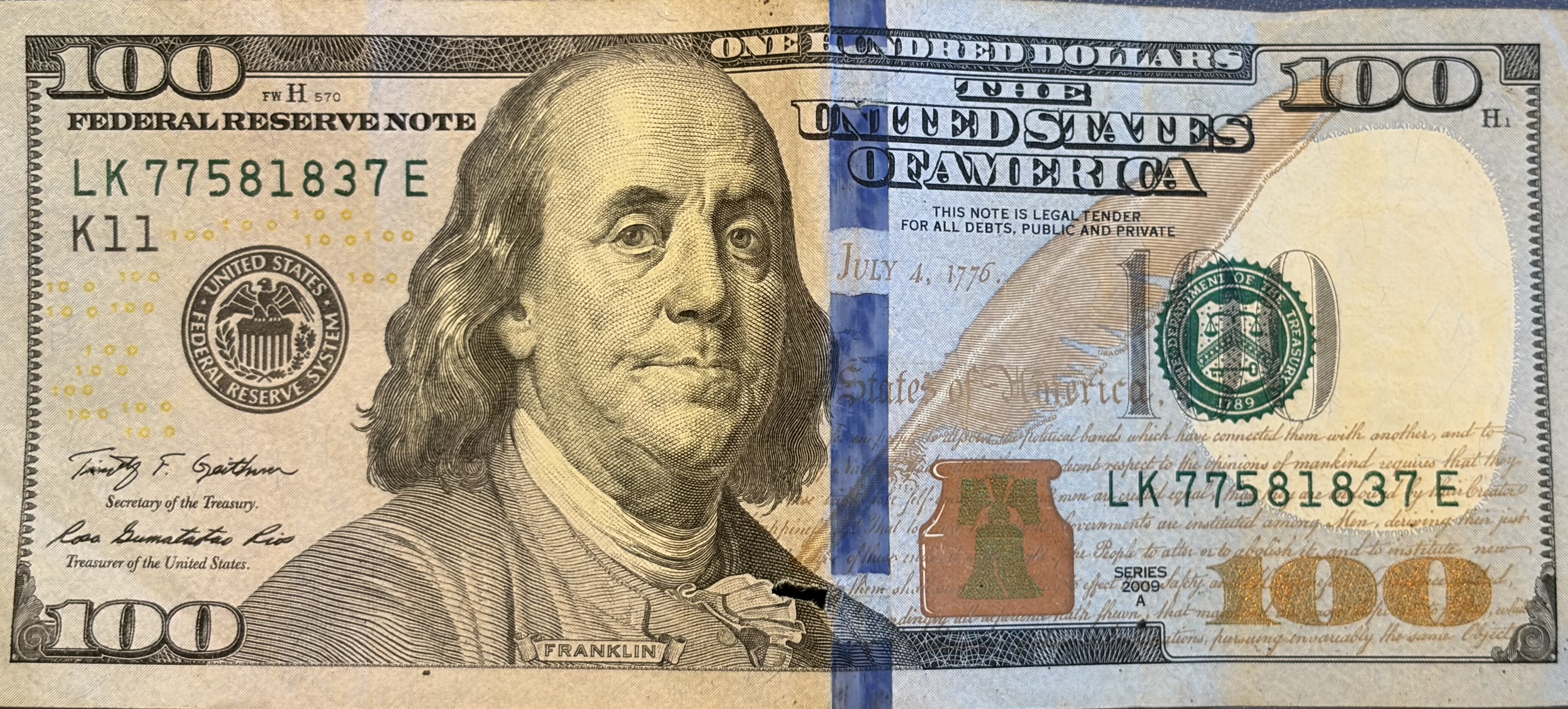
P.S. There is a quiet irony in the fact that Benjamin Franklin’s portrait appears on the U.S. one-hundred-dollar bill. Franklin was unquestionably wealthy, yet he retired early, stepped away from profit, and spent the better part of his life in public service, science, and civic thought. Money, for him, was a means to independence — not a measure of worth.
Perhaps the contradiction is not Franklin’s, but ours. His face now circulates through a culture that often mistakes consumption for freedom and debt for pleasure. In that sense, the bill does not celebrate what Franklin stood for; it quietly reminds us of how far we’ve drifted from it.
 Francesc Borrull