
By Francesc Borrull · January 26, 2026
Note to the reader: This essay contains mild spoilers.
In recent years, “prestige television” has become a familiar label, often applied to shows that are formally ambitious, visually refined, and conceptually bold. Yet not all prestige operates in the same register, nor does it resonate equally with all viewers. Over time, I’ve come to understand that my own engagement with television is governed by a specific aesthetic hierarchy—one that privileges human experience over conceptual ingenuity.
The realization can be distilled simply:
I do not connect to ideas in isolation.
I connect to people inside ideas.
This distinction has helped me understand why certain widely acclaimed series feel distant to me, while others—sometimes quieter, less ostentatious—feel profound and enduring.
Concept-led storytelling and its limits
Many contemporary series begin with a strong speculative or structural premise. The question driving them is often implicit: What if this existed? These shows tend to foreground design, symmetry, and allegory. Their worlds are carefully calibrated; their metaphors tightly controlled. For many viewers, this precision is exhilarating; for me, it often produces emotional distance.
Concept-led storytelling risks subordinating character to structure. When characters primarily exist to demonstrate an idea, the result may be intellectually satisfying but experientially thin. The story unfolds as a puzzle rather than a lived reality. Everything fits, but nothing leaks.
This is why certain celebrated series never fully engaged me, despite my willingness to meet them halfway. They were allegories first and human stories second—clever, controlled, schematic. I admired the craft, but I did not feel implicated.
This tension is especially visible in concept-led series such as Severance. Despite its formal ingenuity and meticulous design, the show operates primarily as an allegory, asking the viewer to contemplate an idea before inviting emotional attachment. For some audiences, this intellectual distance is precisely its appeal. For me, however, the characters remain subordinated to the conceptual architecture, resulting in an experience that is formally impressive yet emotionally inert.
The human pivot: from abstraction to consequence
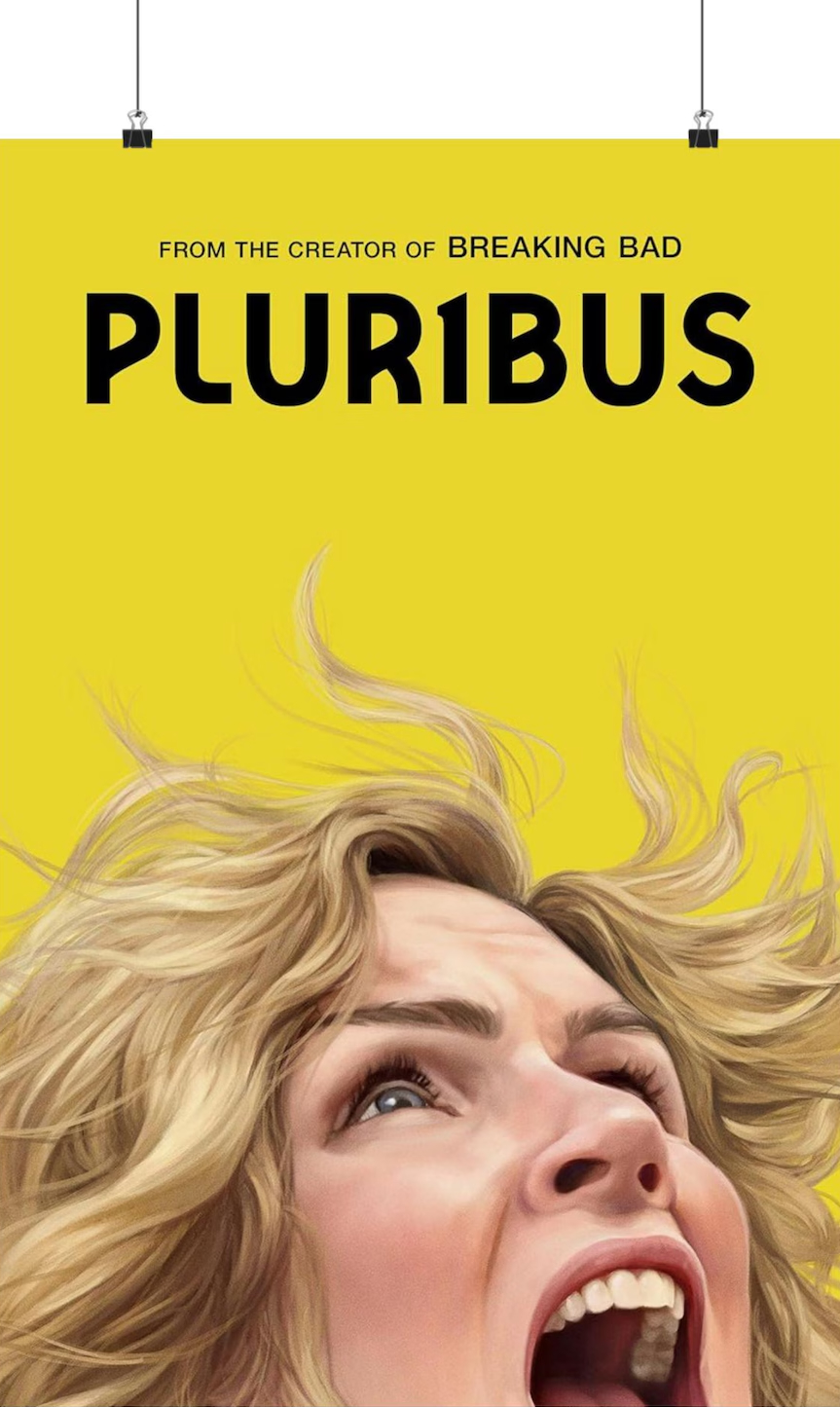
My experience watching Pluribus clarified this tension sharply. For several episodes, the show remained interesting but inert. The premise was intriguing, the execution competent, yet the narrative felt theoretical—an idea being demonstrated rather than a life being shaped.
In Episode 5, that changed. The story pivoted around a moral decision: communication, responsibility, consequence. The narrative moved from abstraction to action. What mattered was no longer what existed, but what had to be done. That shift—from concept to consequence—was the moment the series became compelling.
The fact that it took five episodes to arrive there, however, remains significant. I find it increasingly difficult to accept the idea that emotional engagement should be deferred, as if humanity were a later narrative reward rather than the foundation.
Why HBO often works—for me
This framework also explains my long-standing affinity for HBO’s best work, even as I remain fully aware that not all HBO series are great, nor uniformly so.
At its strongest, HBO begins with a different question:
Who is this person, and what does this do to them?
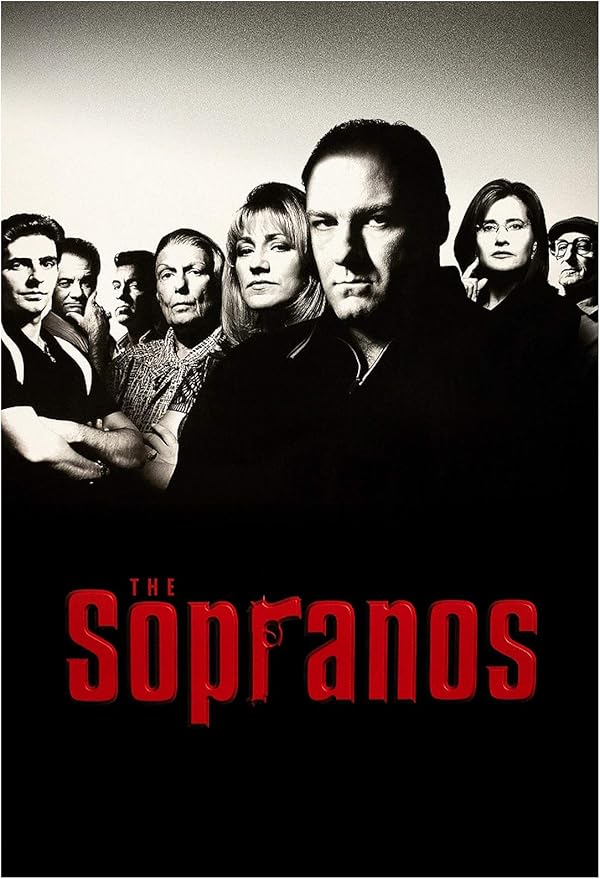
Consider The Sopranos, which remains, for me, the greatest television series ever made. Its genius lies not in its premise—a mob boss in therapy—but in its relentless attention to psychological contradiction. Tony Soprano is not a symbol; he is a man whose desires, violence, tenderness, and self-deception coexist without resolution. The show’s ideas about capitalism, masculinity, and American decay emerge organically from character, not abstraction.
Similarly, Succession operates less as a satire of wealth than as an anatomy of emotional deprivation. Its brilliance lies in how power corrodes intimacy. The Roy children are not stand-ins for concepts; they are damaged individuals whose inability to love or be loved gives the series its tragic weight. The show’s sharpness flows from character, not design. (For a more extensive analysis, see my essay on Succession published on Creative Cadence.)
Even a non-HBO example like Homeland—despite its uneven later seasons—worked for me precisely because it anchored its geopolitical ideas in unstable, morally compromised individuals. Carrie Mathison’s brilliance and fragility were inseparable; the stakes were personal before they were political.
The Pitt: urgency, interiority, and moral pressure
Watching Season 1 of The Pitt sharpened this framework further—and, in some ways, tested it.
On paper, the series risks collapsing into procedural efficiency: a high-pressure emergency department, relentless pacing, overlapping crises. Yet what distinguishes The Pitt—at least in its strongest stretches—is its refusal to let urgency erase interiority. The show understands that speed does not negate humanity; it amplifies it.
What consistently held me was not the medical spectacle, but the moral pressure exerted on individuals forced to act without certainty, rest, or emotional closure. Decisions are made under exhaustion. Compassion collides with protocol. Responsibility arrives before clarity. These are not characters illustrating a thesis; they are people absorbing consequences in real time.
There were moments—many of them—when the show kept me on the edge of my seat. And there were moments when it broke through my defenses entirely. I cried—not once, but more than once—because the suffering felt earned, proximate, and human.
When scale threatens intimacy
And yet, nothing is immune to strain.
When the mass-shooting arc entered the narrative and the ER was evacuated to accommodate only the shooting victims, I felt a subtle but meaningful shift. The show’s moral center narrowed. Individual complexity gave way, at times, to logistical choreography and heightened spectacle. The pressure remained, but the intimacy thinned.
This does not negate the achievement of the season. It complicates it.
What I felt was not rejection, but loss—loss of the delicate balance the show had previously maintained between scale and subjectivity. The quality did not collapse, but it wavered. The people inside the crisis occasionally receded behind the mechanics of the crisis itself.
That this slippage was noticeable is, paradoxically, a testament to how strong the human foundation had been.
Counterexamples matter
This perspective also clarifies why certain HBO series failed to sustain my interest. Game of Thrones is the clearest example. Early seasons succeeded because political intrigue was grounded in character psychology and consequence. Over time—particularly in seasons six through eight—the series increasingly privileged spectacle, acceleration, and payoff over internal coherence. Characters began to serve plot mechanics rather than moral logic.
The result was technically impressive but emotionally hollow.
Prestige alone is not enough. Production value, scale, and ambition cannot compensate for the erosion of human credibility.
Exceptions that confirm the rule
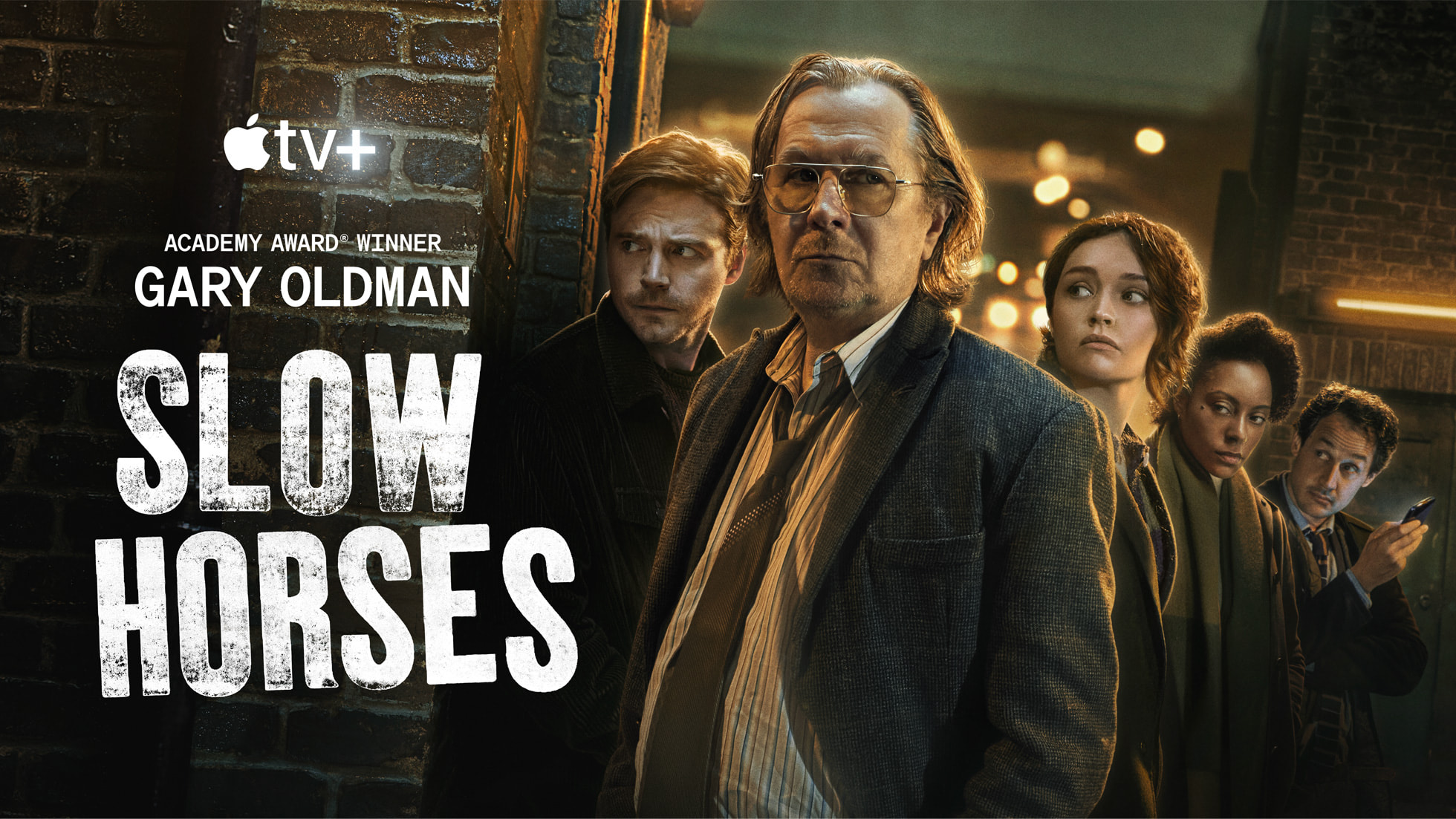
This is not an indictment of platforms. Apple TV+, for instance, has produced work I genuinely admire. Slow Horses succeeded immediately for me because it foregrounded damaged, weary characters over espionage mechanics. Ted Lasso and Shrinking work because they are emotionally transparent, unembarrassed by vulnerability, and invested in contradiction.
These series do not contradict my framework; they confirm it. When human experience leads, ideas follow naturally.
Taste as a form of ethics
Understanding this pattern feels less like a matter of preference and more like a form of self-knowledge. My taste consistently gravitates toward work defined by clarity, authenticity, depth, elegance, and substance. I am drawn to stories that feel inhabited rather than engineered, permeable rather than sealed.
As a viewer—and as a writer—this distinction matters.
Ideas are essential. But they do not move me unless they are filtered through flawed, vulnerable human beings. Meaning does not arise from conceptual ingenuity alone, but from the consequences of living inside an idea.
Stories endure not because they are clever, but because they are human.
© Francesc Borrull, 2026

 Francesc Borrull