
By Francesc Borrull · March 9, 2026
I. The Banquet Where Truth Dies
The story of Salome is one of the most unsettling episodes in the Gospel — not because of cruelty alone, but because of how casually that cruelty is enacted.
In the Gospel of Mark (6:14–29), the narrative momentarily steps backward. Herod hears rumors about Jesus, and those rumors awaken a memory he cannot silence: John the Baptist, the prophet he imprisoned and then executed. What follows is not merely a flashback, but an anatomy of guilt.
Herod hosts a banquet. His stepdaughter dances. The guests are pleased. Caught in the trap of his own words, Herod promises the girl anything she asks. She hesitates, consults her mother, Herodias — and returns with an unthinkable request: the head of John the Baptist.
Mark is careful here. Herod is distressed. He fears John. He knows he is righteous and holy. He has protected him before. And yet, in front of his guests, bound by an oath he never should have made, Herod gives the order.
John is killed not by hatred, but by weakness afraid of losing status.
That is the real violence of this story. Power does not act decisively; it collapses. Truth does not lose an argument; it is silenced by cowardice. John dies because he names what is wrong — because he tells the truth to power — and because power cannot bear the cost of listening.
Mark sharpens the contrast further. Herod’s banquet ends in death. Jesus’ meals, throughout the Gospel, give life. One feast is governed by appearances, fear, and vanity. The other by compassion, truth, and invitation. The opposition could not be clearer.
II. Salome Between Scripture, History, and Imagination
One of the most unsettling choices Mark makes is also one of the most restrained: he never names the girl.
She is not Salome in the Gospel. She is simply “the daughter of Herodias.” The focus remains where it belongs — not on erotic spectacle, but on moral responsibility. The horror is not desire, but cowardice. Not transgression, but abdication.
Later history fills in the name. The historian Josephus identifies her as Salome, daughter of Herodias and stepdaughter of Herod Antipas. Once named, she becomes available to imagination — and imagination does not resist her.
By the late nineteenth century, Salome has transformed from a narrative function into a cultural obsession. This is where literature intervenes decisively, most notably with Oscar Wilde.
Wilde’s Salomé (1891), written in French, abandons biblical restraint entirely. His Salome is desire incarnate: obsessive, transgressive, lyrical, and cruel. She does not stumble into violence; she wills it. John the Baptist becomes an object of fixation. The severed head, no longer an aftermath, becomes the climax.
Wilde does not misunderstand the Gospel — he rewrites it for a world intoxicated by aesthetic extremity. In his hands, Salome is no longer a mirror reflecting weak power; she is an active force of destruction. The story shifts from ethics to psychology, from cowardice to obsession.
This literary transformation prepares the ground for music.
III. Strauss and the Sound of Transgression
When Richard Strauss adapted Wilde’s play into his opera Salome (1905), the story crossed another threshold. Strauss did not merely set Wilde’s words to music; he intensified them.
The orchestra cuts like a blade. Desire, fear, revulsion, and ecstasy collapse into one another. Strauss’s Salome is overwhelming — musically, psychologically, morally. The famous “Dance of the Seven Veils” is not decoration; it is coercion. By the time John’s head appears, the listener has already been dragged through excess.
Strauss asks a different question than Mark.
Mark asks: What does fear do to power?
Strauss asks: What does desire do to truth?
Both arrive at violence, but by radically different paths.
IV. Walking, Listening, Remembering
I realized only recently that I had lived with this story long before I understood it — not first through Scripture, but through music.
In the summer of 2000, I walked El Camino de Santiago. Along the way, I met a high school principal from Santander who had brought about twenty students with him. We walked together for weeks. We talked about education, religion, culture, politics — and opera.
We discussed Rigoletto in detail: power, cruelty, innocence destroyed, the violence of men who mistake authority for entitlement. After reaching Santiago de Compostela, I accepted his invitation to visit him in Santander, a beautiful city by the Mar Cantábrico.
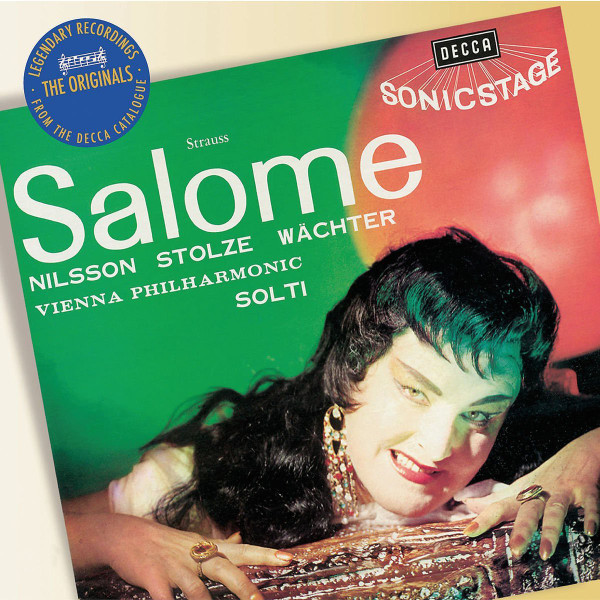
Wanting to reciprocate his generosity, I went to El Corte Inglés to buy him a gift. He loved Italian opera. I had spoken to him about German opera — Wagner and Strauss — which he barely knew. Then I saw it: the Decca recording of Salome, conducted by Georg Solti.
He put it on immediately. Loud. The room transformed. The orchestra filled the space, violent and luminous at once. Two educators — once strangers — stood listening, bonded by walking, conversation, and sound.
Only now do I see how perfectly that moment aligns with the Gospel story: art entering a life before its meaning becomes clear.
V. The Long Shadow of Salome in Art
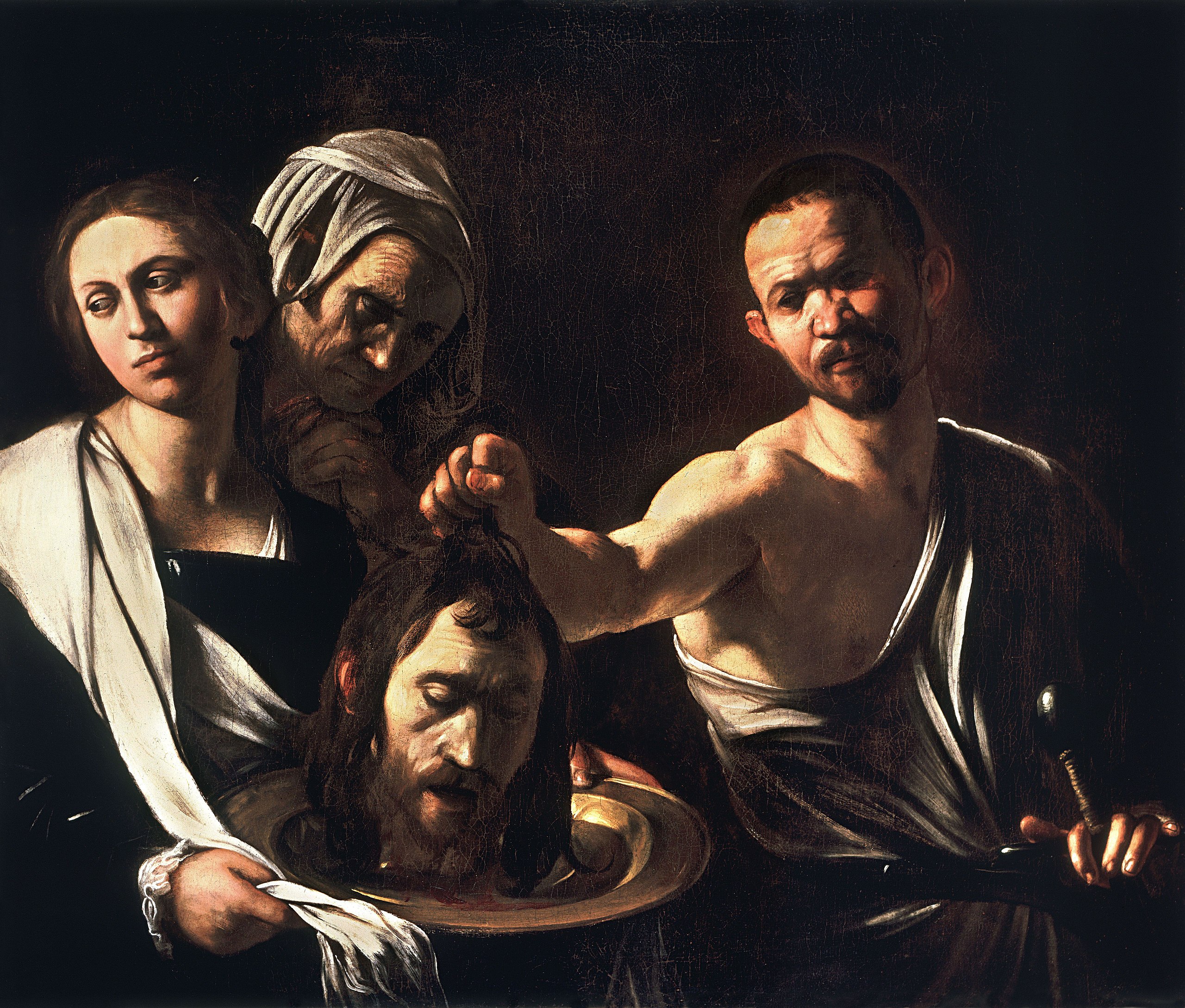
If Wilde eroticized Salome and Strauss sonified her excess, painters have rendered her aftermath.
In Caravaggio’s Salome with the Head of John the Baptist (c. 1609–10), there is no spectacle. No triumph. Only gravity. Salome does not rejoice; she witnesses. The executioner lowers the head. The moment is heavy with consequence. The painting now hangs in the National Gallery in London — a place worth visiting not for beauty alone, but for reckoning.
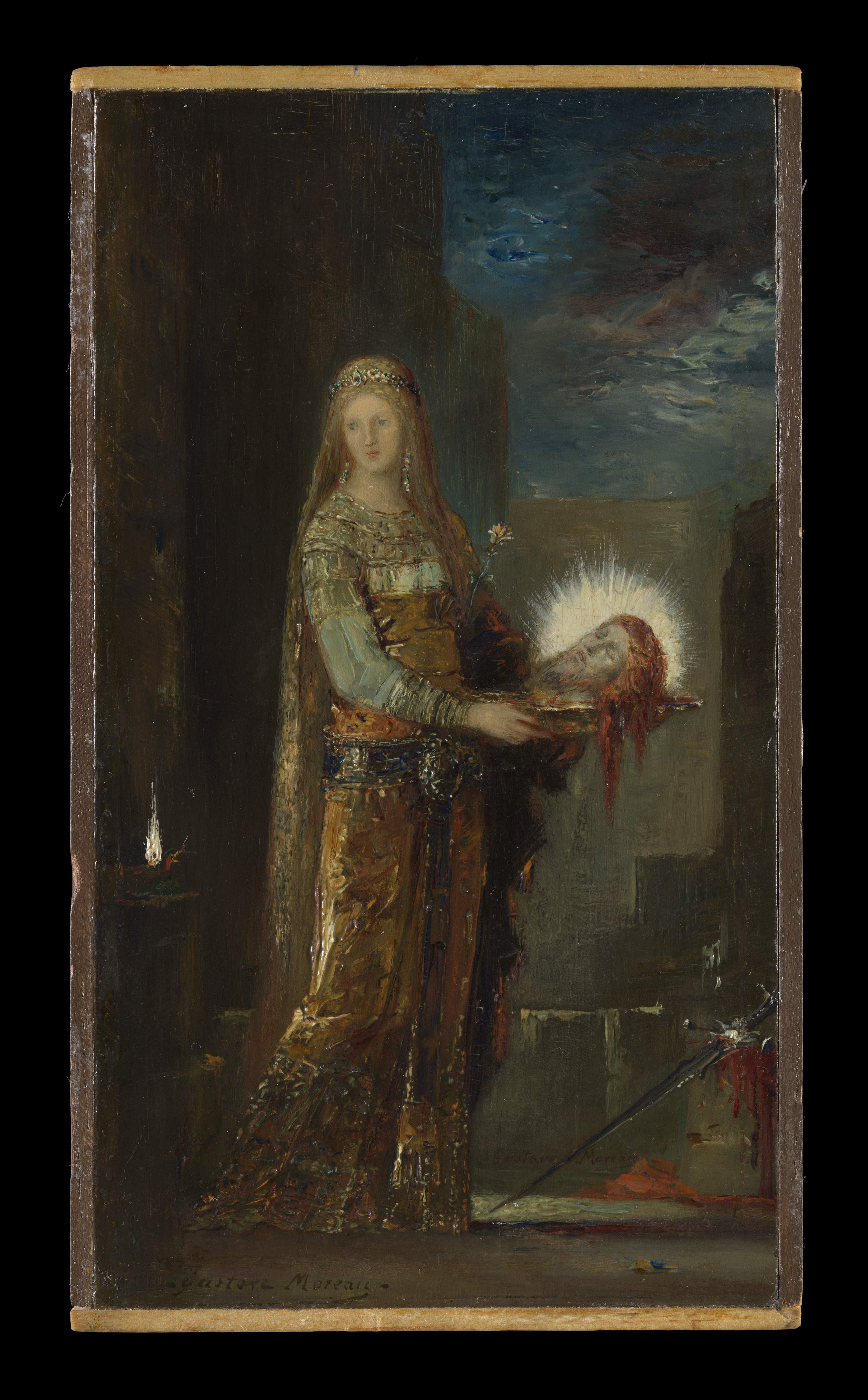
By contrast, Gustave Moreau turns Salome into ornament and symbol. His fin-de-siècle Salome dazzles, overwhelms, intoxicates. She belongs to the same aesthetic universe as Wilde and Strauss — excess without restraint, beauty without accountability.
Each tradition reveals something different. None cancels the others.
VI. What Remains
Reading Mark again, I felt Scripture, opera, literature, and art collapse into one another — not as abstraction, but as lived memory. The Gospel did not cancel Strauss. Strauss did not replace the Gospel. Wilde did not corrupt the story. Caravaggio did not redeem it.
They illuminated each other.
And I was reminded that art, like Scripture, does not exist to comfort us cheaply. It exists to expose the cost of truth in a world ruled by appearances — and the quiet violence of power too weak to choose rightly.
I will carry that with me.
© Francesc Borrull, 2026
 Francesc Borrull