
By Francesc Borrull · March 23, 2026
Introduction
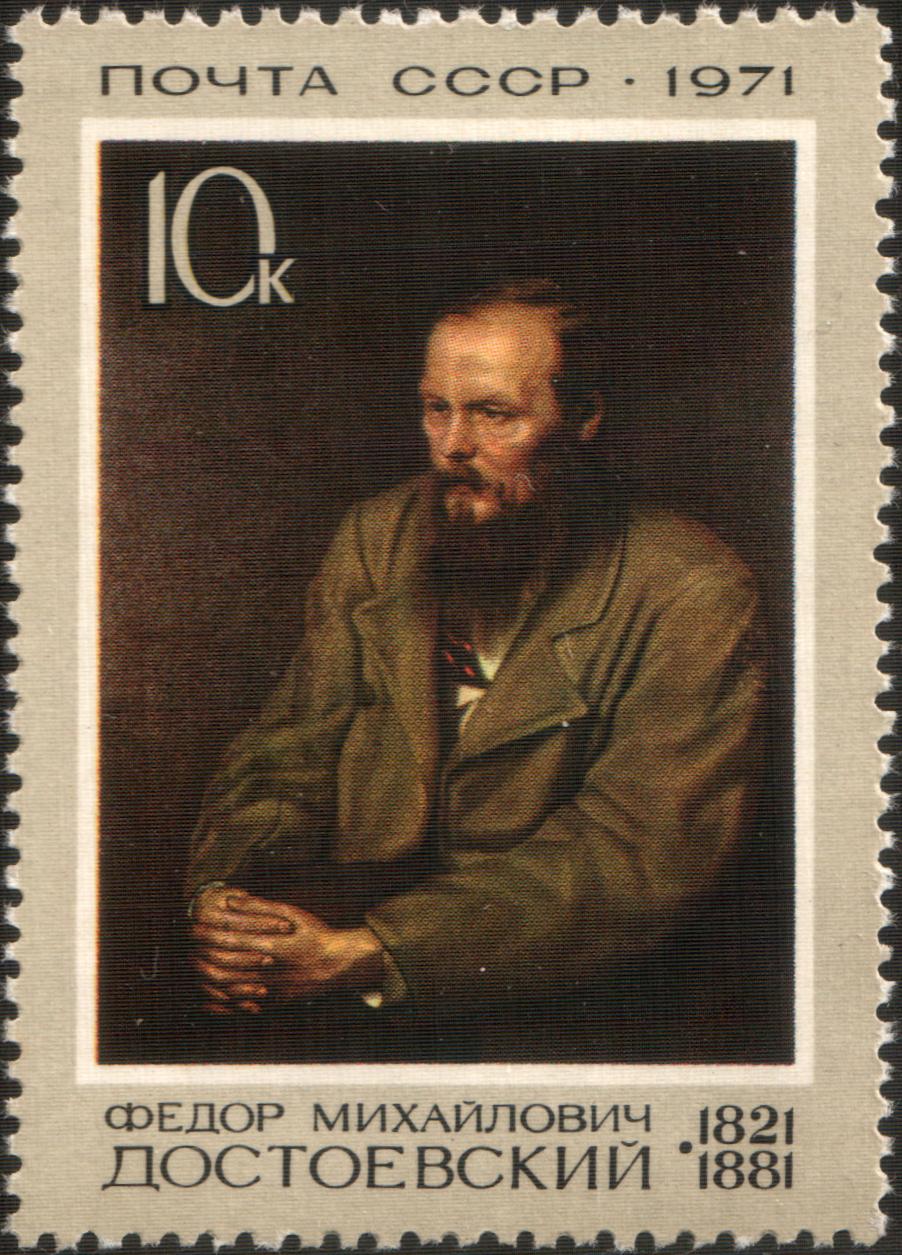
Few writers in the history of literature feel less optional than Fyodor Dostoevsky. To approach him is not simply to read another nineteenth-century novelist; it is to enter a space where freedom, guilt, belief, doubt, cruelty, compassion, and self-deception collide with almost unbearable intensity. His novels do not entertain the conscience — they interrogate it.
Dostoevsky was born in 1821 in Moscow, into a Russia caught between Western intellectual currents and Orthodox spiritual tradition. He began his career as a promising young writer, celebrated early for Poor Folk. Then, at twenty-eight, his life fractured. Arrested for involvement in a radical intellectual circle, he was sentenced to death. The execution was staged. The rifles were raised. At the final moment, the sentence was commuted by the Tsar. The spectacle was deliberate. Terror was part of the punishment.
Instead of death, Dostoevsky was sent to Siberia — four years in a labor camp among murderers and thieves, followed by compulsory military service. This experience was not a footnote in his biography. It was the furnace in which his imagination was recast. He emerged neither a simple political radical nor a complacent conservative, but something far more difficult: a writer obsessed with the spiritual consequences of ideas. He had seen ideology stripped of abstraction. He had lived among men who had crossed moral thresholds most people only theorize about.
From that point forward, Dostoevsky wrote as someone who knew that the human being is capable of both terrifying cruelty and radical compassion — sometimes within the same hour. He distrusted systems that claimed to perfect humanity. He rejected rational formulas for happiness. He distrusted any optimism that ignored the darker impulses of freedom.
His great novels were written under extraordinary pressure: financial ruin, gambling addiction, epilepsy, political turbulence, the deaths of loved ones. Yet out of this instability came works that expanded what fiction could do. In his hands, the novel became a battleground of competing voices. Characters do not merely act; they argue, accuse, confess, justify, revolt. Ideas are not discussed safely — they are lived to their breaking point.
To read Dostoevsky is to encounter a writer who refuses simplification. He does not present villains without self-awareness, nor saints without vulnerability. He stages moral catastrophe not as spectacle, but as interior crisis. The drama unfolds inside the human soul, where freedom is both gift and danger.
That is why he still matters.
Five Doors into Dostoevsky
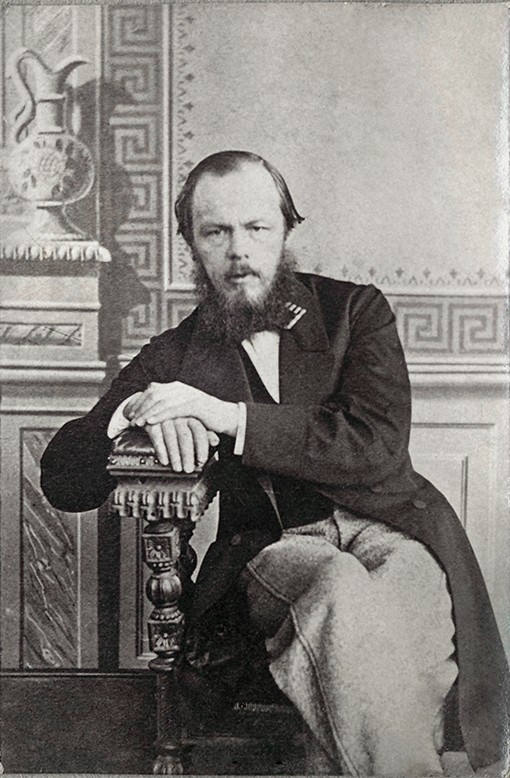
If one were to recommend a single path into Dostoevsky, it would be impossible to declare a universal starting point. Readers encounter him differently. Some are drawn to psychological suspense. Others to spiritual struggle. Others to philosophical confrontation. What matters is not where one begins, but that one enters.
These five works offer five distinct doors.
1. Notes from Underground (1864)
This short novel — if “novel” is even the right word — detonated modern literature.
The unnamed narrator, the so-called Underground Man, speaks directly to us from a place of spite, self-consciousness, and corrosive intelligence. He rejects rational utopianism. He mocks the idea that human beings act purely in their own best interest. He insists, almost perversely, that people will sabotage themselves simply to prove that they are free.
In barely a hundred pages, Dostoevsky anticipates existentialism, psychological fragmentation, and the modern anti-hero. The Underground Man is not a villain in the conventional sense. He is something more unsettling: a mind turned against itself.
This is where Dostoevsky exposes the danger of pure rationalism divorced from humility. It is where he first shows that freedom, unmoored from moral orientation, can curdle into self-destruction.
For readers who want to see the birth of modern interior fiction, this is the place to begin.
2. Crime and Punishment (1866)
If Notes from Underground is an explosion, Crime and Punishment is a slow, suffocating fever.
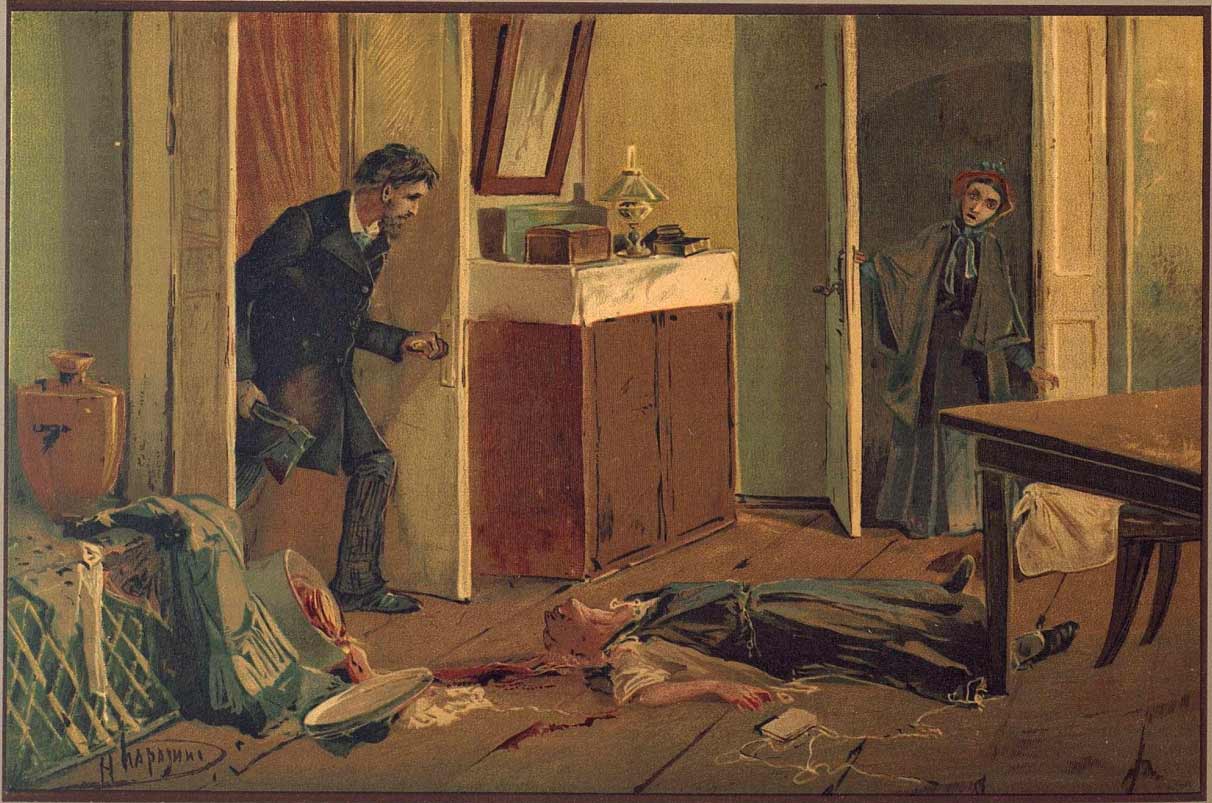
Raskolnikov, an impoverished student in St. Petersburg, murders a pawnbroker. The act is premeditated, philosophical, almost experimental. He convinces himself that certain extraordinary individuals have the right to transgress moral law for a higher purpose. The murder is meant to prove his theory.
What follows is not merely a crime story. It is a study of guilt as a metaphysical condition. Raskolnikov’s punishment begins long before any legal consequence. His mind fractures under the weight of justification. Suspense arises not from whether he will be caught, but from whether he can survive himself.
Dostoevsky turns a murder into an inquiry about conscience, pride, suffering, and redemption. The novel forces the reader to confront a troubling possibility: that the most dangerous crimes begin as ideas.
Few novels have rendered psychological torment with such sustained, suffocating precision.
3. The Idiot (1869)
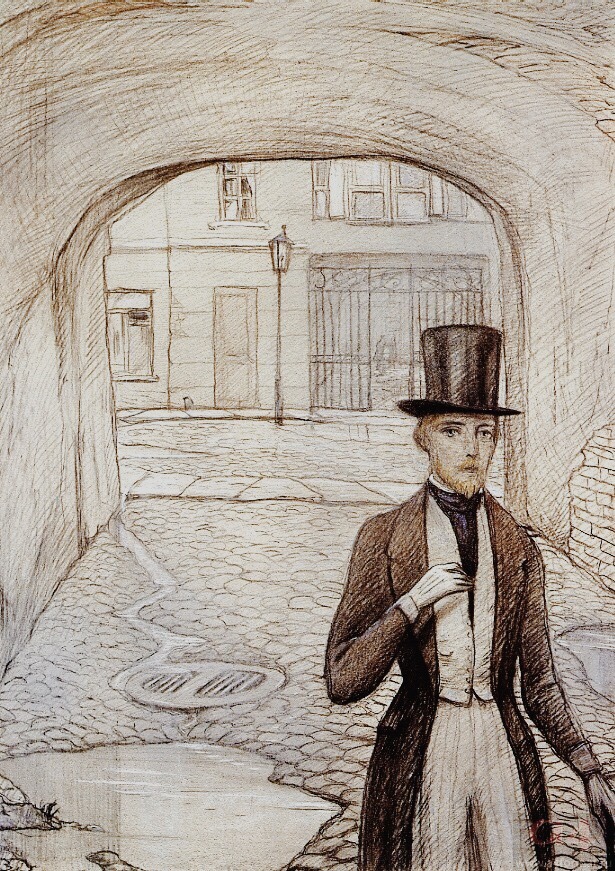
With The Idiot, Dostoevsky attempts something audacious: to create a genuinely good man and place him in a society incapable of understanding him.
Prince Myshkin returns to Russia after years in a Swiss sanatorium. He is open, compassionate, almost painfully sincere. In a world governed by vanity, calculation, and social maneuvering, his transparency appears foolish — hence the title.
But Myshkin’s innocence is not stupidity. It is moral vulnerability. He sees others without the usual armor of suspicion. He responds with mercy where others expect rivalry.
The question the novel poses is devastating: Can radical goodness survive among people who measure value in power and possession? Or does purity, once exposed, become combustible?
This is perhaps Dostoevsky’s most tragic moral gamble. It shows not the failure of virtue, but the fragility of it.
4. Demons (1872)
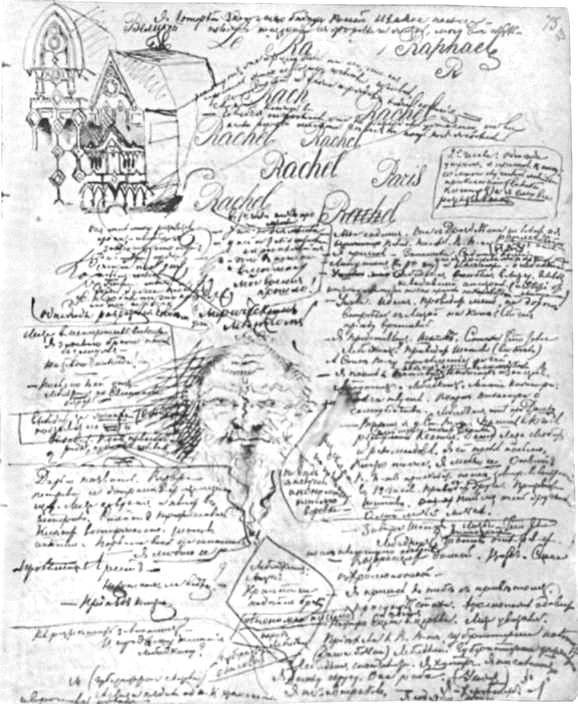
If the earlier novels focus primarily on the interior battlefield, Demons turns outward toward society.
Here Dostoevsky examines ideological extremism, revolutionary fervor, and the seduction of abstract ideas. The novel is loosely inspired by real political violence in Russia, but its reach extends far beyond its immediate context.
What happens when intellectual systems promise total transformation? What happens when moral restraint is dismissed as weakness? What happens when individuals become instruments of theory?
The characters in Demons are not caricatures; they are frighteningly lucid. They expose how ideas can detach from conscience, how rhetoric can inflame action, how destruction can masquerade as liberation.
The novel reads like a warning written before the catastrophe. It anticipates the catastrophes of the twentieth century and remains disturbingly contemporary.
If one wants to understand how literature can interrogate political fanaticism without resorting to slogans, Demons is indispensable.
5. The Brothers Karamazov (1880)
Dostoevsky’s final novel gathers all his obsessions and intensifies them.
At its surface, it is a story of parricide — a father murdered, sons accused, a courtroom drama unfolding. But beneath the plot lies a vast inquiry into faith, doubt, rebellion, forgiveness, and responsibility.
The three brothers embody divergent responses to existence: sensual impulsiveness, intellectual skepticism, and spiritual humility. Around them swirl questions that refuse easy resolution. Is suffering compatible with divine justice? Can moral order survive doubt? Is belief an evasion or an act of courage?
The famous chapters — “The Grand Inquisitor,” “Rebellion” — are not abstract essays disguised as fiction. They are dramatic confrontations staged within the intimacy of family.
The novel does not simplify belief, nor does it mock skepticism. Instead, it allows competing visions to speak with astonishing force. Dostoevsky trusts the reader to endure the tension.
It is an overwhelming book — deliberately so. It feels less like a story one reads and more like a moral universe one inhabits.
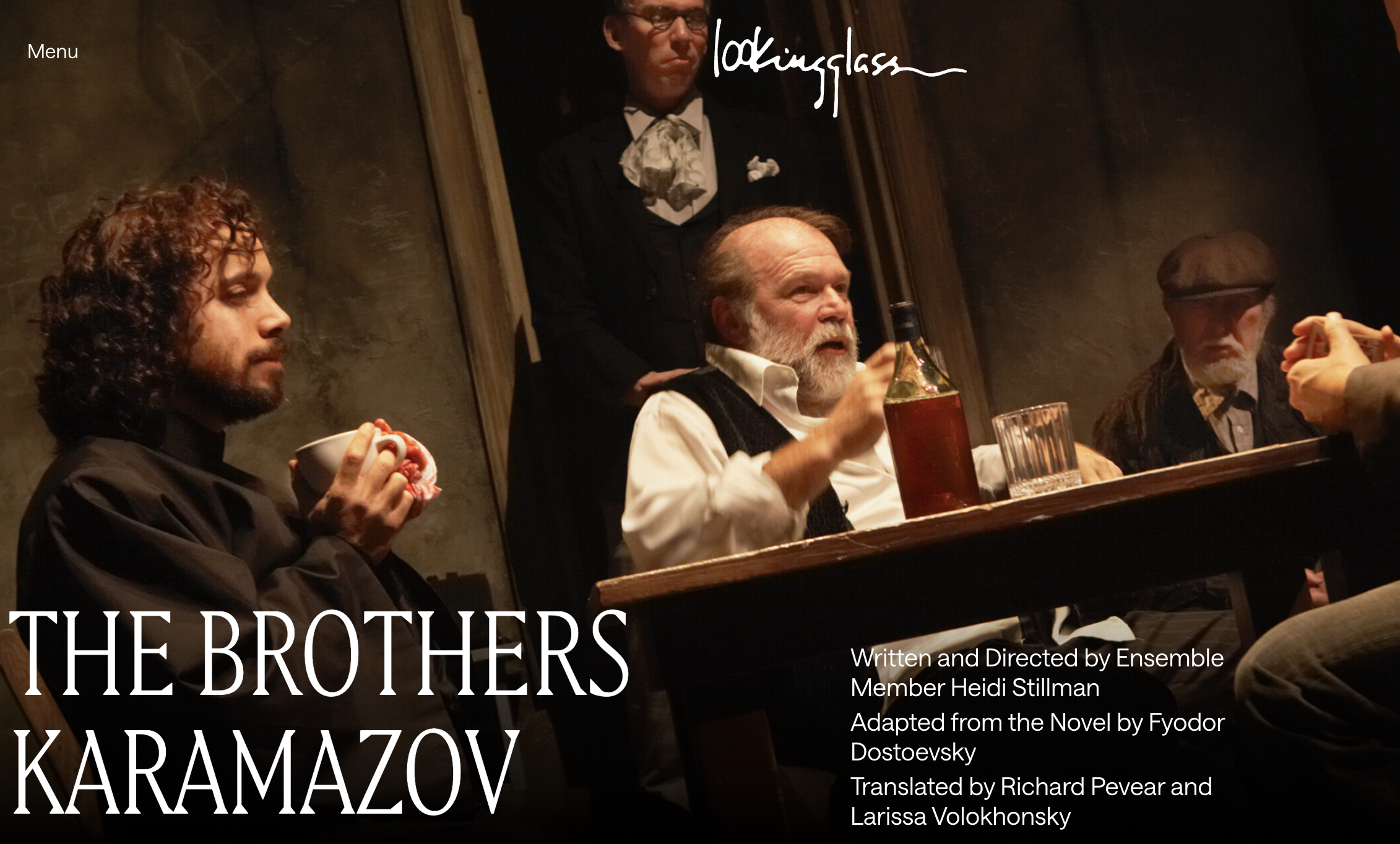
In 2008, I saw The Brothers Karamazov adapted for the stage at Chicago’s Lookingglass Theatre. Watching it performed was a revelation. The arguments did not feel literary; they felt combustible. Faith and rebellion were not abstract positions but living forces moving through bodies on a stage. The infamous father, grotesque and magnetic, was no longer a figure on the page but a presence radiating excess and corruption.
What the performance clarified was something easy to miss when reading alone: Dostoevsky writes theatrically. His novels are structured around confrontation — voices colliding, convictions tested aloud. The courtroom, the confession, the family quarrel, the philosophical duel — these are not narrative ornaments. They are engines.
Seeing it staged confirmed what the novel suggests: Dostoevsky does not merely narrate moral crisis. He dramatizes it.
What Dostoevsky Changed
Across these five works, Dostoevsky expanded the novel’s possibilities.
He made fiction capable of housing philosophy without turning into treatise. He allowed criminals to be thinkers. He allowed skeptics to be eloquent. He allowed saints to tremble. His characters are not symbols. They are battlegrounds.
He understood that human beings are rarely consistent. That pride can coexist with tenderness. That compassion can emerge from suffering. That freedom is both gift and danger.
Most importantly, he refused to flatter the reader. He does not offer comfortable moral superiority. When we judge his characters, we often recognize something of ourselves.
Why He Still Matters
Dostoevsky wrote in nineteenth-century Russia, yet his concerns feel startlingly modern: alienation, ideological extremism, spiritual doubt, psychological fragmentation, moral responsibility in an age of competing truths. He does not provide solutions. He provides confrontation.
To read Dostoevsky is to risk discomfort. His novels are long, digressive, emotionally intense. They demand patience. They demand attention. They demand intellectual honesty. But they reward the reader with enlargement.
If you have never read him, choose one of these five doors. It does not matter which. Enter with seriousness. Stay with the difficulty. Resist the temptation to reduce the experience to plot summary.
Dostoevsky does not offer escape. He offers depth. And in an age that often prefers surfaces, depth is radical.
© Francesc Borrull, 2026
 Francesc Borrull