
By Francesc Borrull · April 6, 2026
There are certain misunderstandings that do not come from ignorance, but from having lived too deeply inside a tradition to question it.
For years—quietly, without anxiety, without contradiction—I believed that the Resurrection happened on Monday.
It made perfect sense.
I grew up in Barcelona, where Holy Week was not an interruption of life but one of its organizing principles. Palm Sunday was not symbolic—it was tactile: palms in our hands, a beginning you could hold. Ash Wednesday, weeks earlier, had already marked the body, initiating Lent not as abstraction but as rhythm: restraint, anticipation, slow inwardness. Even Carnaval, just before, played its role—the excess before the silence, the necessary imbalance before equilibrium.
And then came the week itself.
Schools closed. The city changed tempo. Good Friday (Divendres Sant) was heavy, almost suspended. Saturday carried a strange stillness. Sunday, of course, was Easter—the Resurrection, we were told. But the emotional and cultural culmination, at least for a child, came the next day: Dilluns de Pasqua. Monday.
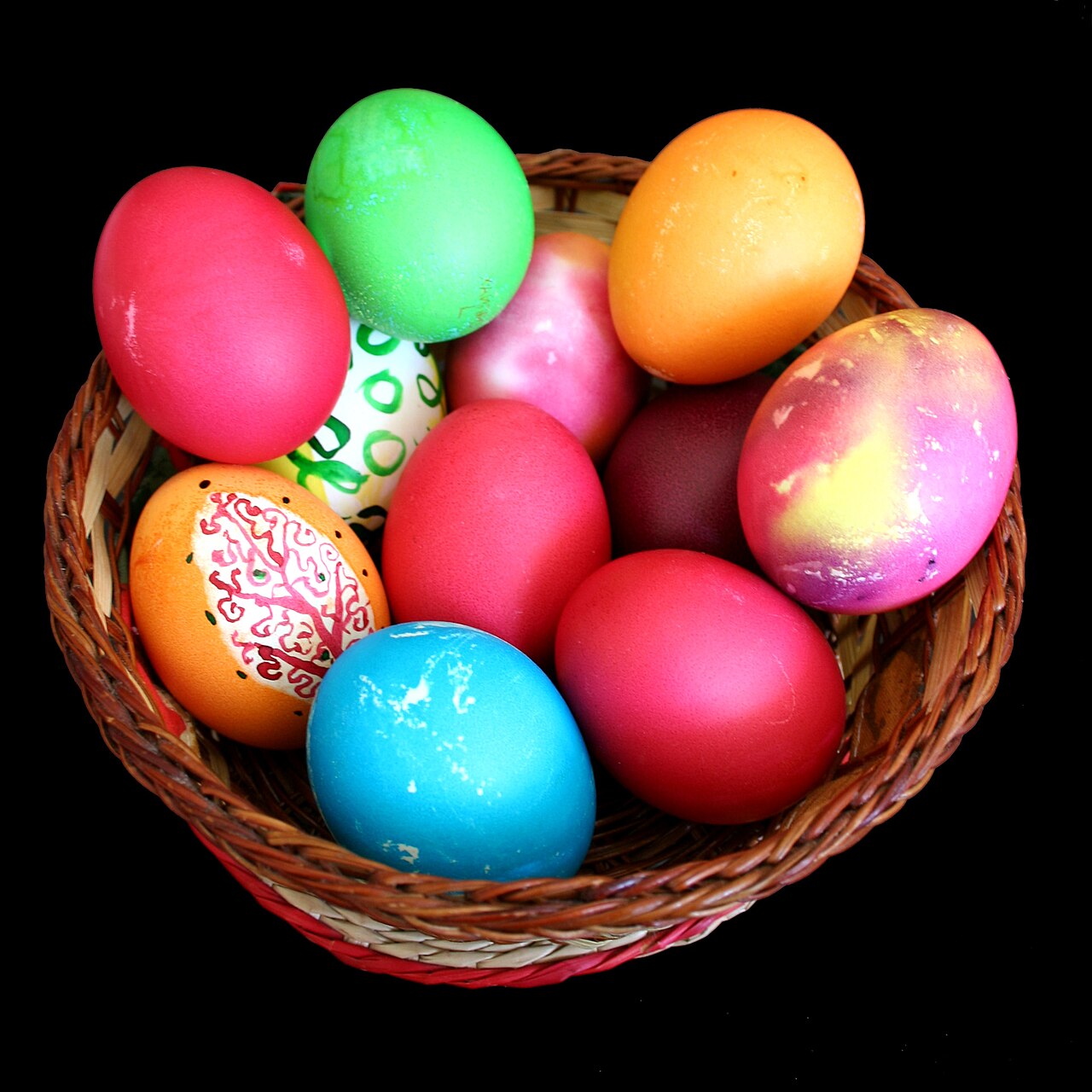
That was the day of movement again. Of visiting. Of laughter returning. Of godparents and gifts. Of la mona de pasqua: the cake, the chocolate, and always—always—the egg.
So yes, for a long time, I thought: this must be it. If Christ rose “after three days,” then Friday, Saturday, Sunday… surely Monday completes the count. Surely Monday is the true arrival.
No one corrected me. Or perhaps no one needed to.
Because what I had misunderstood mathematically, I had grasped intuitively.
I. The Third Day Is Not What We Think
The confusion dissolves the moment one encounters a different way of counting time.
In the modern world, we think in units—measurable, divisible, precise. A day is twenty-four hours. Duration is arithmetic. Friday to Saturday: one day. Saturday to Sunday: two. Sunday to Monday: three. The logic is impeccable.
But the world of the Gospels does not think like this.
Ancient Jewish time is inclusive. Any part of a day counts as a whole day. Friday (even if only a few hours before sunset) is Day One. Saturday is Day Two. Sunday—however early—is Day Three.
The Resurrection happens on the third day, not after three complete days.
This is not an error. It is a different ontology of time.
And more importantly, it reveals something crucial: the narrative is not structured by duration, but by pattern.
Friday: death.
Saturday: silence.
Sunday: life.
This triadic structure—what Christian tradition later names the Paschal Triduum—is less about chronology than about transformation. It is a sequence, almost archetypal: loss, suspension, return. Something is broken, disappears into obscurity, and then emerges altered. The “third day” is not a calculation. It is a form.
And once you see this, you begin to recognize it everywhere: in myth, in literature, in narrative instinct itself. The third movement resolves what the first two cannot. It is not the end of time—it is the turning of it.
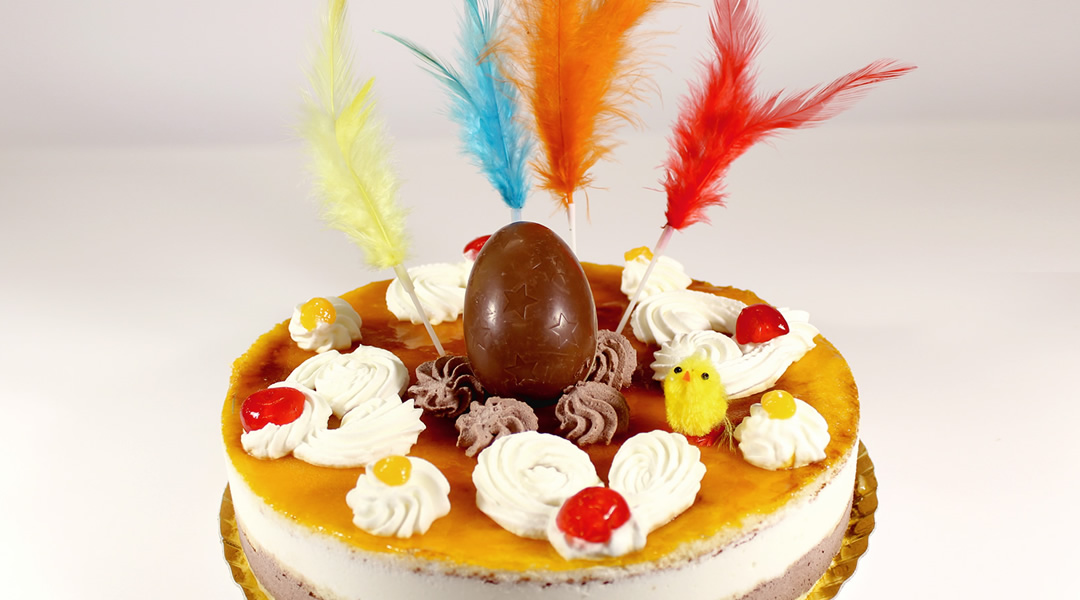
and received a “mona” that looked very much like this.
II. Monday: The Day That Does Not Belong (and Therefore Matters)
But this still leaves Monday.
If the Resurrection belongs to Sunday, why did Monday feel—culturally, emotionally, almost existentially—like the true culmination of Easter? Because Monday is not theological. It is something else. It is what happens when an event leaves its formal boundary and enters life.
In Catalonia, Dilluns de Pasqua is not an extension of doctrine, but of joy. The Resurrection, contained within liturgy on Sunday, spills outward into social practice. It becomes visit, exchange, inheritance. The godparent gives; the child receives. Something is passed on, but not explained. And at the center of this transmission: the egg.
III. The Egg: A Perfect Symbol That Does Not Explain Itself
Few symbols are as deceptively simple—and as structurally complete—as the egg. To a child, it is decoration. Sweetness. A reward. Something to be eaten or admired. But from a philological and cultural perspective, the egg is extraordinary precisely because it carries multiple symbolic layers without collapsing into a single meaning.
First, it resembles the tomb. Closed. Sealed. Opaque. Nothing visible from the outside. And yet, inside, life is not absent—it is forming. The shell is not a barrier but a threshold. When it breaks, it is not opened from the outside; it yields from within. This is not metaphor imposed after the fact. It is structural equivalence. The egg does not represent the Resurrection—it performs it.
Second, the egg belongs to a much older symbolic field: spring, fertility, renewal. Long before Christianity, it signified life emerging cyclically from dormancy. What Christianity does is not erase this meaning, but radicalize it. The egg no longer marks seasonal return, but transformation: not life continuing, but life passing through death and becoming something else.
In Eastern Christian traditions, this transformation acquires another layer: eggs are dyed red. Blood and life coexist in the same object. The shell becomes not only a tomb, but a surface marked by sacrifice. When broken, it releases not just life, but life that has passed through violence.
And then there is la mona de pasqua. Here, theology dissolves into ritual. The egg sits atop a cake, given by godparents to children. No doctrine is required. The gesture is enough. Something is being transmitted—not explained, not argued, but enacted.
As a child, I did not “learn” what the egg meant. I received it.
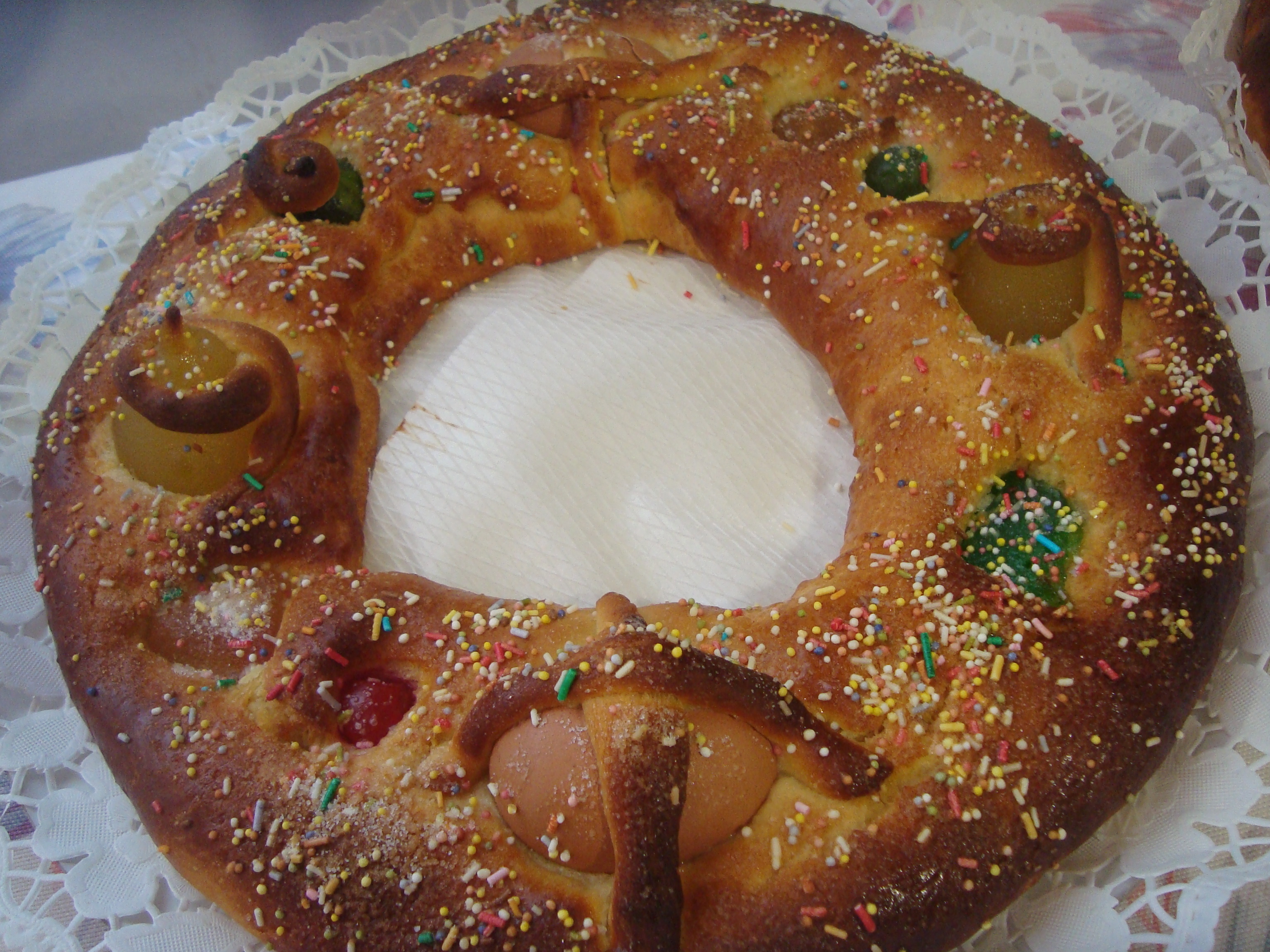
in my mother’s hometown in rural Tarragona.
IV. The Shock of America: When Time Detaches from Its Origin
When I moved to the United States in 2002, what struck me was not the absence of Easter, but its displacement. Holy Week was not a week off. Schools did not close. Life continued with minimal interruption. “Spring Break” existed, but floated freely, rarely aligning with Easter itself. Even Christmas, while culturally dominant, was linguistically reframed as “Winter Break.”
At one level, this reflects a coherent principle: the separation of church and state. Public time is not organized around religious observance. The calendar becomes neutral, or at least aspires to be.
And yet, the neutrality is imperfect.
The very structure of time—years counted from a certain origin, even if renamed as “Common Era”—still carries traces of its theological past. The reference point remains, even when its meaning is bracketed.
What changes, then, is not the structure of time, but its lived intensity. In Catalonia, Holy Week was not only remembered—it was inhabited. Time thickened around it. In the United States, Easter exists, but lightly. It is one date among many, rather than a gravitational center.
And perhaps that is why Monday disappears. Because Monday belongs to a world in which meaning overflows its formal boundary. It is unnecessary in a system that values containment.
V. What I Learned Without Knowing
Looking back, my childhood misunderstanding—that the Resurrection happened on Monday—was not a mistake to be corrected, but an insight waiting to be articulated. Sunday is the event. Monday is what proves the event mattered.
The Paschal Triduum gives us the structure: death, silence, return. But culture—ritual, food, family, inheritance—extends that structure into lived experience. It refuses to let the third day remain enclosed. And the egg, sitting quietly on top of a cake, does something remarkable: it holds together time, death, life, and transformation without explaining any of them. It simply waits.
Closing Reflection
There is a line I would now trust more than any precise calculation of days: the Resurrection happens on Sunday—but its meaning is too large to remain there. It moves into Monday. Into childhood. Into memory. Into a cake, an egg, a visit, a gift. Into the slow realization, years later, that what we receive before understanding may be the most exact form of knowledge we ever have.
© Francesc Borrull, 2026
 Francesc Borrull