
By Francesc Borrull · January 8, 2024
I. Introduction
Born on September 23, 1926, in Hamlet, North Carolina, John Coltrane emerged as a jazz luminary whose legacy transcends the boundaries of time and space. His journey, from the storied ensembles of the Miles Davis Quintet to his groundbreaking solo career, is a narrative woven with innovative techniques and a relentless pursuit of musical excellence, etching his name indelibly into the annals of jazz history.
Coltrane’s life story takes an extraordinary turn that extends beyond the realm of traditional recognition. In 1982, an African Orthodox Church in San Francisco canonized him as a saint, birthing the St. John Coltrane Church. This canonical acknowledgment goes beyond the music, symbolizing the profound impact of Coltrane’s artistry as a spiritual pilgrimage that transcends the conventional boundaries of worship.
As we delve into the multifaceted layers of Coltrane’s narrative, we navigate through the quintets and solo ventures, exploring the innovative sonic landscapes he carved. However, it is within the crucible of personal struggles and spiritual awakening that his magnum opus, “A Love Supreme,” emerges—a musical testament of gratitude and devotion that resounds through the ages.
This introduction encapsulates the dichotomy of Coltrane’s life—the classic origins rooted in the landscapes of North Carolina and the groundbreaking evolution into a jazz luminary and spiritual beacon. In traversing the path of Coltrane’s life and the echoes of his saxophone, we embark on a journey that extends beyond the audible, exploring a canonical recognition that places him among the immortals in the olymp of jazz gods.
II. Early Career
Coltrane’s musical journey burgeoned in the crucible of quintets, with his most notable stint being with the Miles Davis Quintet. This collaboration, which spanned from 1955 to 1960, played a pivotal role in shaping Coltrane’s artistic identity. His tenor saxophone not only complemented Davis’s trumpet but also introduced a new level of virtuosity and innovation.
One of the landmark albums from this period is “Round About Midnight” (1957), where Coltrane’s expressive solos, marked by a perfect balance of technical prowess and emotional depth, became a hallmark of the ensemble. The interplay between Coltrane and Davis on tracks like “Straight, No Chaser” showcased their musical chemistry, laying the foundation for future collaborations.
As Coltrane’s artistry flourished, so did his impact on other quintets. His tenure with the Thelonious Monk Quartet, documented in albums like “Thelonious Monk with John Coltrane” (1961), further showcased his versatility and ability to navigate different jazz idioms.
Another significant collaboration was with Johnny Hodges, exemplified in “Johnny Hodges with Billy Strayhorn and the Orchestra” (1962). Coltrane’s role in this album extended beyond the traditional quintet setting, revealing his adaptability to diverse musical contexts.
However, it was his association with the Miles Davis Sextet that birthed the iconic “Kind of Blue” (1959). Coltrane’s contributions to this seminal work, notably on tracks like “So What” and “Freddie Freeloader,” transcended the traditional confines of improvisation, laying the groundwork for his future explorations in modal jazz.
In essence, Coltrane’s early career was a tapestry woven with collaborations that not only showcased his technical brilliance but also hinted at the experimental spirit that would define his later solo ventures. The quintets were the crucible where Coltrane’s musical prowess was honed, setting the stage for the epochal chapters that would follow in his solo career.
III. Solo Career
A. Modal Jazz Era
Modal jazz, a subgenre that emerged in the late 1950s and early 1960s, represented a departure from the chord progressions and structures of traditional jazz. Unlike the prevailing harmonic complexity of bebop, modal jazz focused on modes or scales as the basis for improvisation, allowing for greater freedom and exploration.
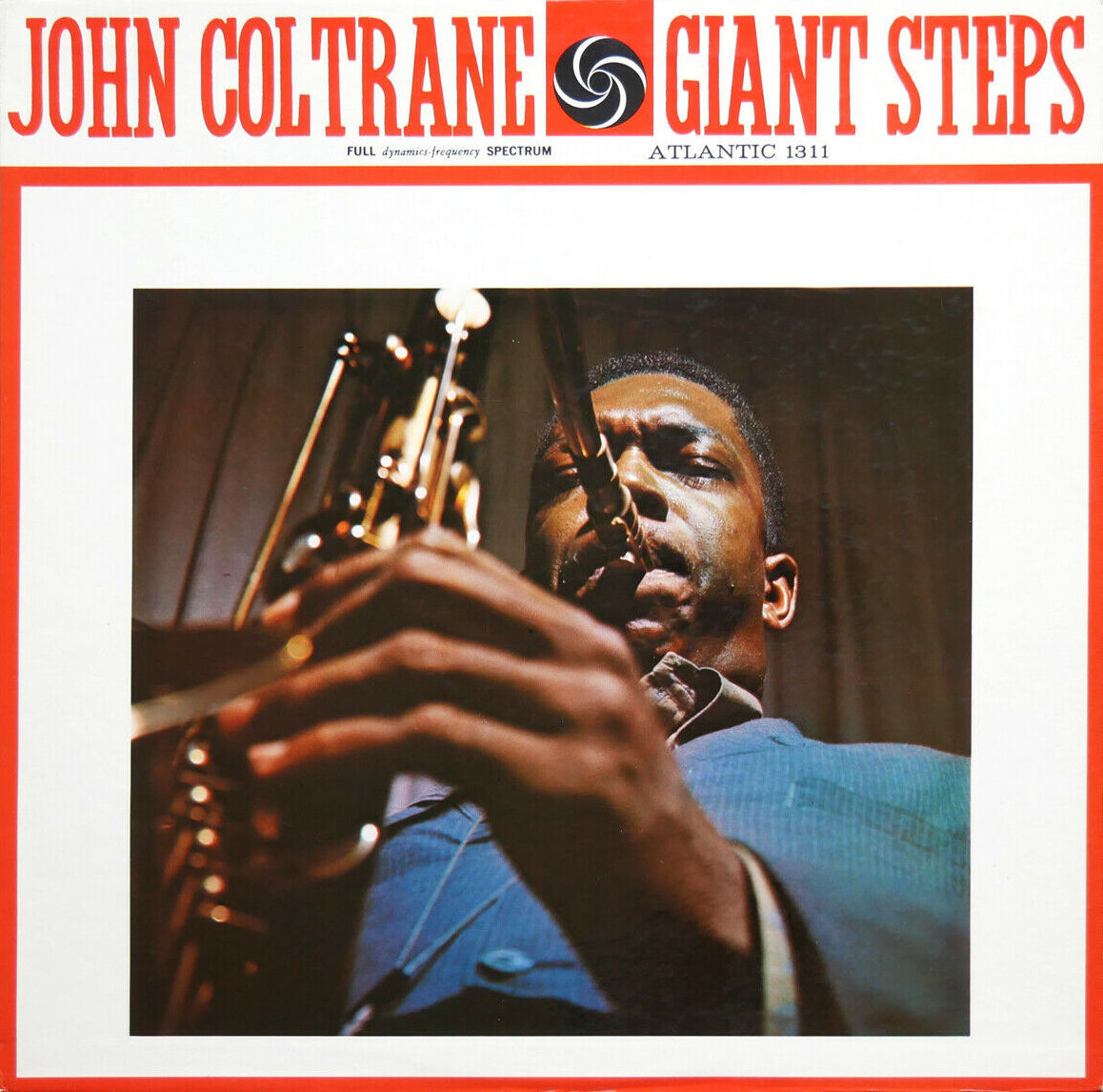
John Coltrane, a pioneer in this movement, led the charge into modal jazz with his seminal album “Giant Steps” (1960). This record, often considered a bridge between his earlier hard bop work and his later avant-garde explorations, marked a watershed moment in the evolution of jazz.
“Giant Steps” showcased Coltrane’s virtuosity in navigating complex harmonic structures. The title track, with its rapid chord changes and intricate melodies, became an iconic representation of Coltrane’s mastery over the modal approach. The album’s eponymous composition, in particular, demonstrated Coltrane’s innovative use of chord progressions and his ability to seamlessly weave through different modes, laying the groundwork for the modal jazz era.
As Coltrane’s solo career burgeoned, other albums further solidified his commitment to modal exploration. “My Favorite Things” (1961), a transformative work that reimagined the title track from The Sound of Music, is a quintessential example. The extended modal improvisations, especially on the title track and “Summertime,” showcased Coltrane’s ability to extract diverse tonalities and emotions from a singular mode.
In “Olé Coltrane” (1961), the influence of modal jazz is palpable, particularly in the eponymous track “Olé.” The extended modal improvisations and the use of Spanish and African rhythms revealed Coltrane’s expanding sonic palette.
“Equinox” (1964) is another noteworthy example, where the title track stands as a testament to Coltrane’s adeptness in modal composition. The deliberate pacing and exploration of different scales exemplify his evolving approach to jazz expression.
In essence, the Modal Jazz era of Coltrane’s solo career not only showcased his technical virtuosity but also marked a significant departure from traditional jazz norms. His pioneering efforts paved the way for a new generation of jazz musicians to explore the limitless possibilities inherent in modal structures.
B. Avant-Garde Exploration
The mid-1960s marked a radical departure for John Coltrane as he delved into the avant-garde realm, a sonic landscape characterized by free-form improvisation, experimental structures, and a departure from traditional jazz conventions. This period represented a stark evolution from the modal jazz era, showcasing Coltrane’s relentless quest for musical innovation and self-expression.
One of the definitive albums that epitomizes Coltrane’s foray into avant-garde jazz is “Ascension” (1966). This avant-garde masterpiece, a cacophony of sound and energy, stands as a testament to Coltrane’s willingness to push the boundaries of conventional jazz. The absence of a traditional chordal structure and the emphasis on collective improvisation marked a radical departure from his earlier modal explorations.
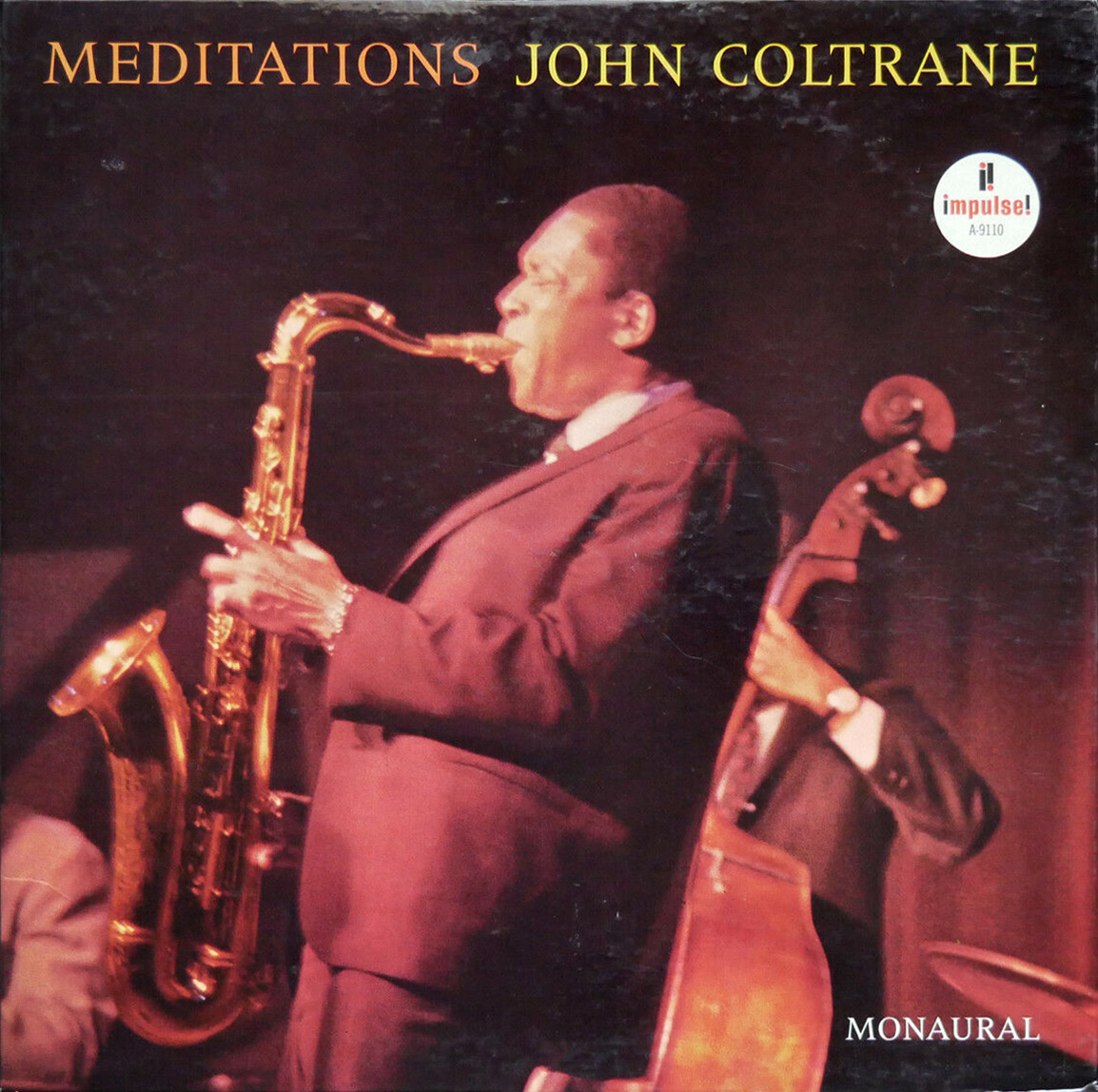
Following “Ascension,” Coltrane continued to break new ground with “Meditations” (1966). This album retained elements of modal jazz but incorporated a more open and exploratory approach to improvisation. Tracks like “The Father and the Son and the Holy Ghost” exemplify Coltrane’s departure from established harmonic structures, embracing a more free-flowing and spiritually charged sonic narrative.
The avant-garde journey reached its zenith with “Interstellar Space” (1967), a duet album with drummer Rashied Ali. This stripped-down setting allowed Coltrane to delve even further into free-form improvisation, creating a raw and visceral sonic experience. The absence of a harmonic framework provided Coltrane with unparalleled freedom to explore the outer reaches of his artistic vision.
As the avant-garde phase unfolded, live performances such as those captured in “Live in Japan” (1966) showcased the evolution of Coltrane’s sound. The extended, exploratory solos, often pushing the boundaries of tonality and structure, mirrored the avant-garde ethos.
The shift from modal jazz to avant-garde exploration represented a seismic transformation in Coltrane’s musical language. While modal jazz retained some semblance of traditional harmony, avant-garde jazz dismantled these conventions, allowing for a more liberated and spontaneous form of expression. Coltrane’s journey into the avant-garde marked a fearless exploration of the outer limits of sound and emotion, solidifying his legacy as an avant-garde pioneer in the world of jazz
C. Spiritual Awakening and A Love Supreme
In the mid-1960s, John Coltrane found himself grappling with a myriad of personal challenges, chief among them being his battle with drug addiction. The toll of substance abuse had taken a profound toll on his physical and mental well-being, leading to a period of introspection and self-discovery.
It was during this tumultuous phase that Coltrane underwent a spiritual awakening, a transformative experience that would shape the trajectory of his life and music. The specifics of this awakening are deeply rooted in Coltrane’s exploration of spirituality and the divine. Influenced by various religious traditions, including his studies of Eastern philosophies and Christianity, Coltrane sought a higher purpose and a connection to a transcendent reality.
This spiritual reawakening was not merely a philosophical shift but a profound internal transformation that deeply influenced his approach to music. Coltrane, now driven by a sense of divine purpose, channeled his struggles and newfound spirituality into the creation of “A Love Supreme.”
In summary, Coltrane’s personal struggles, including his battle with addiction, became the crucible for a spiritual awakening that fueled the creation of “A Love Supreme.” This period of introspection and transcendence not only marked a turning point in Coltrane’s life but also gave birth to a masterpiece that would resonate across time as a testament to the healing power of music and the human spirit.
IV. A Love Supreme: Magnum Opus
A. Inception
“A Love Supreme” emerged from the crucible of John Coltrane’s spiritual awakening. Inspired by his profound connection to the divine, Coltrane envisioned a musical journey that transcended the boundaries of traditional jazz. The suite, comprising four movements, served as a personal testament and an offering of gratitude to a higher power. Coltrane’s creative energies merged seamlessly with his newfound devotion, giving birth to a transformative work that stands as a testament to the symbiosis of music and spirituality.
B. Recording and Musicians
The recording of “A Love Supreme,” a pivotal moment in jazz history, was a one-session endeavor on December 9, 1964, at Van Gelder Studio in Englewood Cliffs, New Jersey. In this momentous session, John Coltrane led a quartet featuring the unparalleled talents of pianist McCoy Tyner, bassist Jimmy Garrison, and drummer Elvin Jones. The quartet’s synergy was more than a musical collaboration; it was a spiritual communion that resonated through the notes and rhythms. Tyner’s pianism, Garrison’s resonant bass lines, and Jones’s dynamic drumming created a foundation upon which Coltrane’s saxophone soared, forging an otherworldly musical experience. The timeless masterpiece, “A Love Supreme,” emerged from this singular session and was released by Impulse! Records in January 1965, making the album 59 years old at the time of this writing.
C. Critical Reception
Upon its release in 1965, “A Love Supreme” reverberated through the jazz landscape, earning universal critical acclaim. Critics and audiences alike hailed the album for its innovative approach and profound spiritual depth. The work marked a departure from conventional jazz structures, inviting listeners into a transcendent realm of expression. Its reception catapulted Coltrane into a new echelon of artistic expression, solidifying his status as a trailblazer in the ever-evolving landscape of jazz.
D. Musical Analysis
Acknowledgement: The opening track, “Acknowledgement,” serves as a sonic proclamation of gratitude. Coltrane introduces the iconic four-note motif, a musical mantra that becomes the linchpin of the entire suite. The track’s repetitive structure and impassioned saxophone lines convey a sense of spiritual awakening.
Resolution: Building upon the foundational motif, “Resolution” delves into complex harmonic progressions. Coltrane’s saxophone journeys through intricate melodic terrain, showcasing not only technical prowess but also a deep musical sophistication. The movement serves as a testament to Coltrane’s ability to seamlessly blend complexity with emotional resonance.
Pursuance: In the energetic third movement, “Pursuance,” the quartet engages in dynamic interplay. Tyner’s piano, Garrison’s bass, and Jones’s drums weave a tapestry of sound, providing the perfect backdrop for Coltrane’s expressive saxophone improvisations. The movement exemplifies the quartet’s unparalleled synergy and collective musical intuition.
Psalm: Closing the suite, “Psalm” serves as a prayerful reflection, bringing the spiritual journey full circle. Coltrane’s saxophone becomes a vessel for introspection, echoing a sense of spiritual transcendence. The movement invites listeners into a contemplative space, concluding the suite with a profound sense of resolution and serenity.
E. Artwork and Impact
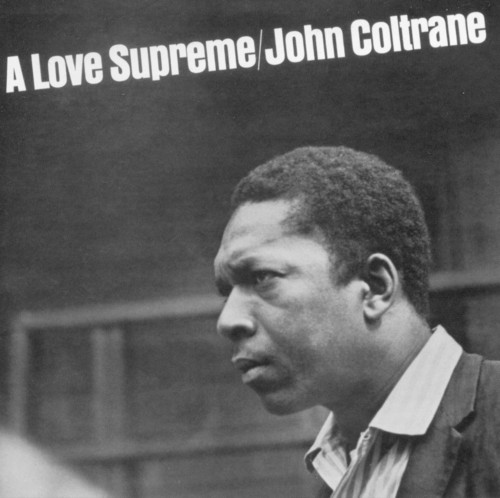
The album’s iconic cover, featuring a photograph of Coltrane, is a visual encapsulation of spiritual devotion. The image, capturing Coltrane in a moment of deep introspection, complements the music’s emotive depth. The evocative design serves as a portal into the spiritual realm that Coltrane sought to convey, solidifying “A Love Supreme” as a timeless masterpiece that transcends the auditory to evoke a holistic sensory experience.
F. Legacy
“A Love Supreme” stands as a transformative moment not only in jazz history but in the broader spectrum of music. Its enduring impact reverberates across generations, influencing musicians across genres. Coltrane’s vision and innovation in merging spirituality with music cement his status as a visionary artist. The album’s legacy extends beyond critical acclaim, becoming a touchstone for those seeking the intersection of artistic expression and spiritual exploration. “A Love Supreme” remains an indispensable pillar in the pantheon of musical masterpieces.
Notable Comments:
Carlos Santana: “’A Love Supreme’ is a universal message from a universal being. It is truly a love supreme that we get to hear this, feel this, and hopefully, share this with others. John Coltrane’s masterpiece is timeless and touches the eternal.”
Joni Mitchell: “Coltrane’s ‘A Love Supreme’ is a profound musical prayer. It’s not just an album; it’s a spiritual journey that continues to resonate with anyone who listens. It transcends genres and time itself.”
Wynton Marsalis: “In the landscape of jazz, ‘A Love Supreme’ is a towering peak. It’s not just an album; it’s a manifesto, a testament to the limitless possibilities of artistic expression. Coltrane’s legacy is etched in every note, inspiring musicians to push boundaries and seek higher artistic ground.”
These comments offer a glimpse into the wide-reaching impact of “A Love Supreme” and how it resonates with musicians and artists from diverse backgrounds.
G. Contemporary Impact
As we navigate the contemporary landscape of jazz, “A Love Supreme” remains an enduring titan, standing tall among the greatest jazz albums of all time. Its influence continues to reverberate, and the album holds a revered place in the hearts of enthusiasts and musicians alike. Despite the evolution of musical tastes and the emergence of new genres, Coltrane’s magnum opus endures as a touchstone for those seeking profound artistic expression and spiritual resonance.
Sales and Enduring Popularity. While sales figures alone may not capture the essence of its impact, “A Love Supreme” has maintained a steady presence in the market. Its enduring popularity is evident in consistent album sales and its perennial status as a sought-after vinyl and digital release. The album’s timeless appeal transcends generational boundaries, finding new audiences who discover and rediscover its transformative power.
Recent Remaster Edition. In a testament to its ongoing relevance, a recent remaster edition of “A Love Supreme” by Verve Records (2020) has garnered attention. This remaster aims to enhance the sonic fidelity of the original recordings, allowing contemporary listeners to experience the album with newfound clarity and depth. The remastering process is a delicate balance, preserving the authenticity of the original while leveraging modern technology to elevate the listening experience. This edition not only caters to audiophiles but also introduces the classic to a younger audience with a heightened appreciation for sound quality.
Contemporary Consensus. The general consensus about “A Love Supreme” today echoes the sentiments expressed decades ago—this album is a transcendent masterpiece. Its cultural impact extends beyond the realm of jazz, influencing artists across genres and inspiring countless reinterpretations. The spiritual depth, innovative approach, and sheer musical brilliance embedded in each note continue to captivate listeners, making “A Love Supreme” a timeless and indispensable gem in the ever-expanding universe of music.
As we navigate the complexities of the modern musical landscape, “A Love Supreme” endures not as a relic of the past but as a living testament to the boundless possibilities of artistic expression and the enduring power of a love supreme.
V. Conclusion
John Coltrane, an architect of sonic landscapes and a spiritual journeyman, transcends the boundaries of time, weaving his life and legacy into the very fabric of jazz mythology. His narrative, evolving from a sideman to a revered jazz deity, finds its zenith in the profound opus that is “A Love Supreme.” This masterpiece stands not merely as a musical composition but as a testament to Coltrane’s extraordinary metamorphosis, intertwining the corporeal and the spiritual.
From his early days contributing to iconic quintets, notably alongside Miles Davis, Coltrane’s musical prowess burgeoned, laying the groundwork for his solo odyssey. The evolution from the harmonic complexities of modal jazz to the avant-garde frontiers marked a fearless exploration, emblematic of Coltrane’s relentless pursuit of artistic innovation.
The magnum opus, “A Love Supreme,” stands at the crossroads of Coltrane’s personal struggles and spiritual reawakening. In the crucible of addiction, a profound metamorphosis occurred—a journey within that birthed a musical testament of gratitude and devotion. The four movements of the suite become not just notes on a stave but a transcendental journey—Acknowledgement, Resolution, Pursuance, and Psalm—a sonic pilgrimage that resonates with the divine.
The quartet’s alchemy with McCoy Tyner, Jimmy Garrison, and Elvin Jones on this spiritual odyssey created a sonic tapestry, transcending conventional jazz and propelling Coltrane into an unparalleled realm of artistic expression. The critical acclaim and universal resonance upon the album’s release in 1965 heralded a new era for jazz, firmly establishing Coltrane among the pantheon of musical visionaries.
As we traverse the contemporary landscape, “A Love Supreme” remains an everlasting beacon. Its enduring popularity and recent remaster editions attest to its timeless significance. In the words of Carlos Santana, it is a “universal message from a universal being,” a sentiment echoed by artists across genres.
John Coltrane’s legacy, immortalized in the evocative notes of his saxophone and the spiritual resonance of his compositions, continues to reverberate across the ages. His transcendent journey serves as an inspiration for aspiring musicians and a guiding light for those seeking the intersection of artistic expression and spiritual exploration. As we reflect on the life and legacy of John Coltrane, we recognize not only a jazz deity but a spiritual luminary whose resonance echoes through the eternal corridors of music, firmly placing him among the immortals in the olymp of jazz gods.
© Francesc Borrull, 2023-2024
 Francesc Borrull