
By Francesc Borrull · January 29, 2024
Ernest Hemingway, an iconic figure in American literature, holds a distinctive place in my reading journey. Born in Oak Park, IL, a neighbor to my second home of Chicago, Hemingway’s literary legacy feels almost like a familiar whisper from the winds of the Midwest. My background in literary studies has led me through the works of numerous authors, yet Hemingway stands out among my favorites. His unique voice, shaped by experiences in war and journalism, has left an indelible mark on the literary landscape.
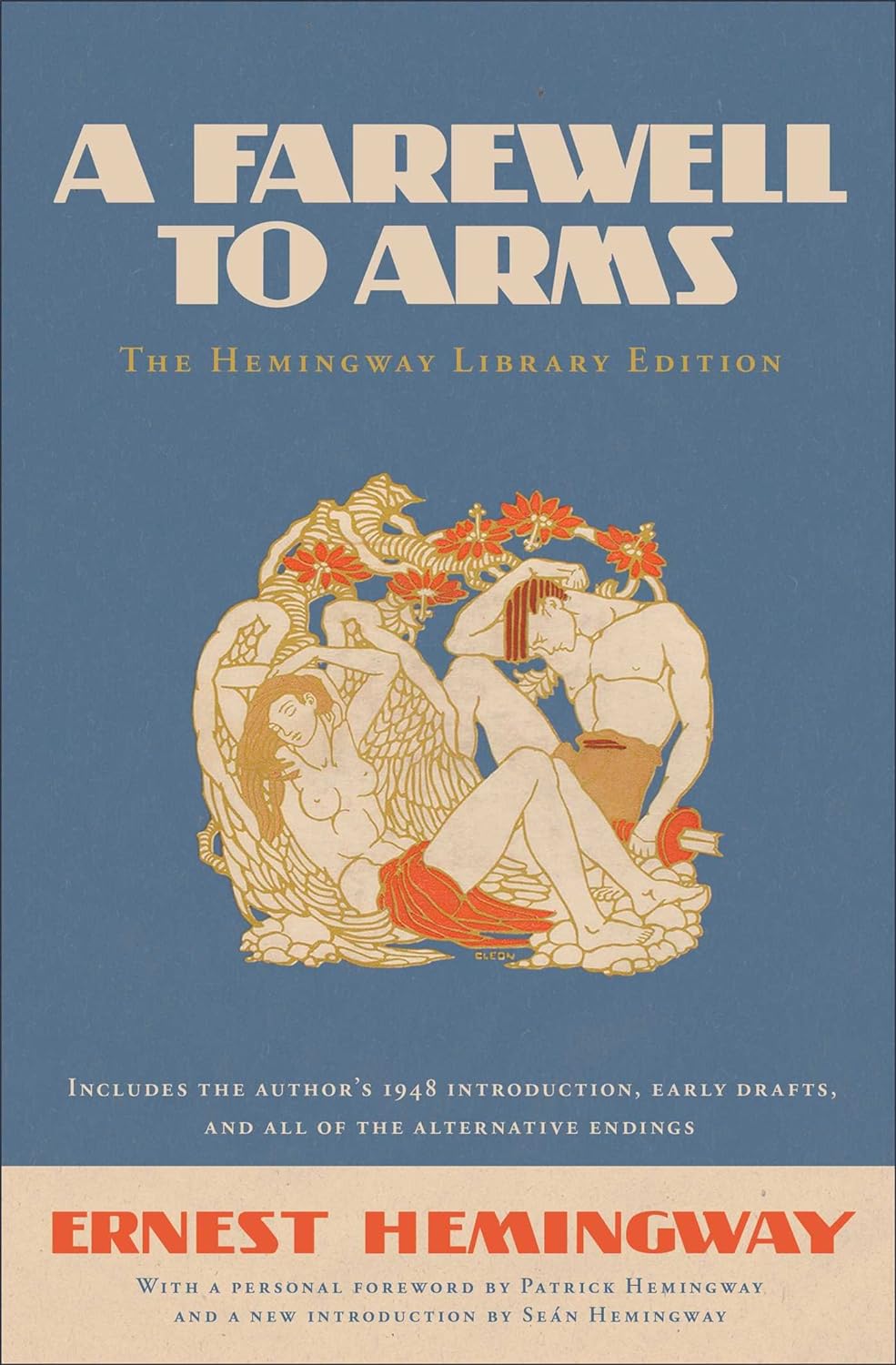
In “A Farewell to Arms,” Hemingway takes us on a poignant exploration of love and war against the backdrop of World War I. My recent reading of the novel prompted this brief book review. Hemingway’s signature terse prose acts as both a powerful strength and a potential stumbling block, immersing the reader in the raw reality of the narrative while simultaneously maintaining a certain emotional distance. This duality creates a complex reading experience, where the stark beauty of the prose enhances the atmosphere of the novel, even as it challenges readers to navigate the subtle nuances of the characters’ emotions.
In “A Farewell to Arms,” Hemingway’s mastery unfolds through prose as sharp as a bayonet, a double-edged sword that pierces through the narrative with striking precision. The language, stark and vivid, authentically captures the wartime setting and the intricacies of Lieutenant Frederic Henry and Catherine Barkley’s love story. This central romance, tender and haunted by the specter of war, becomes the beating heart of the narrative.
Hemingway, drawing from his firsthand experience as an ambulance driver in World War I, portrays the brutality of conflict without romanticization. The unflinching depiction of war’s senselessness lingers, painting a stark and powerful picture of the human cost of battle. This authenticity, woven into the narrative, elevates the novel beyond a mere love story, creating a complex tapestry of emotion and stark reality.
However, this mastery comes with its challenges. The brevity of Hemingway’s prose, while evocative, erects a subtle emotional barrier, leaving readers at times distanced from the characters. The stoic demeanor and detached narrative style, characteristic of the era, may hinder a deeper connection, preventing certain moments from reaching their full emotional potential.
The novel’s focus on the central love story occasionally casts peripheral characters into one-dimensional roles. These supporting figures, while instrumental in advancing the plot, lack the depth and development that would add richness to the overall narrative. In their shadow, the tapestry of character portrayal seems incomplete, leaving a desire for more nuanced exploration.
The ambiguous ending, a double-edged resolution, invites readers into a realm of interpretation. While ambiguity can be a potent literary device, here, it beckons both contemplation and a yearning for a more definitive conclusion. The fate of the protagonists, suspended in uncertainty, becomes a point of reflection, echoing the broader theme of the unpredictable nature of life in the midst of chaos.
In the expansive realm of Hemingway’s literary legacy, “A Farewell to Arms” stands as a poignant testament to his thematic preoccupations and stylistic brilliance. As a cornerstone in his body of work, this novel echoes the recurring motifs of love, war, and the human spirit that characterize much of Hemingway’s writing.
Compared to his earlier works, such as “The Sun Also Rises,” “A Farewell to Arms” extends beyond the Lost Generation’s post-war disillusionment. While “The Sun Also Rises” immerses readers in the aimless hedonism of the Jazz Age, “A Farewell to Arms” transcends the boundaries of time, delving into the enduring complexities of love and conflict. It marks a subtle shift from the exuberance of youth to a more somber reflection on the impact of war on the human soul.
Additionally, the novel resonates with echoes of Hemingway’s journalistic prowess, evident in works like “For Whom the Bell Tolls.” The raw, unfiltered portrayal of war in both novels underscores the author’s firsthand encounters on the frontlines. Yet, “A Farewell to Arms” distinguishes itself by placing a profound emphasis on the fragility of love amid the chaos, intertwining the personal and the political in a way that feels distinctly introspective.
When juxtaposed with “The Old Man and the Sea,” a later masterpiece, the thematic currents of resilience and endurance emerge. While “The Old Man and the Sea” contemplates the individual’s struggle against nature, “A Farewell to Arms” grapples with the tumultuous forces of human conflict. Both, however, share Hemingway’s signature economy of language and a profound exploration of the human condition.
In the vast tapestry of Hemingway’s works, “A Farewell to Arms” emerges not only as a standalone narrative but as a bridge connecting the author’s evolving perspectives on life, love, and the indomitable spirit. It invites readers to traverse the thematic landscapes of his literature, offering a nuanced understanding of Hemingway’s exploration of the profound and often tumultuous journey of the human experience.
As I reflect on my recent reading of “A Farewell to Arms,” it becomes evident that this novel is more than a narrative; it is a portal into the complex terrain of the human soul. Hemingway, an artisan of words, paints the hues of love, loss, and the enduring spirit’s resilience on a canvas that transcends the boundaries of time. Personally engaging for me, the mention of Maestre train station in Venice, the picturesque landscapes of Pordenone, and the historical streets of Udine resonates deeply. Having visited these places numerous times and formed connections with friends who call them home, the novel becomes not just a literary journey but a nostalgic stroll through the heart of cherished memories, seamlessly blending the fictional with the intimately familiar.
In the vast tapestry of Hemingway’s literary landscape, this novel emerges as a poignant testament to his thematic preoccupations and stylistic brilliance. Compared to his earlier works, it extends beyond the post-war disillusionment of the Lost Generation, delving into the enduring complexities of love and conflict. Hemingway’s journalistic prowess, evident in works like “For Whom the Bell Tolls,” finds resonance in the raw, unfiltered portrayal of war, yet “A Farewell to Arms” distinguishes itself by emphasizing the fragility of love amid chaos.
Juxtaposed with “The Old Man and the Sea,” a later masterpiece, the thematic currents of resilience and endurance come to the forefront. While “The Old Man and the Sea” contemplates the individual’s struggle against nature, “A Farewell to Arms” grapples with the tumultuous forces of human conflict. Both share Hemingway’s signature economy of language and a profound exploration of the human condition.
In this exploration, strengths and challenges coalesce. The sharpness of the prose, the haunting love story, and the unflinching portrayal of war create an immersive experience that transcends time. However, the emotional distance crafted by Hemingway’s brevity and the lack of diverse characterization leave room for interpretation, prompting readers to navigate the subtle nuances of the characters’ emotions.
The ambiguous ending, a hallmark of Hemingway’s narrative style, serves as a poignant punctuation mark. As the protagonists’ fates remain suspended in uncertainty, it mirrors the unpredictability of life itself—an invitation for reflection, challenging readers to grapple with the complexities of love and loss long after the last page is turned.
In conclusion, “A Farewell to Arms” not only adds a resonant chapter to Hemingway’s literary legacy but stands as a testament to the enduring power of human connection in the face of adversity. It is a bittersweet farewell, not just to arms but to the intricacies of the human experience—a farewell that echoes long after the echoes of battle have faded into the silence of history.
© Francesc Borrull, 2023-2024
P.S. Check out “A Farewell to Arms” for yourself here. Know that I don’t receive any compensation if you decide to make a purchase – just sharing the love for a thought-provoking read! Happy reading!
 Francesc Borrull