
By Francesc Borrull · February 16, 2024
In the labyrinth of human existence, myths have served as ancient mirrors, reflecting the complexities of our own nature and the ceaseless quest for meaning. One such myth, that of Sisyphus, unfolds with poignant resonance, capturing the essence of eternal struggle and the philosophical tapestry of the human condition. This paper embarks on a journey through time, delving into the mythological realm through the eyes of the master painter Titian and the existentialist philosopher Albert Camus.
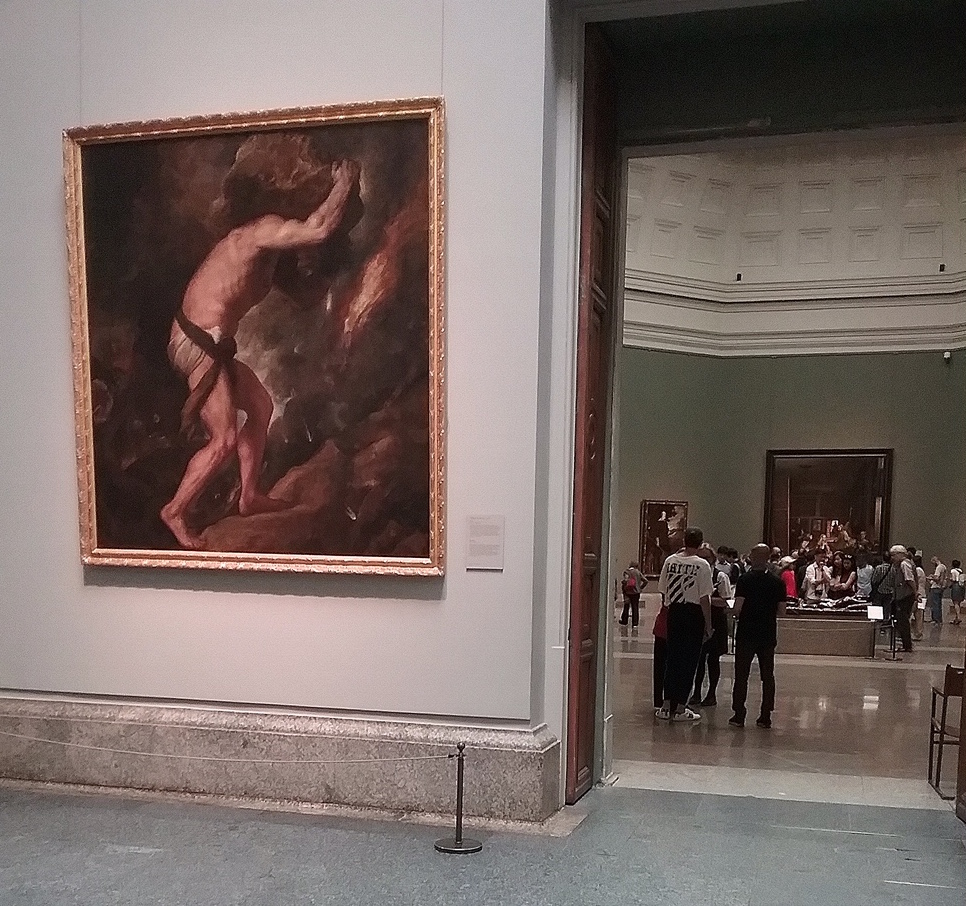
As we unravel the threads of this narrative, we first cast our gaze upon Titian’s canvas, where the visual masterpiece at El Museo del Prado in Madrid breathes life into the enduring tale of Sisyphus. The strokes of Titian’s brush evoke the physical and emotional weight of Sisyphus’s punishment, inviting us to contemplate the intricate symbolism embedded within the painting.
But the myth extends beyond the canvas; it finds a second life in the pages of Albert Camus’s groundbreaking essay, “The Myth of Sisyphus.” In this literary exploration, Camus beckons us to confront the absurdity of life, unraveling the existential threads that bind us to Sisyphus’s eternal struggle. His philosophical reflections, etched with both depth and nuance, resonate with postwar intellectuals and continue to echo through the corridors of literature and thought.
Together, we will embark on a dual journey, traversing the visual and literary landscapes crafted by Titian and Camus. From the Renaissance brilliance of Titian’s painting to the existential depths plumbed by Camus, our expedition seeks to unravel the timeless questions that linger in the shadows of Sisyphus’s boulder. As we navigate this interdisciplinary exploration, the myth of Sisyphus emerges not merely as a relic of antiquity but as a living, breathing allegory that transcends epochs, beckoning us to ponder the intricacies of our own existence.
Join us as we unravel the layers of meaning, symbolism, and existential inquiry woven into the myth of Sisyphus. Together, we will traverse the realms of art and philosophy, seeking to understand the profound impact of this ancient tale on the collective consciousness of humanity. Through the lenses of Titian and Camus, the journey promises to be both enlightening and introspective, inviting readers to ponder the eternal struggle that defines the human experience.
Introduction to the Myth of Sisyphus
In the vast tapestry of Greek mythology, the tale of Sisyphus stands out as a poignant exploration of the human condition and the eternal struggle against fate. Sisyphus, a cunning and deceitful king of Corinth, was known for his cleverness and deceitful nature. However, his audacity ultimately incurred the wrath of the gods, and he found himself ensnared in a punishment both eternal and emblematic of life’s inherent challenges.
Sisyphus’s Transgressions and Divine Punishment
The myth unfolds with Sisyphus deceiving and outwitting death, leading to the gods’ disapproval. As punishment for his audacious actions, Sisyphus was condemned to an eternity of ceaseless toil. His task was to roll a boulder up a steep hill, only to witness it roll back down each time he neared the summit. This cyclical ordeal symbolizes the Sisyphean struggle – a never-ending effort with no ultimate resolution.
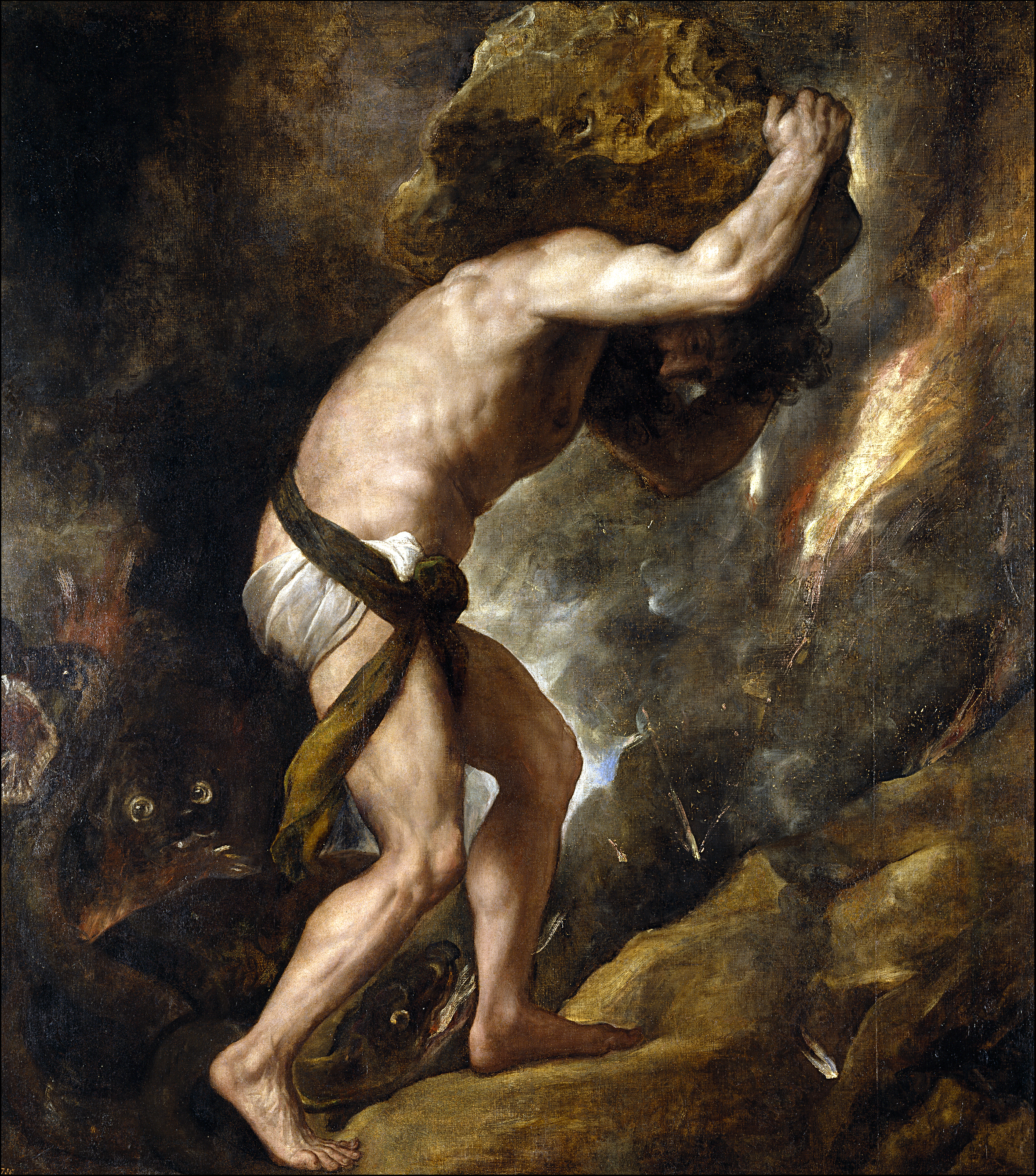
Titian’s Artistic Interpretation
Titian’s portrayal of the myth of Sisyphus, captured in the painting housed at El Museo del Prado in Madrid, showcases the artist’s mastery of the Renaissance style and his ability to convey profound themes through visual storytelling.
Style and Composition
The painting, created in the Venetian Renaissance tradition, exhibits Titian’s characteristic use of rich colors, dynamic composition, and meticulous attention to detail. The interplay of light and shadow enhances the dramatic intensity of the scene, casting Sisyphus and the boulder in a chiaroscuro that emphasizes the physical and emotional weight of the punishment.
Commission and Patronage
Commissioned by Philip II of Spain, Titian created this masterpiece as part of a series of paintings for the Alcázar in Madrid. The commission from Philip II, a powerful patron of the arts, reflects the significance placed on mythological and allegorical themes during the Renaissance. The choice of Sisyphus as a subject suggests a profound interest in exploring existential and philosophical concepts through visual art.
Symbolism and Narrative
The composition of the painting skillfully captures the essence of Sisyphus’s eternal struggle. Sisyphus is depicted mid-motion, straining against the massive boulder, his muscles tense with effort. The steep incline and rocky terrain convey the arduous nature of his task. The boulder, frozen in descent, symbolizes the perpetual recurrence of the Sisyphean ordeal.
The composition of Titian’s painting not only skillfully captures the physical struggle of Sisyphus but also incorporates a rich layer of symbolism in the scene below him. As Sisyphus labors against the boulder, a chaotic and tumultuous scene unfolds beneath him.
In the lower part of the painting, a cluster of snakes and tormented figures engages with one another. These serpentine creatures intertwine with the struggling figures, creating a disconcerting tableau. The inclusion of snakes, often associated with deception and cunning in classical mythology, adds a layer of complexity to the narrative. It may symbolize the consequences of Sisyphus’s deceitful actions that led to his eternal punishment.
The tormented figures, entangled with the snakes, evoke a sense of suffering and despair. Their contorted expressions and strained postures suggest a perpetual state of anguish. This chaotic scene below Sisyphus serves as a visual parallel to his own struggle, underscoring the broader consequences of one’s actions and the interconnectedness of fate.
The inclusion of these mythological elements aligns with the Renaissance tradition of infusing paintings with classical symbolism. The snakes, reminiscent of the underworld and its inhabitants, allude to the broader mythological context surrounding Sisyphus and his defiance of death. The intertwined figures may represent the interconnectedness of human destinies and the inescapable web of consequences.
Titian’s decision to juxtapose the intense physical labor of Sisyphus with the tumultuous scene below creates a visual duality. It suggests that the consequences of Sisyphus’s actions extend beyond his immediate struggle, emphasizing the ripple effect of choices in the grand tapestry of existence.
In this way, Titian’s inclusion of the snakes and tormented figures beneath Sisyphus not only adds depth to the narrative but also invites viewers to contemplate the broader implications of human actions and the intricate interplay of destiny and free will. The visual complexity of the lower scene enriches the overall symbolism, making the painting a nuanced exploration of the myth’s existential themes.
Emotional Resonance
Titian masterfully conveys the emotional weight of Sisyphus’s punishment. The expression on Sisyphus’s face reflects a blend of determination and resignation, encapsulating the complex emotions associated with the futility of his labor. The viewer is invited to empathize with the protagonist’s struggle, contemplating the broader implications of the myth.
Influence on Artistic Tradition
Titian’s rendition of the Sisyphus myth has had a lasting impact on the artistic tradition. The painting not only serves as a visual interpretation of the myth but also as an exploration of human existence and the struggle against seemingly insurmountable odds. The work contributes to the ongoing dialogue between visual art and philosophical concepts, bridging the gap between myth and lived experience.
In conclusion, Titian’s artistic interpretation of the myth of Sisyphus goes beyond mere representation, delving into the emotional and philosophical dimensions of the narrative. Through meticulous craftsmanship and thoughtful symbolism, Titian’s painting invites viewers to engage with the timeless themes of human struggle and the pursuit of meaning in the face of existential challenges.
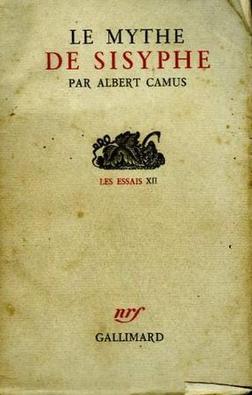
Albert Camus and “The Myth of Sisyphus”
Albert Camus, a prominent figure in existentialist philosophy and literature, explored the themes of absurdity, rebellion, and the human quest for meaning in his essay “The Myth of Sisyphus.” Published in 1942, this work delves into the philosophical implications of the Sisyphus myth, drawing parallels between Sisyphus’s eternal task and the human struggle for purpose in an indifferent universe.
Analysis of “The Myth of Sisyphus”
In “The Myth of Sisyphus,” Camus begins with the famous declaration: “There is but one truly serious philosophical problem, and that is suicide.” This opening sets the stage for an exploration of the absurdity of life and the inherent tension between the human desire for meaning and the apparent meaninglessness of the universe.
Camus introduces the concept of the absurd, asserting that life is absurd because of the inherent human desire for rationality and meaning in a universe that remains indifferent. He famously states, “The absurd is born of this confrontation between the human need and the unreasonable silence of the world.”
The essay revolves around the allegory of Sisyphus, whom Camus sees as the absurd hero. Sisyphus’s eternal struggle echoes the human condition, where individuals are condemned to persist in their pursuits despite the apparent lack of ultimate meaning. Camus poses a fundamental question: Can one find happiness and fulfillment in embracing the absurdity of existence?
Embedded within the text, Camus’s poignant reflections in “The Myth of Sisyphus” echo a profound understanding of the human condition. His words resonate with existential insights that continue to captivate readers. Consider his conclusive statement, wherein he declares, “The struggle itself toward the heights is enough to fill a man’s heart. One must imagine Sisyphus happy.” Here, the essence of Camus’s central argument is distilled – within the seemingly futile nature of Sisyphus’s perpetual task lies a wellspring of fulfillment. Camus provocatively suggests that embracing life’s absurdity and deriving purpose from the very struggle becomes an act of rebellion, a defiant stance against the universe’s indifferent silence.
Camus further delves into the nature of the absurd with the assertion, “The absurd teaches us that all experiences are unimportant in themselves and that they may, singularly, give value to others.” In these words, he unravels the subjective tapestry of meaning, illuminating the idea that individual experiences, while lacking inherent significance, can collectively mold the broader narrative of one’s life. This profound insight invites readers to reassess the value embedded within the accumulation of seemingly inconsequential experiences, encouraging a contemplative exploration of life’s nuanced tapestry. Camus’s literary brush paints a canvas where the seemingly trivial gains collective significance, challenging readers to find meaning in the amalgamation of life’s diverse moments, no matter how modest or seemingly insignificant.
Influence on 20th-Century Literature and Thought
Camus’s exploration of the absurd in “The Myth of Sisyphus” and his broader body of work significantly influenced 20th-century literature and philosophical thought. Existentialist and absurdist themes permeated literary works, influencing writers like Jean-Paul Sartre, Samuel Beckett, and Franz Kafka.
Camus’s emphasis on individual responsibility in the face of absurdity resonated profoundly with postwar intellectuals who found themselves grappling with the profound repercussions of World War II. The devastation and disillusionment wrought by the war prompted a philosophical reckoning, and Camus’s ideas struck a chord. His exploration of the absurd, encapsulated in “The Myth of Sisyphus,” resonated with thinkers who sought to navigate a world that seemed marked by chaos and uncertainty.
One notable example of Camus’s influence can be seen in the existentialist movement of the mid-20th century, particularly in the work of Jean-Paul Sartre. Sartre, a leading figure in existentialist philosophy, engaged with Camus’s ideas and expanded upon them in his own works. Sartre’s concept of radical freedom and the idea that individuals are condemned to be free, as articulated in his seminal work “Being and Nothingness,” bears traces of the existential dilemma explored by Camus.
Additionally, Camus’s ideas found echoes in the literary realm, notably in the works of Samuel Beckett. Beckett’s play “Waiting for Godot” reflects existential themes of absurdity, despair, and the search for meaning in a seemingly indifferent universe. The characters’ futile waiting for an elusive figure mirrors the Sisyphean struggle and underscores the pervasive sense of absurdity in the postwar world.
Furthermore, the broader cultural and philosophical shift spurred by Camus’s ideas is evident in the way society grappled with notions of meaning, morality, and individual agency. The emphasis on personal responsibility in the face of a seemingly indifferent world influenced not only philosophical discourse but also permeated literature, art, and even political thought.
In this way, Camus’s exploration of the absurd and the call for individual responsibility resonated not only in theoretical circles but also in practical applications across various disciplines. His ideas became a touchstone for those navigating the complex landscape of a post-war world, contributing to a broader cultural and philosophical shift that sought to make sense of the inexplicable and find meaning in the face of existential challenges.
In conclusion, Albert Camus’s “The Myth of Sisyphus” stands as a timeless cornerstone of existentialist philosophy, offering profound insights into the intricate tapestry of the human condition. Camus’s exploration of the absurd, encapsulated in the essay, has left an indelible mark on both literary and philosophical landscapes. His profound impact extends beyond the confines of its initial publication, resonating deeply with subsequent generations of thinkers and artists grappling with the aftermath of World War II.
Camus’s call for embracing the absurdity of life and finding purpose in the face of seemingly insurmountable challenges has reverberated throughout the existentialist movements of the mid-20th century. From the pens of Jean-Paul Sartre to the stages of Samuel Beckett’s plays, the echoes of Camus’s ideas resonate in the exploration of individual responsibility, freedom, and the search for meaning in a world marked by upheaval.
Beyond philosophical circles, Camus’s influence has permeated literature, art, and cultural discourse, contributing to a broader shift in how society grapples with questions of meaning and purpose. His enduring legacy challenges individuals to confront the absurdity of existence and find fulfillment in the very act of navigating life’s complexities. As we continue to navigate our way through an ostensibly indifferent world, Camus’s exploration remains a guiding beacon, urging us to imagine our own forms of happiness amidst the perpetual struggle – a testament to the enduring relevance of his insights in the ongoing quest for meaning.
Conclusion
In tracing the contours of the myth of Sisyphus through the visual eloquence of Titian’s canvas and the philosophical depth of Albert Camus’s essay, we find ourselves at the confluence of art and existential inquiry. The journey through the winding paths of Sisyphus’s eternal struggle has revealed not only the mastery of Titian’s brush and the profound insights of Camus but a shared exploration of the human experience.
Titian’s visual narrative, frozen in the timeless strokes of the Renaissance, encapsulates the weight of Sisyphus’s boulder and invites us to contemplate the symbolism ingrained in the physicality of the myth. The snakes, the tormented figures below, and Sisyphus’s determined expression collectively contribute to a visual symphony that transcends mere representation, echoing the profound interconnectedness of actions and consequences.
On the literary front, Camus’s “The Myth of Sisyphus” serves as a philosophical compass, guiding us through the labyrinth of absurdity and the search for meaning. The essay’s lasting impact reverberates through the existentialist movements of the mid-20th century, where echoes of Camus’s ideas can be discerned in the works of Sartre, Beckett, and beyond. Through the lens of Sisyphus’s ceaseless labor, Camus implores us to imagine happiness in the very struggle against the absurd, a call to rebellion against the indifferent silence of the universe.
As we bring our exploration to a close, the myth of Sisyphus emerges as a multifaceted prism, refracting the complexities of the human condition. The convergence of Titian’s visual narrative and Camus’s philosophical reflections creates a holistic understanding of the myth, where art and philosophy dance in tandem. The boulder, once an ancient symbol of punishment, transforms into a universal allegory inviting us to confront the absurdity of existence, navigate the intricate tapestry of choices, and ultimately find meaning in the act of living.
In the interplay of canvas and essay, brushstroke and word, we find an enduring resonance that transcends temporal boundaries. The myth of Sisyphus, as interpreted by Titian and Camus, invites us to engage in a perpetual dialogue with the profound questions that define the human experience. As we step away from this exploration, may the echoes of Sisyphus’s labor linger, urging us to ponder the complexities of our own journeys and the relentless pursuit of meaning in a world that often appears indifferent.
© Francesc Borrull, 2024


Re: “Camus provocatively suggests that embracing life’s absurdity”
He appeals to humans cognition to “get” that concept/idea on an intellectual level.
WHY is there a great global need for such an intellectual maneuver (a question Camus, and others, entirely ignores, failing to see the bigger picture)?
Because so-called civilized humans have a deadly disease, a soullessness spectrum disorder — study the theory of the 2 married pink elephants in the historical room
A soulful individual has NO need for such a cognitive self-“education” (self-manipulation)…
LikeLike