
By Francesc Borrull · April 21, 2025
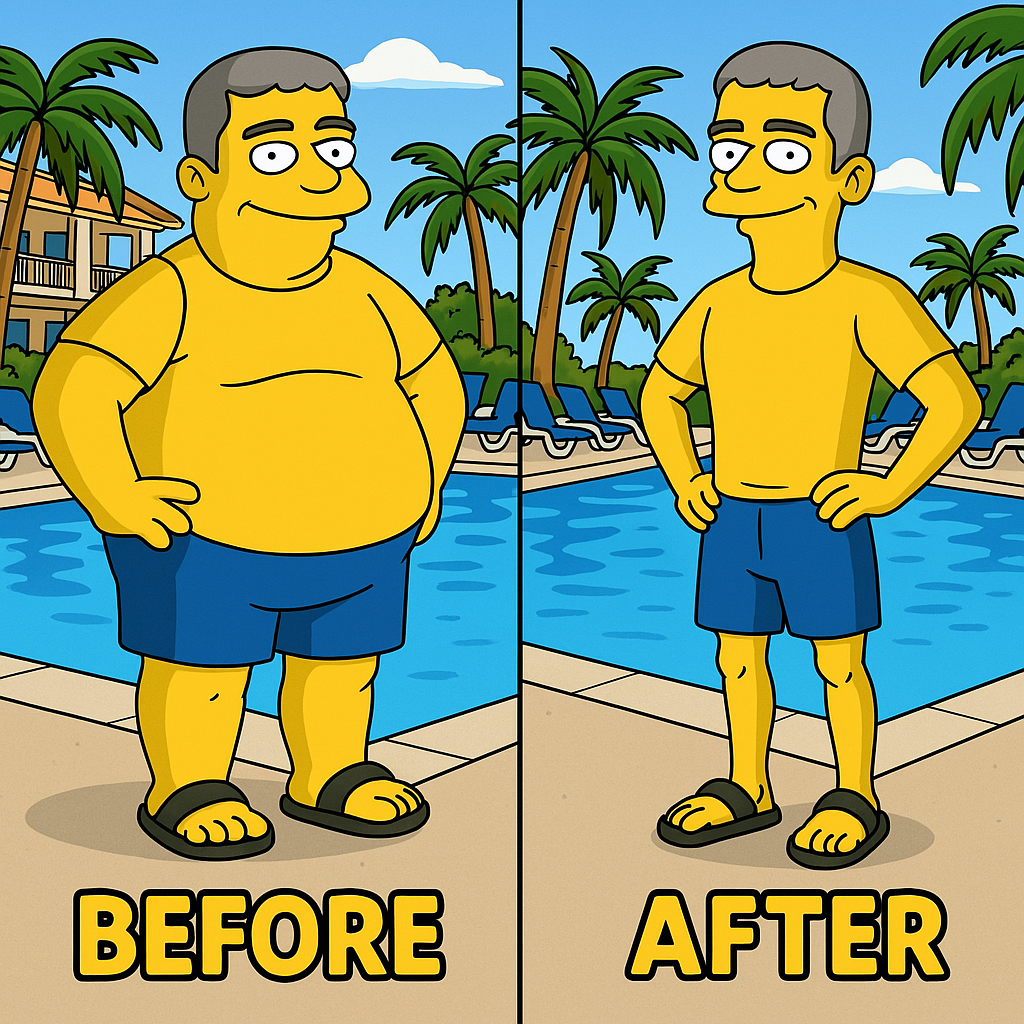
A while ago, I published a post about maximizing protein synthesis (here). Today, I want to dive into another key aspect of general health and sports performance: fat burning. We all know that having too much fat in the body can negatively affect our health, but understanding why it happens and how to manage it is often confusing and overwhelming.
Let me first clarify: I’m not a doctor or licensed medical professional. This post reflects my personal experience and knowledge, and is written to help me understand the topic better, and hopefully help you too. Always consult with a qualified physician for professional medical advice.
Why Body Fat Matters and What Levels Are Healthy?
Body fat isn’t the enemy. In fact, it plays several essential roles:
- Energy Storage – Fat is a long-term energy reservoir for your body.
- Hormonal Function – Fat cells produce hormones that regulate hunger, metabolism, and more.
- Insulation & Protection – Fat helps regulate body temperature and protects vital organs.
- Vitamin Absorption – Many essential vitamins (like A, D, E, and K) are fat-soluble.
- Reproductive Health – Especially in women, fat is key to hormonal balance and fertility.
So what’s a healthy level of fat? While it varies slightly depending on the source, general guidelines are:
- Men: 10–20% body fat (athletes may go as low as 6–13%)
- Women: 18–28% body fat (athletes: 14–20%)
Too much or too little fat can both lead to health problems, so balance is everything.
How Do We Accumulate Body Fat?
When you consistently consume more calories than you burn, your body stores the excess energy. That energy, especially when it comes from carbohydrates or sugars, is converted into glucose, which, if not immediately used, gets transformed into triglycerides and stored in adipose tissue (aka body fat).
This process is biologically normal and actually essential to human survival. From an evolutionary perspective, storing fat helped our ancestors survive periods of famine. Our brains are wired to seek high-calorie foods and store energy efficiently. That was great 10,000 years ago. But now, with easy access to food and sedentary lifestyles (plus refrigerators!), this survival mechanism works against us.
Storing fat is easy, but burning it is much harder. Which leads us to the big question:
How Does Fat Burning Actually Work?
Fat burning, or fat oxidation, is a multi-step process that your body uses to break down stored fat and convert it into usable energy. The first step in this process is called lipolysis.
Lipolysis is the breakdown of stored triglycerides (fat molecules) within fat cells (adipocytes) into free fatty acids (FFAs) and glycerol. This process is triggered by the release of catecholamines, like adrenaline and noradrenaline, typically in response to a calorie deficit or during exercise.
Here’s how it works:
- Catecholamines bind to beta-adrenergic receptors on fat cells.
- This activates a messenger molecule called cAMP (cyclic adenosine monophosphate).
- cAMP stimulates Hormone-Sensitive Lipase (HSL), the key enzyme responsible for lipolysis.
- HSL breaks down triglycerides into free fatty acids (FFAs) and glycerol.
- These FFAs are released into the bloodstream, where they bind to albumin, a transport protein.
- The FFAs are then delivered to tissues like muscles and the liver, especially during exercise.
But that’s only half the journey—once delivered, the fatty acids need to be burned. This happens through a process called beta-oxidation. This is where the real “fat burning” takes place.
- Beta-oxidation occurs in the mitochondria of cells (the energy powerhouses).
- The fatty acids are broken down into smaller molecules that enter the Krebs cycle and eventually the electron transport chain, producing ATP, the energy currency of the body.
- This process is most active during low to moderate intensity exercise, like steady-state cardio or walking, when the body prefers fat over carbohydrates for fuel.
Several hormones support and amplify fat-burning mechanisms:
- Growth Hormone: Reduces the storage of new fat and enhances the action of catecholamines.
- Testosterone: Promotes lean muscle mass and supports fat loss, especially when strength training is involved.
- Insulin (in low levels): When insulin levels drop—such as during fasting or after low-carb meals—lipolysis increases. This is why it may be to your advantage to train in a fasted state, especially if your goal is to tap into fat stores more efficiently.
How Can We Help the Body Burn Fat?
1. Create a Caloric Deficit (But Do It Smart)
Yes, you have to eat less than you burn. But many people try to lose fat by barely eating anything. If your Basal Metabolic Rate (BMR) is 1600 kcal and you only eat 1600–1800 kcal a day without moving much, of course you’ll feel miserable and hungry!
The trick is to raise your daily energy expenditure through movement. Which brings us to…
2. Start Exercising (Yes, You Must)
When you move your body, you burn more calories, simple as that. And that’s the real secret: increasing your energy output so you can create a caloric deficit without starving yourself. It also means you don’t need to go on a super restrictive low-carb diet, something that makes absolutely no sense and isn’t backed by solid science.
Yes, excess carbs can be stored as fat, but carbs are not the enemy, especially if you’re active. The more you move, the more your body uses carbohydrates as fuel. So instead of slashing carbs to reduce calories, focus on burning more calories so you can enjoy a balanced, nutrient-rich diet. All three macronutrients—protein, carbs, and fats—are essential for a healthy, functioning body. More on that in the next section.
I’m a runner, so I naturally burn a lot through training. But if you’re starting from a sedentary lifestyle and your main goal is fat loss, I strongly recommend beginning with strength training. Resistance workouts not only preserve lean muscle—which is key for maintaining a higher metabolism—but also trigger the release of fat-mobilizing hormones like adrenaline. This adrenaline surge stimulates lipolysis, breaking down fat stores and releasing fatty acids into the bloodstream.
But here’s the important part: once those fatty acids are in your blood, they still need to be transported into your muscle cells and oxidized in the mitochondria. That’s where low-intensity, steady-state cardio (like a Zone 2 run or brisk walk) comes in. This type of exercise relies heavily on beta-oxidation and the Krebs cycle, making it ideal for actually burning the fat that’s been mobilized.
So what’s the perfect combo? Try a 30-minute HIIT or strength training session to stimulate fat breakdown, followed by 30 minutes of low-intensity cardio to finish the job. This approach blends hormonal stimulation with metabolic efficiency—giving you the best of both worlds.
Aim to exercise at least three times a week, and more if you can. Consistency, structure, and variety are your allies. And remember: strength training is still king, but combining it smartly with cardio will accelerate your results and make fat loss more effective and sustainable.
3. Dial in Your Nutrition (Macros Matter)
It’s not just about how many calories you eat—it’s also about what those calories are made of. Macro distribution matters when it comes to burning fat. For example, you could eat 300 calories in the form of sugar, or you could eat 300 calories from a salad. Same calories, completely different nutritional impact. Choosing foods that are rich in nutrients and balanced in protein, carbs, and healthy fats will help you stay full, fuel your body, and support fat loss more effectively.
Here are some guidelines to calculate your macro distribution for burning fat:
- Protein: Multiply your weight in kilograms (not pounds!) by 1.6 grams (minimum 1.4 gr/kg, max 2.2 gr/kg). That’s your daily protein target. Example: A 90 kg man → 90 x 1.6 = 144 g of protein (576 kcal).
Protein isn’t just about muscle building, it’s crucial for fat loss too. It helps you feel full longer, reducing the chances of overeating, and it protects your muscle mass while you’re in a caloric deficit. Muscle is hard to build but easy to lose, while fat is the opposite—easy to gain, hard to burn. That’s why keeping your protein intake high is essential: it ensures the weight you lose comes primarily from fat, not lean muscle. - Carbs: 3–5 g/kg → 90 x 4 = 360 g (1440 kcal).
- Fats: 1–1.3 g/kg → 90 x 1 = 90 g (810 kcal).
That totals 2,826 kcal/day. Subtract a modest deficit—let’s say 300 kcal/day—and you’re left with 2,526 kcal/day. Since 1 kg of fat contains 7,700 kcal, burning an extra 300 kcal per day over a week adds up to 2,100 kcal, which translates to about 270 grams of fat lost per week. These are, of course, rough estimates, but they’re a solid starting point for planning your fat-loss strategy.
Use tools like MyFitnessPal or Cronometer to track your intake, at least for a couple of months. I personally use Cronometer (no sponsorship—just love it). I suggest you pay for the premium version (I do) to get all the tools that will help you maximize your effort.
Check your progress weekly and adjust as needed. If you’re losing about 1 lb (450 gr) per week, you’re right on track. If not, consider a small adjustment—either reduce your calorie intake slightly or increase your physical activity. But remember: never starve yourself. And above all, don’t cheat yourself. Be honest, consistent, and patient. You didn’t gain fat overnight—it took months or even years—so it will take time to lose it in a healthy, sustainable way.
Another way to Calculate Your Caloric Expenditure
Understanding how many calories your body burns daily is crucial for planning your fat loss (or muscle gain) goals. Here’s a simple, science-backed method you can use to estimate your Total Daily Energy Expenditure (TDEE), the number of calories you burn in a day when factoring in metabolism, movement, and digestion. This is an additional computation that will help us contrast it with the numbers we found in the previous section.
Step-by-Step Formula for a sedentary 90 kg man:
- Start with your weight (in kilograms). Multiply your body weight by 22 to estimate your Basal Metabolic Rate (BMR) — the calories your body burns at rest just to stay alive.
Example: 90 kg × 22 = 1,980 kcal (BMR) - Factor in your activity level (NEAT + exercise). Use a multiplier based on your lifestyle and how many times you train per week. I use the Eric Helms activity factor:
- Sedentary + trains 0–2x/week: 1.2–1.3
- Lightly active + trains 3x/week: 1.3–1.4
- Moderately active + trains 4–5x/week: 1.5–1.6
- Very active + trains 6x/week or has physical job: 1.7–1.8
Example (sedentary but trains 3x/week): 1,980 × 1.3 = 2,574 kcal
- Add the Thermic Effect of Food (TEF). Eating food actually burns calories during digestion. This is called thermogenesis. Multiply your current total by 1.1 to account for this. Example: 2,574 × 1.1 = 2,831 kcal/day.
Interestingly, this number is almost identical to the earlier calculation we made (2,526 kcal/day), which helps validate the accuracy of our approach. Still, it’s important to remember that calorie calculations are estimates—not exact science. Your real-world results may vary. That’s why it’s crucial to monitor your progress weekly and make adjustments based on how your body actually responds.
Bonus Tips & Supplements
Now for the extra stuff—the icing on the cake (low-calorie, of course):
- Fiber Is Your Fat-Loss Ally: One often overlooked but incredibly powerful tool for fat loss is fiber. Aiming for around 35 grams per day can make a huge difference (30–36 grams for men, 25–30 grams for women). Why? Fiber helps keep you full longer, reducing unnecessary snacking and helping you naturally eat fewer calories. It also slows digestion, stabilizes blood sugar, and prevents energy crashes that lead to cravings. Plus, it supports a healthy gut, which plays a key role in metabolism, inflammation, and hormone regulation—all crucial for burning fat. Load up on fruits, vegetables, legumes, whole grains, and seeds. Make fiber your daily sidekick, and you’ll not only feel better—you’ll see results faster.
- NEAT (Non-Exercise Activity Thermogenesis): NEAT is the energy you burn from everything outside of intentional exercise—walking, fidgeting, doing chores, standing instead of sitting. It may not feel like much, but it adds up big time. Want an easy win? Walk more. Set a target of 10,000 steps a day to ramp up your NEAT and boost daily calorie burn without extra time in the gym. Remember the NEAT was calculated in our examples above, but you still have to be active beyond the three days you go to the gym!
- Caffeine: A Legit Fat-Burning Boost: Caffeine is one of the most researched and reliable fat-burning aids out there. It increases energy levels, boosts metabolism, and can enhance workout performance—all of which support fat loss. A strong cup of black coffee or green tea can be enough for most people. For a more targeted effect, you might consider a caffeine supplement—but always consult your doctor first, especially if you’re sensitive to stimulants. A safe and effective dosage ranges from 3 to 6 mg per kilogram of body weight. Start on the lower end, assess how your body reacts, and adjust from there if needed.
- Smart Supplement Strategy: Forget the hype. Stick with a few science-backed basics:
- Whey protein powder helps meet daily protein goals conveniently.
- Creatine monohydrate supports strength, muscle retention, and recovery.
- Omega-3s (from fish oil or algae) can reduce inflammation and support overall health.
- Supplements should enhance—not replace—a solid nutrition and training plan. Always prioritize real food first!
Final Thoughts
Fat loss isn’t easy, but it’s absolutely possible. It doesn’t require starving yourself or cutting out entire food groups. It takes knowledge, consistency, smart habits, and a bit of patience. The key is to fuel your body with a balanced diet, stay active (at least three times a week!), and build sustainable routines that support both physical and mental well-being.
For me, fitness and nutrition aren’t just goals; they’re part of my lifestyle and personal growth. Writing about this helps me better understand the science and mindset behind it, and I hope this post helps you feel more equipped to take control of your own journey.
Let’s keep learning, moving, and making progress, one smart, intentional step at a time.
© Francesc Borrull, 2025
 Francesc Borrull