
By Francesc Borrull · May 5, 2025
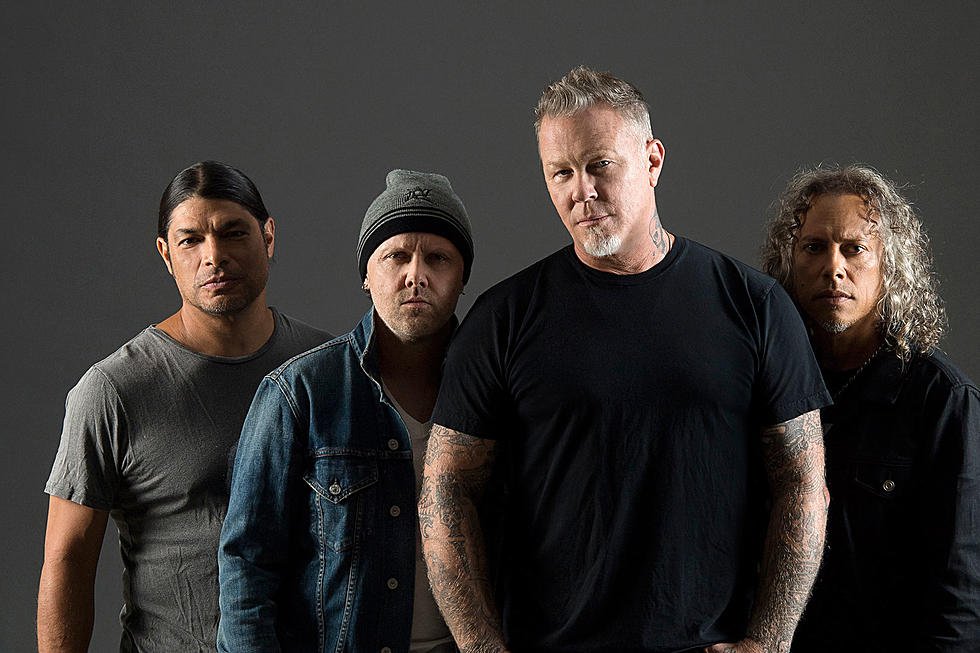
This is not your typical “Top 10 Metallica Songs” list. It’s not trying to rank the most technically complex, the heaviest, or the most popular tracks (whatever “objectively best” means, anyway). Instead, this list is a personal journey through Metallica’s catalog, a curated tour of their career from 1983 to 2023, with each song selected to represent a moment, a shift, or just something that hit me hard at a specific time in my life.
Metallica has released 12 studio albums, and I didn’t include every single one. In fact, for a couple of them, I couldn’t help myself and picked two songs. And yes, there’s even one cover in here. Because let’s face it: Metallica is not only a monster of a metal band, they’re also one of the greatest cover bands of all time.
Each song comes with two sections:
- One that focuses on the facts — some context, trivia, and musical details.
- And another, more personal rant, where I explain why the song matters to me.
Let’s dive in.
1. Seek and Destroy (1983) – Kill ’Em All
The Song: A standout from Metallica’s debut Kill ’Em All, “Seek & Destroy” has been a live staple for over four decades, embodying the raw, street-level aggression that defined early thrash. When Kill ’Em All dropped in July 1983, critics called it “a new kind of metal”—an unprecedented explosion of intensity, speed, and fury. As Kirk Hammett put it, “there were no hard rock or heavy metal albums up to that point that sounded like Kill ’Em All, in terms of intensity, speed, and aggression. From start to finish, that album is a complete package: young, raw, obnoxious, loud, fast, energetic, and inspirational.”
“Seek & Destroy” encapsulates all of that spirit. Inspired by Diamond Head’s “Dead Reckoning,” James Hetfield wrote the riff sitting in his truck outside of work, crafting a song built around a higher one-note riff in A rather than the typical E. The chorus riff—and the descending riff during the faster solo section—also lifted inspiration from Saxon’s “Princess of the Night.” Still, despite the clear influences, Metallica forged something unmistakably their own: bone-crushing rhythm guitars, Cliff Burton’s tightly locked bass line, Hetfield’s snarling vocals, and Hammett’s frantic soloing.
The track’s chugging riff, mid-paced tempo, and shouted chorus were tailor-made for crowd participation. Even today, crowds erupt the moment that iconic opening riff kicks in, a sign of its timeless, unrelenting energy. “Seek & Destroy” managed to sound as heavy and punishing as underground acts like Slayer or Venom, but with just enough polish and precision to appeal to fans of Dio and Thin Lizzy as well.
Kirk Hammett later admitted he was haunted by a few “sour notes” in his recorded solo, having plugged his Gibson Flying V into an Ibanez Tube Screamer and a Marshall Super Lead and banged out a few quick takes. “I didn’t have much really worked out,” he recalled. “No frills, no over-intellectualizing—we weren’t going over the finer points. I had just been taking lessons from Joe Satriani, and I remember thinking, I hope Joe likes this.” Despite a few bends out of pitch, Hammett’s frantic, high-energy solo perfectly captures the raw spirit of Kill ’Em All—something even a more technically precise performance could never replace.
Seek & Destroy crushed just about everything else released in 1983—a year packed with great metal—and remains one of Metallica’s most enduring and iconic songs.
Personal Rant: So many memories with this one. I actually learned to play “Seek & Destroy” on guitar, and that’s one of the things I love about Metallica. They’re heavy, but accessible. As an intermediate guitarist, you can totally hang with a lot of their riffs. This song takes me back to my punk/metalhead teenage years, roaming the city with my crew, wearing ripped jeans and feeling unstoppable. “Seek & Destroy” was one of the very first Metallica tracks I ever heard, and it still hits hard. Of the early albums, I think Kill ’Em All may have aged the worst… except this one. This song is still as alive as it was in 1983.
2. Fade to Black (1984) – Ride the Lightning
The Song: “Fade to Black” was a game-changer—not just for Metallica, but for heavy metal as a whole. Their first ballad, it became the “Stairway to Heaven” of thrash: a haunting track with a somber acoustic intro and raw, introspective lyrics about suicidal despair. In a genre dominated at the time by gore, fantasy, and bravado, Metallica dared to show vulnerability—and it worked.
It’s a rare feat when a metal band manages to sound both beautiful and heavy at once, but with “Fade to Black,” Metallica achieved it without sacrificing their signature intensity. Instead of alienating fans, the song resonated deeply with the metal community—where behind the spikes and black t-shirts, many struggled with depression, alienation, and self-doubt. “Fade to Black” gave that pain a voice, and in doing so, expanded Metallica’s reach beyond the underground.
Listening to “Fade to Black,” it’s clear how far Metallica had progressed in just a year. No longer the cocky upstarts of Kill ’Em All charging forward with pure fury, they now sounded like seasoned veterans poised to dominate heavy metal for decades. A key example of this growth was their use of acoustic guitar—not just as an intro, like in Ride the Lightning’s opening track “Fight Fire with Fire,” but as an integral part of the song’s mood. “That song was a big step for us,” James Hetfield said. “It was pretty much our first ballad, so it was challenging, and we knew it would freak people out.”
Kirk Hammett recalled writing the song while staying at a friend’s house in New Jersey, during a dark period when the band’s gear had been stolen and tensions were running high. “I was pretty depressed at the time,” he said. Recording the acoustic parts proved equally challenging. “I learned how frustrating playing the acoustic guitar could be—you can hear every squeak if you aren’t careful.”
Yet despite its melancholy, “Fade to Black” did not compromise Metallica’s sound or intensity. It offered one of the most unvarnished contemplations of suicide ever recorded by a metal band, far from the shock tactics sometimes employed by others. Rather than exploitative, the song felt deeply personal, reflecting Hetfield’s genuine mood. “We got a lot of flak for it,” Hetfield said, “but we also got hundreds and hundreds of letters from kids telling us how they related to the song and that it made them feel better.”
In the end, “Fade to Black” stands as one of Metallica’s finest moments—laying the emotional blueprint for future classics like “One” and “The Unforgiven,” yet powerful enough to stand proudly on its own.
Personal Rant: Probably my all-time favorite Metallica song. I can still play the intro and most of the solos on guitar. The lyrics hit deep. There have been moments in my life where I’ve been in that headspace, and this song got me. I remember being 12 or 13, standing outside a local metal band’s garage in the pouring rain, just listening to them cover this song. I didn’t move. I was completely hypnotized. “Fade to Black” is the heart of Metallica’s aesthetic: heavy, emotional, brutally honest. And it always brings me back.
3. Master of Puppets (1986) – Master of Puppets
The Song: Now immortalized by Stranger Things, “Master of Puppets” remains eight and a half minutes of pure metal majesty. It opens with one of the most powerful riffs ever recorded—an intro often compared to the raw, immediate force of Beethoven’s Fifth Symphony—and from there, the song unfolds almost like a heavy metal symphony. After an explosive thrash opening, it slows into a somber, harmonized interlude, builds into a standalone middle section, and then storms back to the original theme in a final, chaotic explosion.
The sophistication of its structure was a testament to how far Metallica had come in just a few years. By the time they entered the studio to record Master of Puppets in late 1985, James Hetfield, Kirk Hammett, Lars Ulrich, and Cliff Burton had been forged into a brutally efficient machine by years of relentless touring. Their playing was tighter, their songwriting more ambitious, and their chemistry undeniable. “We had gotten to know each other’s musical capabilities and temperaments,” Hammett said, “and I could tell it was really blossoming into something to be reckoned with.”
The song’s signature descending riff actually grew out of backstage jams during the Ride the Lightning tour. James Hetfield would often fool around with the pattern on the D string, while Hammett played harmonies above it on the G string. It sounded goofy at first, but later, Hetfield reimagined it on the low E string, creating the devastatingly heavy intro that would define “Master of Puppets.” “Ah, so you finally found a use for that dorky little thing!” Hammett recalled saying.
Lyrically, Hetfield explored the theme of addiction—how the user becomes the used. “It deals pretty much with drugs [and] how things get switched around,” Hetfield explained. “Instead of you controlling what you’re taking and doing, it’s drugs controlling you.” Paired with the album’s cover art—rows of white crosses manipulated by the strings of a hidden master—the song resonates far beyond substance abuse, hinting at broader, invisible forces that control people’s lives.
At the time of Master of Puppets‘ release, Metallica was still an underground phenomenon, hungry for recognition. Their fanbase was growing rapidly, but mainstream success had yet to materialize. That would change with Master of Puppets—their first Gold-certified album, powered largely by the strength of its towering title track. For many listeners, “Master of Puppets” didn’t just define Metallica; it redefined what heavy metal could be: brutal yet sophisticated, aggressive yet intelligent, chaotic yet meticulously crafted.
Cliff Burton called it “the best Metallica song yet” back in 1986. Decades later, few would argue with him.
Personal Rant: For me, this song was a way of life. “Master of Puppets” was everything I loved about metal: the angst, the power, the rebellion. And yes, I wore a button with Cliff Burton’s face on it. Always. I had long hair, black tees, and shredded jeans. I lived for this stuff. This song, and this album, were turning points for Metallica, they weren’t just a metal band anymore. They were the metal band.
4. One (1988) – …And Justice for All
The Song: Metallica’s first Top 40 hit and the band’s first-ever music video, “One” was an unlikely breakthrough: a sprawling seven-minute epic based on Johnny Got His Gun, Dalton Trumbo’s searing anti-war novel. The song tells the grim story of a World War I soldier trapped in his own body after losing his limbs and senses, left to silently endure a waking nightmare.
The track opens with a clean, mournful guitar intro—partly inspired by Venom’s “Buried Alive”—a haunting calm before the storm. What follows isn’t a conventional power ballad but a slow, relentless build into one of the heaviest and most devastating assaults in Metallica’s catalog. Lars Ulrich’s machine-gun drumming mimics the rattle of battlefield gunfire, and Kirk Hammett delivers not one, but three distinct guitar solos, each escalating the song’s emotional intensity. Hammett later admitted he “lost a lot of sleep” trying to perfect the middle solo, ultimately recording and re-recording it countless times before finally nailing the version that made the album—during a late-night session at New York’s Hit Factory.
At the time, Metallica was mixing …And Justice for All while touring with the Monsters of Rock festival, a grueling schedule that saw Hammett flying overnight to record solos between shows. Exhausted but determined, the band pushed through, and the results speak for themselves: “One” remains one of the most chilling, beautifully constructed tracks in metal history.
The song’s stark music video, which splices in clips from the 1971 film adaptation of Johnny Got His Gun, helped expand Metallica’s audience dramatically. Though the song’s dark imagery, complex structure, and furious instrumental passages might have seemed destined to repel casual listeners, it instead pulled in a new wave of fans looking for something deeper, heavier, and more real.
While Metallica would go on to score even bigger commercial hits, “One” remains a potent gateway—an unforgettable blend of tragedy, fury, and artistry that continues to give listeners goosebumps decades later.
Personal Rant: When …And Justice for All dropped in 1988, I was already a Metallica superfan. This was their moment, even after Cliff’s tragic death, they came back swinging. This song is special for me for a lot of reasons. It’s the closing track of Side A, track #4, continuing that legacy from “Fade to Black” and “Welcome Home (Sanitarium),” the ballad slot, basically. But more than that, “One” is pure art. The riffs, the solos, the themes… it all hit me hard. I even tattooed the album cover on my arm. Enough said.
5. The Unforgiven (1991) – Metallica (The Black Album)
The Song: “The Unforgiven” signaled another bold reinvention for Metallica. As part of The Black Album—the record that propelled them to stadium-level fame—it was both a standout and a lightning rod. Thrash purists balked at the band’s more radio-friendly sound, and this six-minute ballad, with its acoustic textures and subdued vocals, became a focal point for their criticism. But listen closely, and you’ll hear that “The Unforgiven” is anything but soft.
From its opening reversed horn sample—a haunting, cinematic touch—the track immediately sets itself apart. Instead of following the classic metal ballad formula (soft verses, heavy choruses), Metallica flipped the script: the verses here are crushing and aggressive, while the chorus retreats into a plaintive, almost fragile melody. It’s a brilliant act of subversion that plays with listener expectations and tension.
At the song’s emotional center is Hetfield, whose delivery feels both wounded and defiant. Lines like “You labeled me, I’ll label you” cut deep, capturing a lifetime of alienation and resentment. There’s a rawness here, a sense that Hetfield is reaching inward—offering a glimpse of his inner child, battered but unbowed.
Kirk Hammett’s contribution is just as vital. Pushed hard by producer Bob Rock—famously seen in the documentary A Year and a Half in the Life of Metallica (Part I here, Part II here)—Hammett delivers not one but two solos back to back. The first is Spanish-tinged and expressive, the second gnarlier and more aggressive, creating a dynamic contrast that mirrors the song’s internal push-pull. Hammett later admitted the process was grueling, with countless takes, but the final result stands as one of his most nuanced, melodic performances.
“The Unforgiven” became so essential to Metallica’s identity that the band revisited its themes twice, first on Load and later on Death Magnetic (both of which I’ve explored in depth in this post). These sequels continued a narrative rooted in struggle, isolation, and the search for self. For many fans, the original song offered a first glimpse into Metallica’s emotional and sonic depth. It served not as a return to their thrash beginnings, but as an entry point into a darker, more introspective side of the band. Austere, aching, and unforgettable.
Personal rant: The Black Album was controversial. For metal purists, songs like “Nothing Else Matters” and “The Unforgiven” felt like betrayal. Not me. I was all in. I thought Metallica had never sounded better, more mature, more layered. This song in particular hit me hard back then, and still does. Hetfield’s lyrics? Poetry in barbed wire. I loved it in ’91, I love it now. I can still play it all the way through on guitar, and even though I’ve drifted from the album over time, this one remains an untouchable gem.
6. All Nightmare Long (2008) – Death Magnetic
The song: After a decade of experimenting with post-grunge textures and distancing themselves from their thrash roots, Metallica came roaring back with Death Magnetic, an album that reasserted their place atop the metal world. “All Nightmare Long” is its crown jewel—a relentless, high-speed assault driven by quicksilver riffs and a couple of Kirk Hammett’s fiercest solos. It’s tight, furious, and unmistakably Metallica, marrying the aggression of their early years with the refinement of a band that had weathered storms both personal and professional. Lyrically, Hetfield pulls from H.P. Lovecraft’s mythos—specifically the short story “The Hounds of Tindalos”—to paint a vision of inescapable terror, where even sleep offers no refuge. The result is a post-apocalyptic nightmare as cinematic as it is brutal, channeling horror-flick energy into one of Metallica’s most ferocious modern tracks.
Personal rant: I once used the phrase “Metallica canon” in another blog and got roasted in the forums: “What the f*** is the Metallica canon?” Fair question. If you were born post-1990, the Big Four albums (Kill ‘Em All through …Justice) may not hold the same weight. Albums like this are the reason why for younger fans. Death Magnetic (where this beast lives) deserves recognition. This song? It’s mood-altering. Feverish. Every time I’m sick, this one weirdly loops in my head, probably because of its references to disease. It’s also an absolute banger for speed workouts. Angry. Hyped. Glorious.
7. Spit Out the Bone (2017) – Hardwired… to Self-Destruct
The song: This is Metallica’s most brutal closer since “Dyer’s Eve.” “Spit Out the Bone” is a scorcher that tears into our techno-dystopian future with unhinged precision. Hetfield, pissed and prophetic, growls about machines replacing mankind: “Long live machine / The future supreme.” The riffs are savage, the tempo relentless, and the message disturbingly timely.
Personal rant: Holy hell, this track is next level. The lyrics, the pacing, the sheer aggression. It’s everything I love about metal cranked to eleven. I run to this. I live to this. Honestly, this has probably been my most played song of the last year. It proves that Metallica’s bite is still sharp. So yeah, screw the ‘canon’. This belongs up there with the best of them.
8. Welcome Home (Sanitarium) (1986) – Master of Puppets
The song: Inspired by One Flew Over the Cuckoo’s Nest, “Welcome Home (Sanitarium)” plunges listeners into the psychological torment of a narrator trapped—either in a mental institution or within the prison of his own unraveling mind. The 1975 film adaptation of Ken Kesey’s novel about dehumanizing psychiatric systems deeply influenced Hetfield’s lyrics, aligning perfectly with Master of Puppets’ broader themes of control and manipulation. The track begins with an eerie, slow burn—Kirk Hammett’s haunting melodic leads setting the tone—before escalating into a crushing, explosive finale. Hetfield’s vocal performance shows a major leap in range and authority, while the band’s growing confidence is evident in the song’s ambitious structure. Released as a single despite its length and intensity, “Sanitarium” still found airplay, a testament to Metallica’s rising power. Brooding, cinematic, and claustrophobic, it’s a masterclass in sustained tension—an ageless epic where, as Hetfield warns, “time stands still.”
Personal rant: Yes, this is the second song from Master of Puppets on my list. Deal with it. The asylum theme is visceral, and the way the music mirrors that descent into madness? Perfection. I learned to play this one start to finish on guitar, which makes it even more special. It’s slow, it’s fast, it’s brooding, it’s furious. It’s a masterpiece. My list. My rules.
9. So What (Anti-Nowhere League Cover, 1993) – Garage, Inc.
The song: Metallica’s take on “So What” isn’t just a cover—it’s an all-out assault of punk chaos, delivered with snarling delight and zero shame. Originally a B-side by the Anti-Nowhere League in 1981, the song was already infamous for its filthy lyrics and gleeful offensiveness. Metallica, long fans of the track, used to blast it in their early days just to rile up the neighbors. “Whether they could hear the lyrics or not,” Hetfield recalled, “it just felt good to blast the words cock and fuck and stuff like that.” So when they finally recorded it in 1991, the result was nastier, tighter, and even more confrontational than the original. It’s a riotous barrage of profanity, boasting lines about bestiality, STDs, and drug use that would make most censors faint—and yet, somehow, it’s completely addictive. Hetfield summed it up best: “It’s just so much fun to get up there and sing, ‘I’ve even sucked an old man’s cock,’ and watch people in the audience go, Huh?” Vulgar, unhinged, and undeniably fun, “So What” is punk provocation at its most gleefully depraved.
Personal rant: I had to include a cover. The Garage Days EP was a big moment—introducing Jason Newsted, but also tipping their hat to the punk and NWOBHM bands that shaped them. “So What” was a B-side to “Sad But True,” but it might be one of the most iconic Metallica non-album tracks ever. Rebellious, hilarious, revolting—and yet, strangely empowering. Plus, that live version from the early ’90s? Utter chaos. Love it.
10. For Whom the Bell Tolls (1984) – Ride the Lightning
The song: That iconic opening bell? Not a bell at all—just Lars Ulrich hammering a cast-iron anvil. And the moment Cliff Burton’s distorted bass moans into the mix, you know you’re in for something massive. Inspired by Ernest Hemingway’s novel of the same name, “For Whom the Bell Tolls” trades speed for sheer, stomping weight. Its midtempo riff lumbers like a death march, capturing the futility and horror of war with every chord. The band was experimenting—realizing that slowing things down could make them hit even harder. The result is a towering wall of sound: pounding snare hits, slabs of guitar, and lyrics that echo with death, disillusionment, and soldiers fated to die. Though it was a bold choice as a single—especially with vocals not kicking in until two minutes deep—“Bells” became a live staple, a fan favorite, and a fist-pumping anthem of doom that still shakes arenas today.
Personal Rant: I had to end with this one. It’s heavy as hell and deceptively simple to play, one of the first I ever learned. My first band rehearsal? This song. I had a bass and no amp. Metal AF. This was my entry point into playing music, and it still gives me chills. It’s a song that has aged like a fine, evil wine. Oh, and it’s based on a Hemingway novel? Come on. What’s not to love?
Conclusion
There you go—my Top 10 Metallica songs. Heavy on personal meaning, guitar-nerd vibes, and more than a little nostalgia for the headbanging years. This list isn’t meant to be definitive or exhaustive. It’s just a snapshot of what Metallica has meant to me over time. From the raw aggression of Kill ’Em All to the introspective darkness of The Black Album and beyond, they continue to evolve while staying true to their core.
Never listened to Metallica? Maybe start with a few of these tracks and see where they take you. Already a fan? Let’s talk riffs. Let’s talk lyrics. Let’s talk metal. What’s your Top 10? Did I miss your favorite? Drop it in the comments.
Keep it loud. Keep it heavy.
© Francesc Borrull, 2025

