
By Francesc Borrull · May 4, 2026
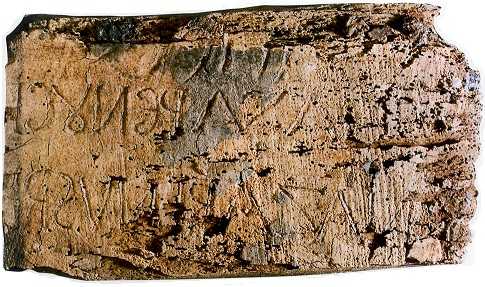
I. The Trilingual Inscription
There is a moment, almost incidental in the Gospel narrative, that contains within it the architecture of a revolution. Above the head of a condemned man, affixed to a Roman cross, is a written notice:
Iesus Nazarenus Rex Iudaeorum. Jesus of Nazareth, King of the Jews.
It is written, we are told, in three languages: Hebrew, Greek, and Latin.
This is not a decorative detail. It is a deliberate act of communication. Roman executions were public, and the titulus—the charge—was meant to be read. It functioned as a warning, a declaration, a piece of imperial messaging. One might even call it, in modern terms, a press release issued by power.
And yet, something unexpected happens here. The inscription is not addressed to a single audience, but to three:
- Latin, the language of the soldiers—the executioners, the machinery of empire
- Greek, the language of the travelers—the cosmopolitan world, the spectators
- Hebrew (or Aramaic), the language of the priests—the accusers, the custodians of religious authority
Rome intends to execute a local nuisance. Instead, it broadcasts a universal claim.
The irony deepens when the religious authorities object. They ask that the wording be corrected: not “King of the Jews,” but “He said: I am the King of the Jews.” A subtle but decisive shift—from proclamation to accusation.
The Roman governor refuses. His response, preserved in Latin tradition, is as terse as it is absolute:
Quod scripsi, scripsi. What I have written, I have written.
In that moment, language becomes irreversible. Authority attempts to control meaning—and fails. The words remain.
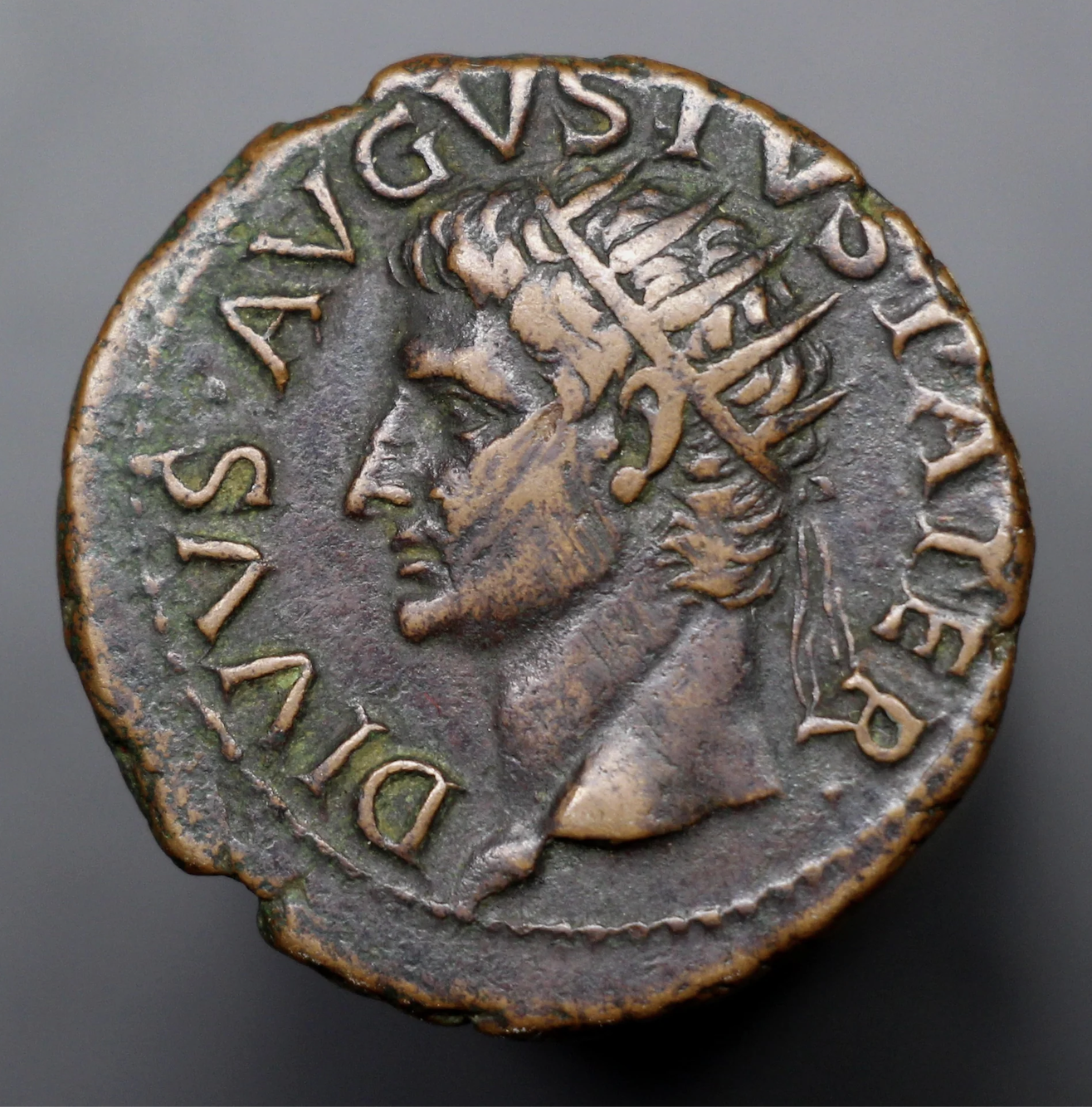
II. The Theology of Coins
Before the rise of Christianity, the language of lordship was already fully operational within the Roman world. It was not metaphorical. It was structural.
The Latin dominus and the Greek kyrios designated authority—real, enforceable, and visible in the daily life of the empire. Emperors, beginning with Augustus and developing more explicitly under his successors, were associated with divine status. Their titles appeared on coins, inscriptions, and public monuments.
A coin was not merely currency; it was theology in metal.
To hold a coin bearing the image and titles of Caesar was to participate, however minimally, in a system that fused political power with sacred legitimacy. The emperor was not simply a ruler. He was a figure through whom order, peace, and stability were guaranteed. To call him Lord was to acknowledge his place at the apex of that system.
This was not optional language. It was a vocabulary of allegiance.
After the destruction of the Temple in 70 AD, the imposition of the Fiscus Iudaicus—a tax redirected to the temple of Jupiter Capitolinus—made this allegiance material. Religion and economy converged. To refuse participation was not merely to dissent spiritually; it was to disrupt the financial and political order.
Within this framework, the word kyrios is not devotional. It is juridical, economic, and imperial. It belongs to Caesar.
III. The Subversion
Into this linguistic and political world enters a sentence of extraordinary simplicity:
“Jesus is Lord.” (Kyrios Iēsous)
At first glance, it appears theological. In reality, it is incendiary.
To declare Jesus as Kyrios is not to add a new religious option within an already pluralistic system. It is to displace the existing center of authority. This is not a metaphor one can safely admire from a distance. It is a claim that, even now, resists neutrality. It is to say, implicitly but unmistakably: Caesar is not Lord.
This is why early Christianity is perceived as dangerous. Not because it introduces a new god—Rome had many—but because it refuses to integrate into the imperial framework of recognition and reciprocity. It does not negotiate its language. It reassigns it.
The consequences are immediate and severe. Refusal to participate in imperial cult practices, including the acknowledgment of Caesar’s lordship, is interpreted as disloyalty. In some cases, it is prosecuted as treason.
The confession “Jesus is Lord” thus operates as both creed and risk. It is, in a very real sense, a death warrant.
What makes this subversion particularly powerful is that it does not invent new terminology. It appropriates existing language and redirects it. The revolution is not lexical; it is semantic.
IV. The Ontology of Power
At the heart of this transformation lies a shift not in vocabulary, but in ontology—the nature of power itself.
Under Roman usage:
- Dominus signifies the capacity to command, to enforce, to coerce
- Power flows downward, from the emperor to the subject
- Authority is demonstrated through control, order, and, when necessary, violence
Under Christian proclamation:
- Kyrios signifies the capacity to redeem
- Power is revealed through self-giving, not domination
- Authority is demonstrated through sacrifice
The word remains the same. Its center of gravity shifts.
One might describe this as a semantic pole shift. The linguistic field is unchanged, but its orientation is inverted. The same term now points to a radically different understanding of what it means to be “Lord.”
This is not merely a reinterpretation. It is a reconfiguration of meaning at the deepest level. The language of empire is not rejected; it is hijacked and transformed.
In this sense, early Christianity does not stand outside the Roman world. It operates within it, using its own vocabulary as the site of contestation.
Language becomes the battlefield.
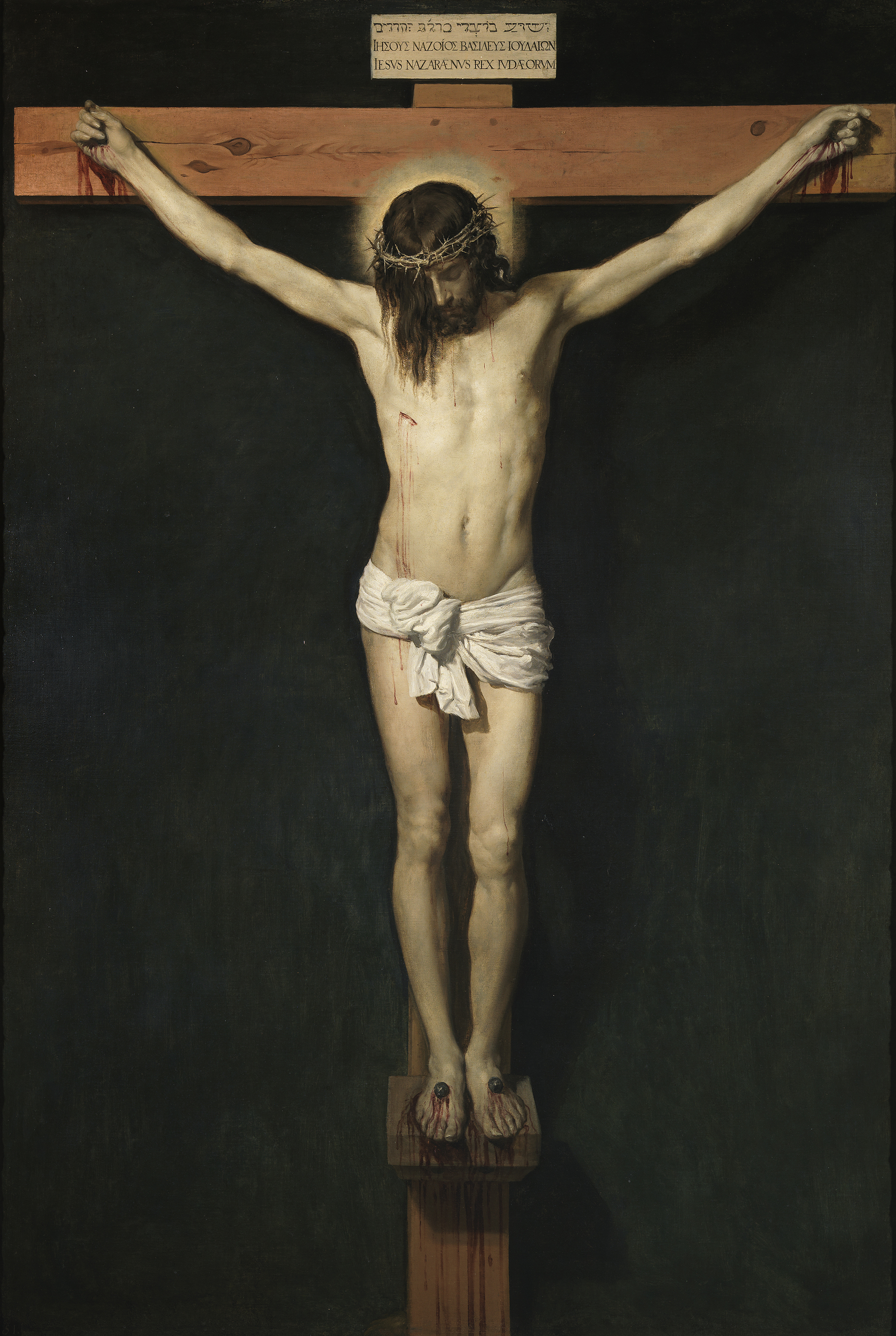
V. The Criminal King
Nowhere is this transformation more visible than in the paradox of the cross.
Crucifixion is a Roman punishment reserved for the lowest and most dangerous elements of society: slaves, rebels, enemies of the state. It is designed to humiliate, to degrade, to erase dignity.
And yet, the central claim of Christianity is that the man subjected to this punishment is, in fact, king.
The cross becomes, simultaneously, an instrument of execution and a throne.
This is not metaphor in the weak sense. It is a collision of meanings:
- What Rome intends as a display of ultimate power becomes, in Christian interpretation, a revelation of ultimate authority
- What is meant to silence becomes proclamation
- What is designed to end a life becomes the beginning of a new order
The inscription above the cross—Rex Iudaeorum—was intended as mockery. It is received as truth.
The paradox is irreducible. The king is a criminal. The criminal is king.
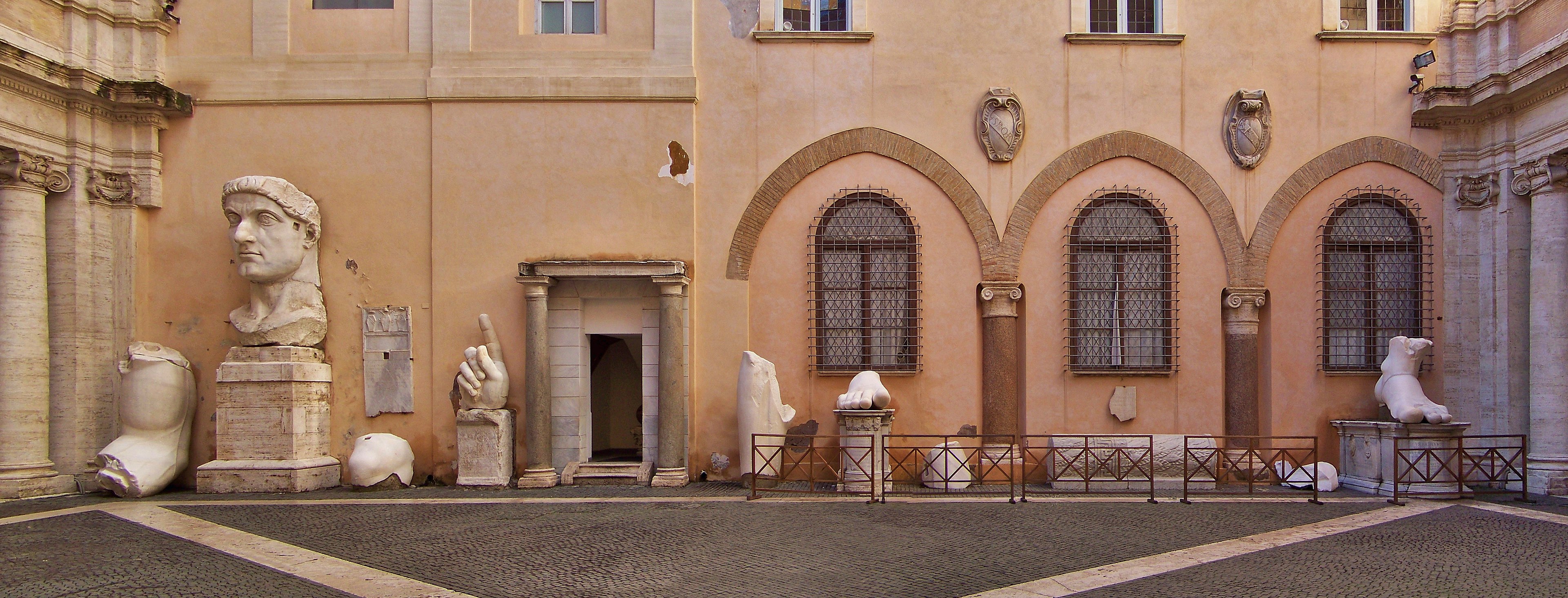
VI. From Catacombs to Palace
The subsequent history of Christianity introduces a new and more complex phase in this linguistic revolution.
With the conversion of Constantine in the early fourth century and the legalization of Christianity, the position of the Church within the Roman world shifts dramatically. What was once marginal becomes visible. What was once persecuted becomes tolerated, and eventually, under Theodosius I, institutionalized as the official religion of the empire.
The word Lord now circulates within a different context. It is no longer exclusively a term of resistance. It becomes, increasingly, a term embedded within structures of power.
This raises a difficult and necessary question: Did Caesar become a Christian, or did “Lord” become another title for Caesar?
The answer is not simple. The process is neither pure corruption nor pure fulfillment. It is a transformation marked by tension.
On the one hand, Christianity gains the ability to shape public life, to build institutions, to preserve and transmit knowledge. On the other, its language risks domestication. The sharp edge of subversion is blunted when the vocabulary of resistance becomes the vocabulary of authority.
The revolution succeeds—and, in succeeding, changes.
VII. The Domestication of a Word
In contemporary usage, the word “Lord” often appears softened, confined to liturgical or devotional contexts. It can sound distant, ceremonial, even abstract.
One might ask whether the word has lost its original force.
To call Jesus Lord in the first century was to make a claim that had immediate political implications. It was to challenge the legitimacy of the most powerful system in the known world. It was, quite literally, to risk one’s life.
Today, the same word can be spoken without consequence. It circulates freely, often detached from the structures of power it once confronted.
This does not necessarily invalidate it. But it does raise a question of memory.
Has the word been neutralized by history? Or does it retain, beneath its familiar surface, the capacity to disrupt, to reorient, to challenge the assumptions of any system that claims ultimate authority?
If the original proclamation was subversive, its continued use demands awareness of what, exactly, it once subverted.
VIII. Quod Scripsi, Scripsi
We return, finally, to Pilate.
Standing between competing claims, he chooses not to revise the inscription. Whether out of indifference, irritation, or a momentary assertion of authority, he leaves the words as they are.
Quod scripsi, scripsi.
In doing so, he becomes an unwitting participant in the very revolution he presides over. The title he refuses to change outlives the empire he represents.
The irony is profound. The official language of Rome, inscribed to assert control, becomes the medium through which a different kind of authority is announced.
What was written as accusation endures as proclamation.
The word remains. The meaning changes. The world follows.
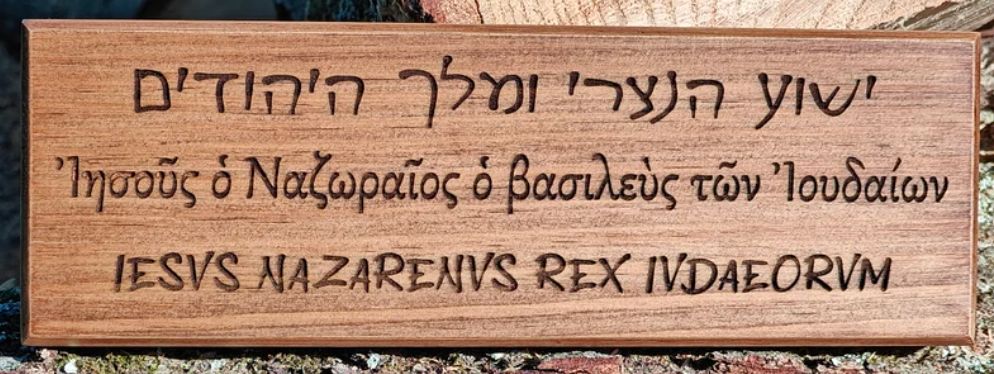
Greek Ἰησοῦς ὁ Ναζωραῖος ὁ βασιλεὺς τῶν Ἰουδαίων (Iēsous ho Nazōraios ho basileus tōn Ioudaiōn).
Latin IESVS NAZARENVS REX IVDAEORVM
Conclusion
The transition from Caesar to Christ is not simply a shift in religious belief. It is a transformation in the meaning of power, mediated through language.
The word Lord stands at the center of this transformation. It begins as a term of imperial dominance and becomes, through a process of subversion and reinterpretation, a term of redemptive authority.
This is not a completed revolution. The tension between these meanings persists. Every use of the word carries within it the history of its own redefinition.
To say “Lord” is, whether consciously or not, to participate in that history—to choose, once again, what kind of authority the word will name.
And perhaps that is why Pilate’s words still resonate: What is written cannot be unwritten. The question is how it will be read.
© Francesc Borrull, 2026

