By Francesc Borrull · August 25, 2025
Introduction: A Lifetime with Bruce Springsteen
Today marks the 50th anniversary of Born to Run, one of the greatest albums ever recorded by my number-one favorite artist, Bruce Springsteen. That alone would be reason enough to write this post. But for me, this anniversary is deeply personal. My entire life has been shaped by Springsteen’s music, and Born to Run stands as a beacon at the center of it all.
I first discovered Bruce at the age of 11, in the most unlikely of places: a nightclub for kids in my hometown. It was a Sunday evening, the place was practically empty—just me and my friend Jorge—and suddenly the speakers erupted with “Born in the U.S.A.” Lightning struck. That instant changed my life forever. I became a Springsteen fan on the spot. From then on, I bought every record, devoured every lyric, and lived inside those songs. My first live Springsteen concert came on August 3, 1988, in Barcelona. Later, I presented a paper at the first-ever Bruce Springsteen symposium, “Glory Days”, at Monmouth University (Sep. 9-11, 2005), and even met members of the E Street Band—Vinny “Mad Dog” Lopez and the late, great Danny Federici.
It’s no exaggeration to say that my life has revolved around Springsteen’s music. And though I consider Darkness on the Edge of Town my personal favorite album, Born to Run is always right near the top. A hundred years from now, when people hear the name “Bruce Springsteen,” they will immediately think of “Born to Run.” It may not be his best song—but it’s THE song. And the album it came from is an undisputed landmark in rock history.
The Making of a Classic
The story of Born to Run is as dramatic as the songs themselves. Recording began in January 1974 at 914 Studios, but by March 1975 the sessions moved to the Record Plant in Manhattan—a legendary studio where Bruce, Jon Landau, and the band crafted the sound that would define an era. The process was painstaking, obsessive, and grueling, but what emerged was something eternal.
There were notable outtakes along the way—songs like “Janey Needs a Shooter” and “Linda Let Me Be the One”—that show just how rich Bruce’s writing was during this period.
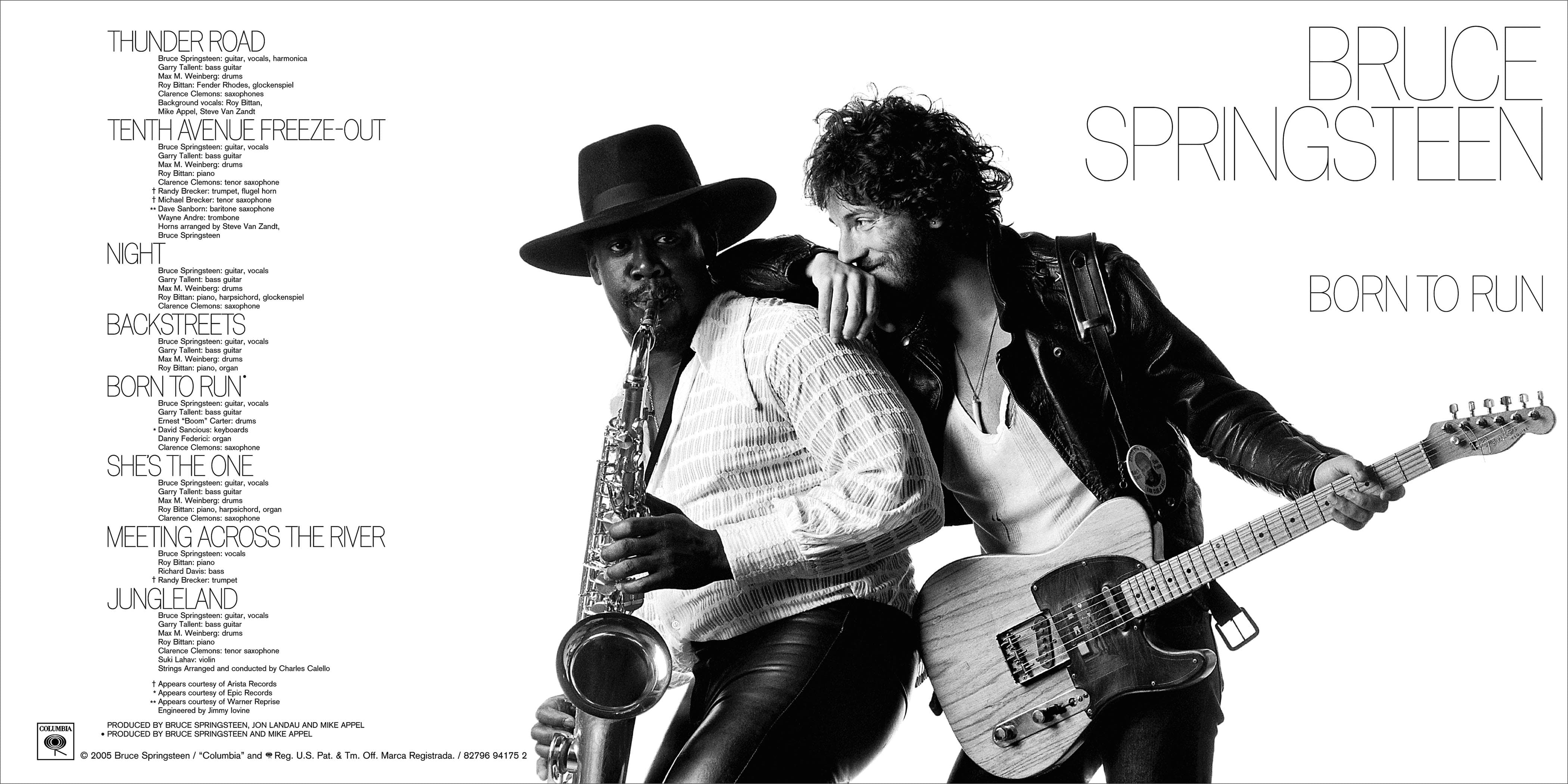
The musicians who played on Born to Run formed the foundation of what would become the classic E Street Band. Roy Bittan joined on piano, organ, and harpsichord, cementing his place as Bruce’s piano player for decades to come. Clarence Clemons brought the soulful saxophone that would become synonymous with Springsteen’s sound. Garry Tallent held down the bass, and Max Weinberg—making his debut here—became the heartbeat of the E Street Band. Danny Federici added his signature organ and glockenspiel textures, while David Sancious, though on his way out of the band, left his mark with piano and synth on “Born to Run.” Even Steven Van Zandt, not yet an official band member, contributed horn arrangements and backing vocals. Together, they forged a sound that was bigger than life.
Track by Track: The Songs of Born to Run
At its core, Born to Run is about escape and the eternal tension between dreams and reality. It’s a record that captures the urgency of youth—the hunger to break free from small towns, dead-end jobs, and limited futures—and yet it never hides the shadows lurking behind those dreams. Every song balances hope with desperation, love with betrayal, victory with loss. If Tunnel of Love is Bruce’s meditation on marriage, and Born in the U.S.A. is his reckoning with Vietnam and America’s broken promises, then Born to Run is his grand myth of freedom. It asks the question every restless soul knows: what happens when the open road calls, and will running really save us?
Side A
1. Thunder Road
If there is a perfect Springsteen song, it may well be this one. “Thunder Road” is an invitation, a pep talk, a promise of escape. The song builds slowly, then explodes with hope when the drums kick in and Bruce shouts about rolling down the window and letting the wind blow back your hair. No matter how many times I’ve heard it, that moment never fails to move me. Over the years Bruce grew weary of constant fan requests for “Thunder Road,” but he always came back to it—because he knew, like we all know, it’s one of the greatest songs he ever wrote. For me, it may very well be my number-one favorite.
2. Tenth Avenue Freeze-Out
This is E Street mythology in song form. Bruce sings about the creation of the band, how the Big Man joined the fold, and how a ragtag crew of misfits found their groove. Musically, it’s funky, horn-driven, and pure celebration. This was also the moment Little Steven’s presence became official—he arranged the horns on the spot in the studio and soon after joined the band full-time. “Tenth Avenue Freeze-Out” is both autobiography and party anthem, and it remains a centerpiece of Bruce’s live shows.
3. Night
Clocking in as the shortest track on the record, “Night” packs a punch. It’s about the grind of the nine-to-five, the drudgery of working just to live for the fleeting thrills that come after dark. Musically, it mirrors that tension, shifting between major and minor keys, capturing the desperation of the day and the freedom of the night. It’s not the most famous track, but it’s essential Springsteen—hard-driving, cinematic, and full of urgency.
4. Backstreets
One of Bruce’s most emotional songs. From the haunting piano intro to the anguished, cry-screamed bridge, “Backstreets” is pure catharsis. It tells a story of youthful friendship and betrayal, but what makes it legendary is the sheer emotion Bruce pours into it. I’ve always connected with this one as a misfit teenager who felt like an outcast. “Backstreets” gave me a companion in the darkness. It’s a song that promises you’re not alone, even when you feel like you are.
Side B
1. Born to Run
The anthem. The magic trick. The song that made Bruce a star. On paper, it could have fallen into cliché. But Bruce believed in it with such unshakable conviction that he made us believe too. “Born to Run” is the sound of youthful desperation and reckless hope, wrapped in the grandeur of Phil Spector’s Wall of Sound. Fifty years later, it’s still electrifying. This is the song that will carry Bruce’s name into the next century and beyond.
2. She’s the One
Fueled by a Bo Diddley beat, “She’s the One” is a tale of obsession. The narrator knows she’s trouble, knows she’s no good for him, but can’t help coming back. It’s primal, urgent, and raw. Live, the song takes on even more power, with Bruce pushing his voice and the band into the red zone.
3. Meeting Across the River
The oddball of the album, and yet one of its most beautiful moments. With Richard Davis on upright bass and Randy Brecker on trumpet, the track oozes noir atmosphere. Bruce tells a first-person tale of a small-time hustler hoping for one big score. It feels like a short film, a glimpse into the world of losers and dreamers. It’s the quiet heart of the record.
4. Jungleland
The epic closer. Nine minutes of cinematic grandeur. It’s a tragic tale of the Magic Rat and the barefoot girl, but it’s also the story of dreams colliding with harsh reality. Roy Bittan’s piano, Suki Lahav’s violin, Bruce’s anguished vocal, and Clarence Clemons’ life-saving sax solo all combine into something transcendent. “Jungleland” is more than a song—it’s an experience. The sound Bruce created here is his own wall of sound, one that has defined him ever since.
As much as each song on Born to Run shines on its own, it’s important to remember that albums in the 1970s were conceived as complete statements. This isn’t just a random collection of tracks—it’s a carefully sequenced story, meant to be experienced from start to finish. Bruce has always been a master at crafting albums as larger narratives, where each cut builds into something bigger.
Back then, the ritual of music was part of the joy: heading to the record store, flipping through the bins, bringing an album home, and listening to it in one sitting. You’d absorb the lyrics on the sleeve, feel the pause as you flipped from Side A to Side B, and immerse yourself fully in the world the artist created. It was a liturgy, a sacred rite for music lovers.
So if you’re under 30 and haven’t done this before, I can’t recommend it enough: listen to Born to Run all the way through, from the opening notes of “Thunder Road” to the final echoes of “Jungleland.” Better yet, put it on vinyl—grab a remastered edition for pristine sound—and let yourself fall into the journey. Trust me: it only gets better with every listen.
The Iconic Album Cover
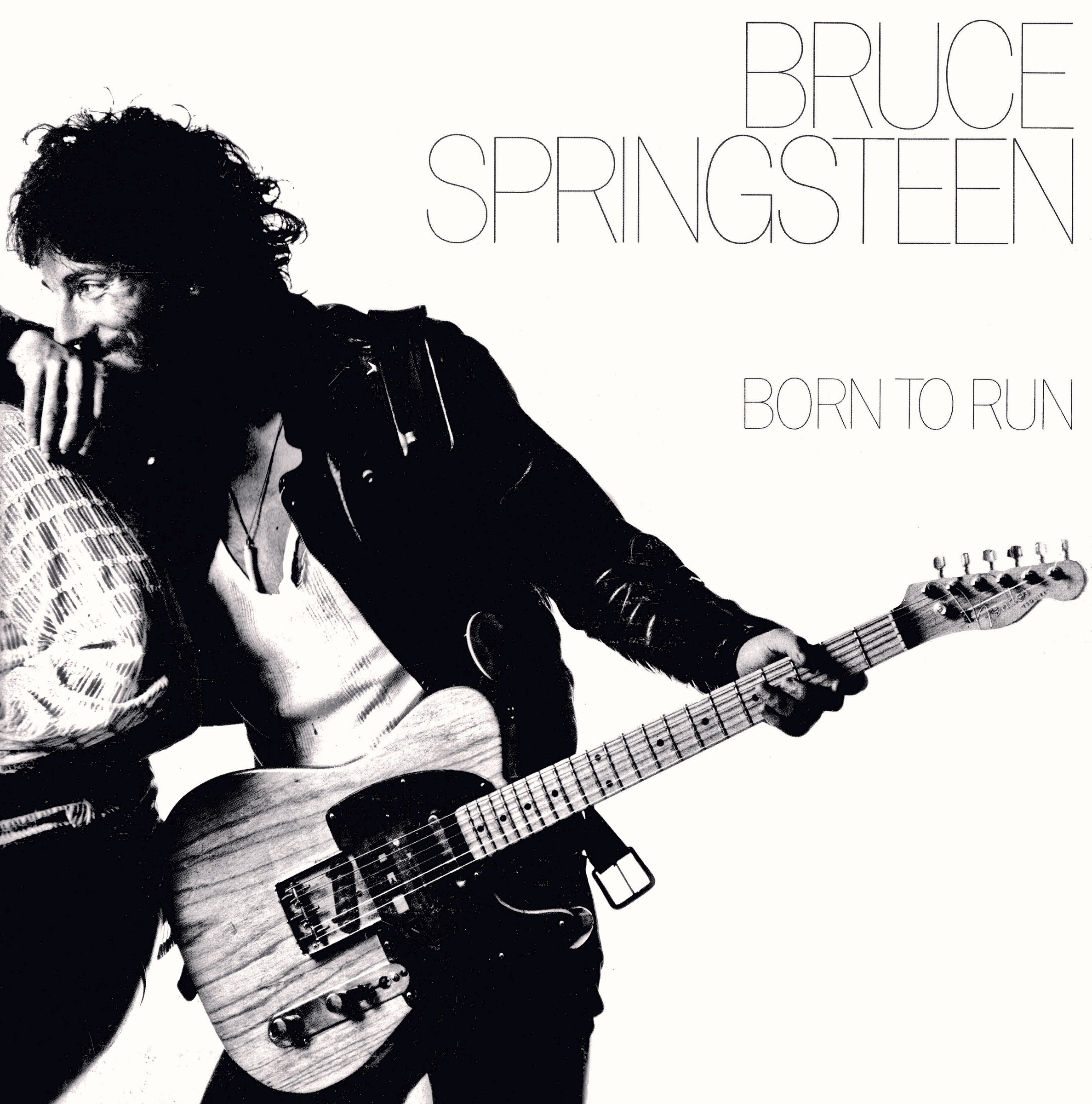
No discussion of Born to Run is complete without mentioning the cover. Shot by Eric Meola, it features Bruce leaning on Clarence, guitar in hand, leather jacket slung over his shoulder. Black and white, timeless, and iconic. That image has become shorthand for Springsteen himself: street-smart, romantic, and larger than life. It’s been imitated countless times but never equaled. The cover alone is part of rock and roll history.
Reception and the Rise of a Legend
When Born to Run hit in 1975, the response was overwhelming. Critics hailed it as a masterpiece; fans embraced it as an anthem. It established Bruce not just as a musician, but as a cultural force. Of course, some critics found the production overblown, too grandiose—but that was the point. Bruce wanted it big, sweeping, and larger than life. And that’s exactly what he delivered.
Part of the mythos of this era was Jon Landau’s now-legendary review in The Real Paper in May 1974, after seeing Bruce perform in Cambridge. Landau famously wrote, “I saw rock and roll’s future and its name is Bruce Springsteen.” That single line became inseparable from Bruce’s rise, framing him as not just another talented songwriter, but as the heir to the rock and roll tradition.
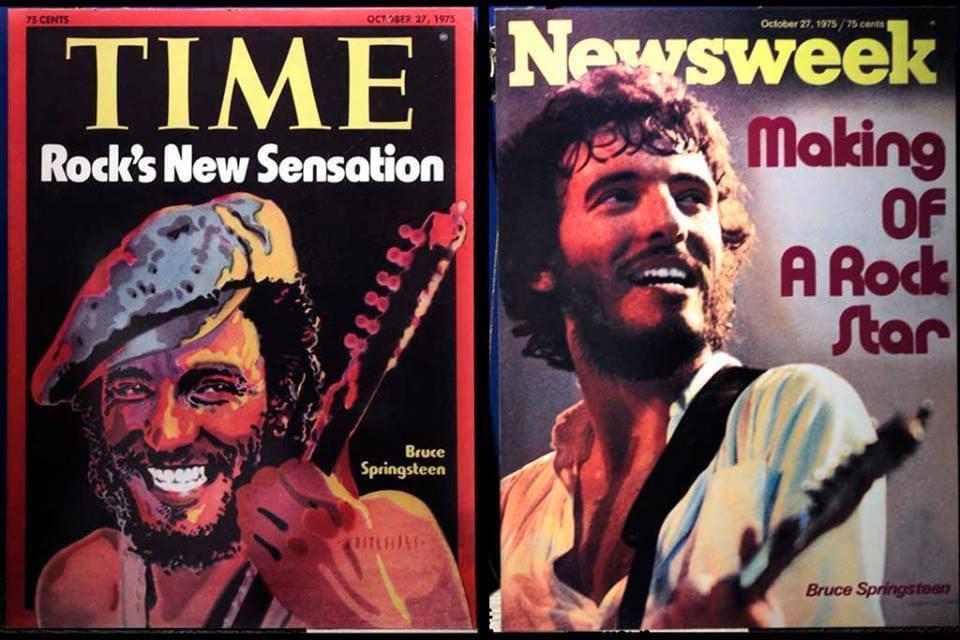
The cultural explosion continued in October 1975, when Springsteen appeared simultaneously on the covers of both Time and Newsweek. It was an unprecedented media moment that declared Bruce not just a rising star but the star of a new generation. Suddenly, the entire world was paying attention.
The tour that followed cemented his reputation as one of the greatest live performers of all time. From that moment on, seeing Bruce Springsteen live wasn’t just a concert—it became a rite of passage.
Conclusion: The Legacy of Born to Run
Fifty years later, Born to Run still stands as a landmark, not just in Bruce’s career, but in the history of rock music. It captured the restless spirit of a generation caught between the idealism of the 1960s and the disillusionment of the 1970s. It spoke to working-class kids searching for escape, love, and meaning in a world that seemed stacked against them.
What followed was an unprecedented run of brilliance: Darkness on the Edge of Town, The River, Nebraska, and Born in the U.S.A. Few artists in history have managed to release five consecutive masterpieces of such depth and variety. But it all started here. Born to Run was the beginning—the record that made Bruce, that redefined rock music, and that forever altered the cultural landscape. The world was never the same, Bruce was never the same, and music itself was never the same.
Whether you love Springsteen or not, you cannot deny the power and importance of this record. It is one of rock’s greatest accomplishments, a masterpiece that shaped popular culture and continues to inspire dreamers around the world.
Here’s to Born to Run at 50. Long may it run.
© Francesc Borrull, 2025
P.S. If you’re someone who has never really cared for Bruce Springsteen—or maybe you’ve only heard a couple of songs and dismissed him—Born to Run is the one record that might just change your mind. It’s not background music; it’s a world you step into. Give it a full listen, front to back, and let it wash over you. If it grabs you (and it probably will), then I’d point you next to Darkness on the Edge of Town for its raw, uncompromising power, and Nebraska for its stark, haunting storytelling. Together with Born to Run, those three albums are a masterclass in what rock and roll can be. Also, you may want to check ‘Bruce Springsteen’s Musical Survey: A Chronological Exploration of 10 Iconic Albums‘ where I surveyed my Top 10 favorite Springsteen albums.


Francesc, I couldn’t have said it any better. Born to Run is, in my estimation, the perfect rock album; it’s absolutely flawless. Rosalita is my favorite song of his, but Thunder Road is a VERY close second.
LikeLike