
By Francesc Borrull · November 2, 2026
I. Berlin, 1988
In 1988, I traveled from Barcelona to Hannover, in northern Germany. I was fifteen, and Germany was still two countries: the Federal Republic of Germany in the West, a member of NATO, and the German Democratic Republic in the East, a communist state within the Warsaw Pact. Ronald Reagan and Mikhail Gorbachev were the faces of the confrontation that had organized much of the world before I was born. I understood its basic vocabulary, and I understood where I belonged. There was our side, which I associated with freedom, and there was the other side, which I associated with its absence. At fifteen, the distance between knowing where you stand and understanding the ground beneath your feet can be considerable.
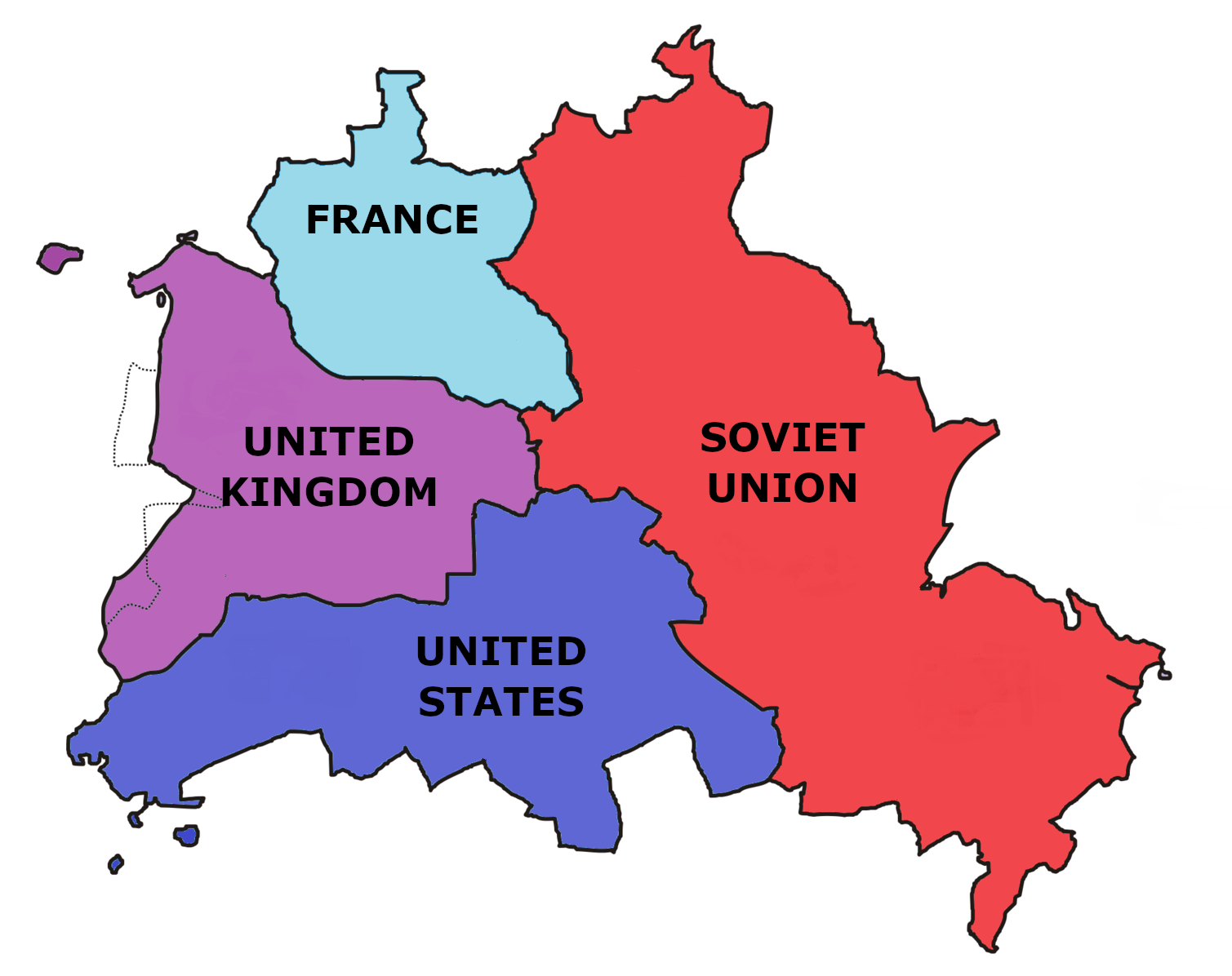
During that stay, I visited Berlin for a single day. To reach West Berlin overland from Hannover, we had to pass through East Germany. The American, British, and French sectors of the city formed West Berlin, an enclave surrounded by East German territory; the Soviet sector was East Berlin. I remember the border inspection vividly: our bags being examined, our passports checked, the intimidating seriousness of the soldiers. We were given a time within which to complete the transit to the city. The procedure made the journey feel conditional, as though our freedom of movement had been temporarily lent to us and could be withdrawn. We tried to remain composed, as composed as teenagers could be, and eventually we were allowed through.
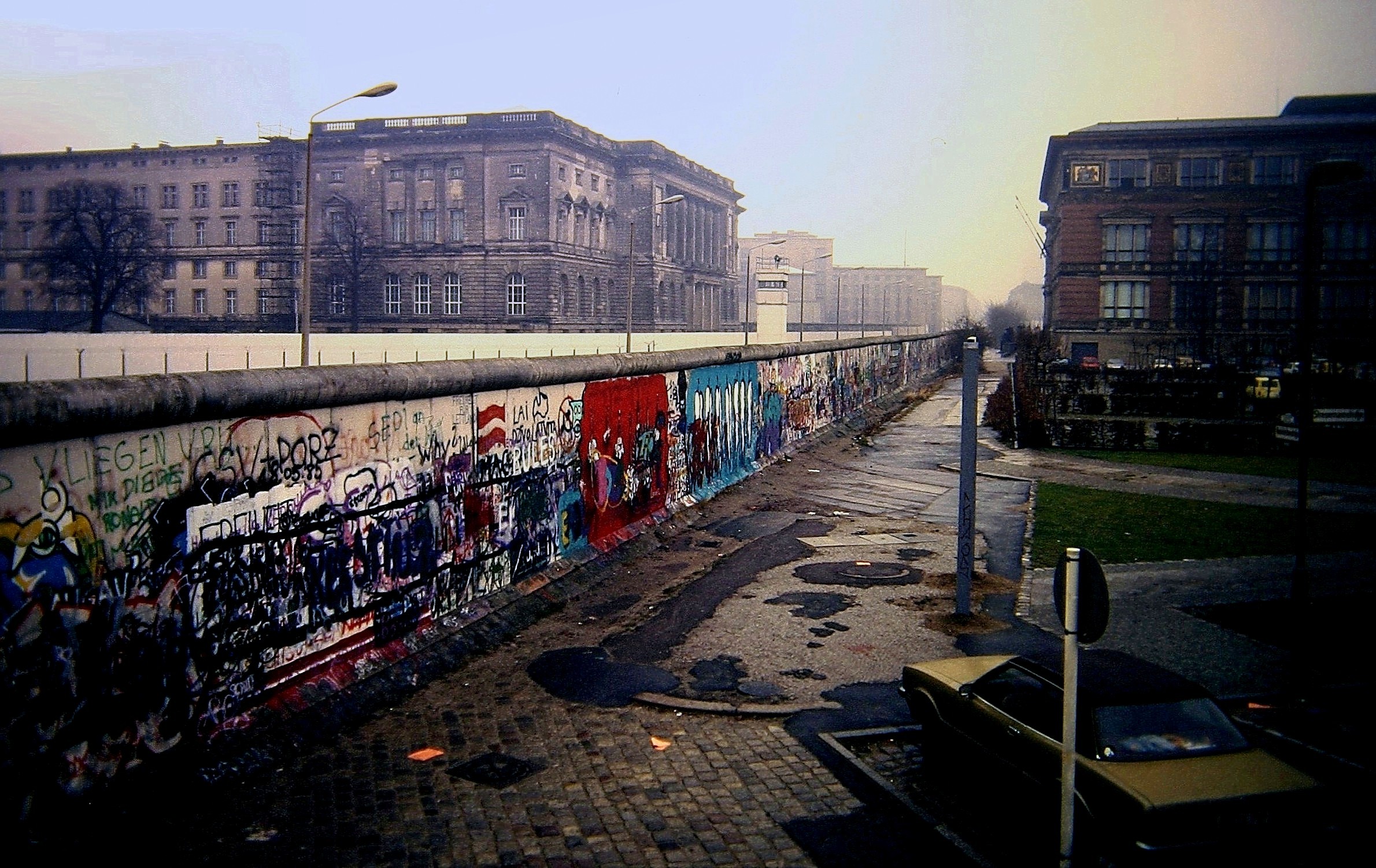
I enjoyed West Berlin. Then I saw the Wall. On the western side there were steps leading to a raised viewing platform, where visitors could look across the border. What I remember seeing was more complicated than a single barrier: two walls, a broad space between them, and guard towers interrupting that emptiness. I cannot recover its dimensions accurately now. The space felt immense because of what it was designed to do. Between one part of a city and another, a government had constructed a place in which an ordinary human movement could become a fatal act. Erected in 1961, the Wall was one of the Cold War’s most brutal symbols, built in a city whose division had followed the Second World War.
I remember being told that someone trying to escape had been shot and that we would not be visiting East Berlin that day. I did not witness a shooting, and I cannot now verify the report or establish its connection to our itinerary. What I did see were the barriers and the armed guards, and what I understood was that the people living beyond them did not possess the same freedom to leave that I possessed to return home.
Looking east, I saw a city that seemed subdued, dusty, almost suspended in another time. Sadness settled over my impression of it. I imagined that living there must feel like the view before me: enclosed, diminished, deprived of the ordinary possibilities I took for granted. Today I would be more careful with that judgment. A glimpse from a platform could not disclose the lives of an entire city, the affection within its homes, the intelligence of its inhabitants, or the private forms of dignity that survive political oppression. My impression of East Berlin was the impression of a young visitor looking across a border. Yet the limits of my understanding did not make the border itself any less real.
When I climbed down, I thought about my own life in Barcelona. There were things I did not have, as there always are when one is young, but the comparison had changed. I could travel, return, imagine another journey. The people across that strip of ground could not necessarily do the same. I had understood freedom as a political word; now I had seen a structure built to prevent its exercise. That was the part of the day that remained with me, long after the details of the itinerary began to fade.
Thirty-eight years later, at fifty-three, I still believe that the freedom to leave a country, criticize its government, and choose a different life matters profoundly. Growing older has complicated my understanding of the West without persuading me that the Wall represented an acceptable alternative. The question that interests me now lies behind the certainty I carried away from Berlin: how had the powers that defeated Nazi Germany come to construct a world in which this division could appear permanent? Who was responsible for the Cold War, and what does an honest answer require us to recognize about the conflicts surrounding us today?
II. How the alliance became a confrontation
The question of blame is appealing because it promises to organize an immense history around an identifiable decision. Someone began it; someone else responded. But the defeat of Germany did not leave behind an agreed peace that one participant simply overturned. It left devastated societies, occupying armies, incompatible political ambitions, and an unsettled question about who would shape the European continent. The United States and the Soviet Union had cooperated against an enemy capable of destroying them. Once that enemy was defeated, the disagreements within their alliance became increasingly difficult to contain. Their wartime partnership had suspended some older antagonisms without resolving them.
The historical readings I have been working through approach that breakdown from different directions. Melvyn Leffler emphasizes Soviet insecurity and the practical calculations behind Stalin’s diplomacy. Odd Arne Westad places the confrontation within competing ambitions for the postwar world. Deborah Welch Larson examines the perceptions through which officials interpreted one another, while Thomas Bailey, John Lewis Gaddis, and George Herring offer sharply different emphases on responsibility. Read together, the adapted excerpts resist the comforting idea that one explanation will account for every decision. They also resist the opposite temptation: assuming that because the causes were complicated, responsibility must have been equal.
The Soviet experience of the Second World War has to enter any serious explanation. Nazi Germany’s invasion had brought destruction on a scale that the peace I knew growing up in Western Europe made difficult to comprehend. Soviet losses encompassed soldiers and civilians across many peoples, including Russians, Ukrainians, and Belarusians. Stalin’s determination to prevent another invasion was rooted in an actual catastrophe, even though his own regime had inflicted enormous suffering. In Leffler’s account, the future of Germany mattered intensely: a defeated Germany might recover, rearm, and again become a threat. From Moscow, arrangements that Western governments described as reconstruction could therefore look like preparations for a danger that had scarcely been buried.
The history before 1941 also matters. Stalin’s 1939 pact with Hitler included a secret protocol dividing Eastern Europe into spheres of influence. After Germany invaded Poland from the west, Soviet forces invaded from the east on September 17. For the people whose country was partitioned, the Soviet state was an occupying power before it became an ally against Nazi Germany. Those experiences help explain why a later Soviet promise of security could be received as the prospect of renewed subordination. The suffering of Soviet citizens and the aggression of their government both belong within the history.
Leffler’s Stalin is also more calculating than the image of a revolutionary determined to provoke immediate confrontation everywhere. He had reasons to preserve cooperation with the Western Allies, needed resources for reconstruction, and could restrain communist movements when their ambitions conflicted with Soviet interests. Westad adds the larger expectations through which Stalin interpreted events, including his belief that capitalist powers would eventually fall into rivalry with one another. Their growing cooperation under American leadership frustrated that expectation. Ideology shaped the way Stalin read the world, but so did military weakness, economic need, and the desire to control the territory through which another invasion might come.
That last desire contains the central moral difficulty. A security buffer is an abstraction when drawn on a strategic map. In practice, it consists of countries whose inhabitants have political wishes of their own. Poland could not become merely the distance between Germany and Russia; its people had not endured occupation in order to become somebody else’s protective arrangement. A government friendly to Moscow and a government unable to act without Moscow’s approval were very different things. As Soviet influence hardened into control, opposition was suppressed and meaningful political choice contracted. The communist takeover in Czechoslovakia in February 1948 showed how quickly what remained of political pluralism could be extinguished. The need for security could explain the demand for a sphere of influence. It could not, by itself, justify the subordination of everyone living within it.
This is where I place the greater share of responsibility for Europe’s coercive division: with Stalin and the Soviet leadership. Their decision to make neighboring societies instruments of Soviet security helped turn a difficult postwar settlement into a durable confrontation. That judgment does not require believing that every Soviet concern was invented or every American response wise. It requires recognizing the consequences of the choices made. A state that secures itself by denying its neighbors independent political lives is creating insecurity for those neighbors, however defensive its own vocabulary may sound.
The American side also deserves examination. Larson’s account shows how judgments about an adversary can harden through unfamiliarity, personal encounters, and assumptions that eventually become difficult to revise. Herring is especially critical of Truman’s tendency to reduce complicated situations to stark alternatives, and of American officials’ readiness to recognize threatening Soviet behavior while discounting evidence of cooperation. These arguments do not establish that a more reassuring conversation would have transformed Stalin into a reliable democratic partner. They suggest something more credible and more troubling: genuine dangers were being interpreted through habits of thought that sometimes enlarged them, while possibilities for accommodation became harder to perceive.
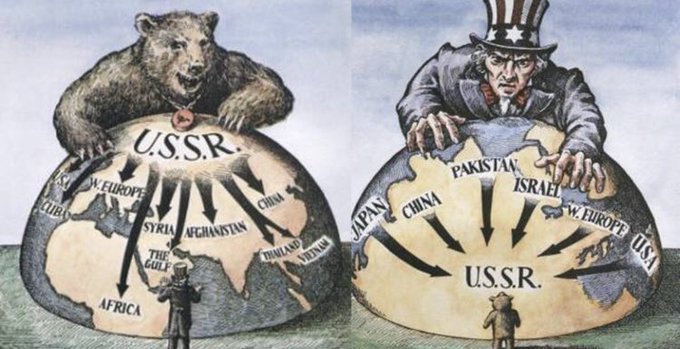
In Ingram Pinn’s two-panel cartoon, each superpower imagines itself dwarfed by the other. In one panel, an enormous Soviet bear looms over a small Uncle Sam; in the other, their proportions are reversed. Arrows spreading out from the Soviet Union in one image become arrows pointing toward it in the other. From one perspective, Soviet expansion threatens the world; from the other, American positions surround the Soviet Union. The images are revealing because they show how the same geography can acquire incompatible meanings. An alliance formed for protection may appear across the border as an advancing threat. An attempt to obtain strategic depth may look to those supplying that depth like an approaching occupation. Understanding this reciprocal fear helps explain how hostility accumulated. It does not establish that the actions provoking the fear were equivalent, or that every claimed insecurity was equally well founded.
American economic power complicated the picture further. Washington wanted a Europe capable of recovering, trading, and resisting communist influence. The Marshall Plan served those purposes together: reconstruction, political stabilization, and an international economy favorable to American interests. Soviet leaders could see Western recovery, particularly German recovery, as a consolidation of power against them. Yet acknowledging the strategic purposes of American aid does not erase what reconstruction made possible for European societies. Material assistance could serve an interest and answer a real need at the same time. To describe it only as generosity would be incomplete; to describe it only as domination would be another simplification.
George Kennan’s response to Soviet power introduced the idea that became the organizing principle of American policy: containment. His Long Telegram of February 1946 and his public article of July 1947 were distinct documents, though the ideas were closely related. Containment proposed sustained resistance to Soviet expansion, with patience rather than an immediate war to overturn the Soviet system. Kennan’s emphasis was substantially political and economic; later policies expanded and militarized the concept. The distinction matters because a strategy intended to protect particular centers of power could develop into a worldwide obligation to oppose almost any movement identified as communist. The distance between those positions would be measured in decisions about actual countries and actual lives.
Truman’s address to Congress in March 1947 gave the struggle a more encompassing moral language. He described competing ways of life, one grounded in representative institutions and individual liberty, the other in coercion and political repression. The contrast named a genuine difference. It also encouraged the assumption that conflicts throughout the world could be understood through the same division. A nationalist movement, a struggle over land, or an attempt to escape colonial rule could be interpreted primarily through its supposed relationship to Moscow. The people involved risked disappearing into a classification made elsewhere. The Cold War became global partly through this habit of turning local histories into tests of a universal confrontation.
I cannot consider the contradictions of the “free world” without remembering that I was born in Spain in 1972, while Franco was still in power. Washington’s strategic relationship with his dictatorship had been formalized in agreements signed in 1953. The fact that a regime was anticommunist could make it useful to the United States without making it free. That same year, American and British intervention helped overthrow Iran’s prime minister, Mohammad Mosaddegh. These examples do not erase Soviet domination in Eastern Europe. They make it impossible to equate every Western strategic choice with the defense of democratic self-determination. A principle loses credibility when its application depends entirely on whether the government concerned is useful to us.
There were also moments when the difference between coercion and resistance was particularly clear. On June 24, 1948, Soviet forces blocked surface access to the western sectors of Berlin. Disputes over Germany’s economic and political future, including Western currency reform, formed the immediate context. The blockade nevertheless placed a civilian population under pressure in pursuit of a political objective. The Western response was an airlift carrying food, fuel, and other necessities. The blockade ended on May 12, 1949, but the airlift continued until September 30 to build up reserves against a renewed blockade. Here, resistance took a form that protected people while avoiding the immediate military risks of forcing a land route open. It remains an example of firmness whose purpose and method can be defended together.
The historians’ disagreement becomes useful precisely where it prevents any of these episodes from swallowing the rest. Bailey’s account, published in 1950, places Soviet behavior and communist ideology at the center of the breakdown. Gaddis’s 1972 argument examines an interaction in which both governments interpreted and adjusted to the other, while asking which leadership had greater freedom to change direction. Stalin’s concentrated authority gave him opportunities to alter policy that leaders operating under democratic constraints did not possess in the same way. I find that argument persuasive, with a qualification: domestic pressures explain American choices without absolving American leaders of responsibility for making them. Constraints are part of an explanation, not a certificate of innocence.
My answer, then, assigns responsibility at more than one level. Stalin’s coercive consolidation of Soviet power in Eastern Europe bears the heavier responsibility for the continent’s division. American fears, economic ambitions, ideological rigidity, and later interventions helped determine how the confrontation expanded and what damage it caused elsewhere. The nuclear rivalry and the tendency to interpret every setback as an advance for the enemy made adjustment still harder. None of this requires imagining a predetermined conflict in which leaders merely performed their assigned roles. They made consequential choices within dangerous circumstances. The history becomes more intelligible when we examine both, and less honest when complexity becomes an excuse to stop judging.
III. After the Wall
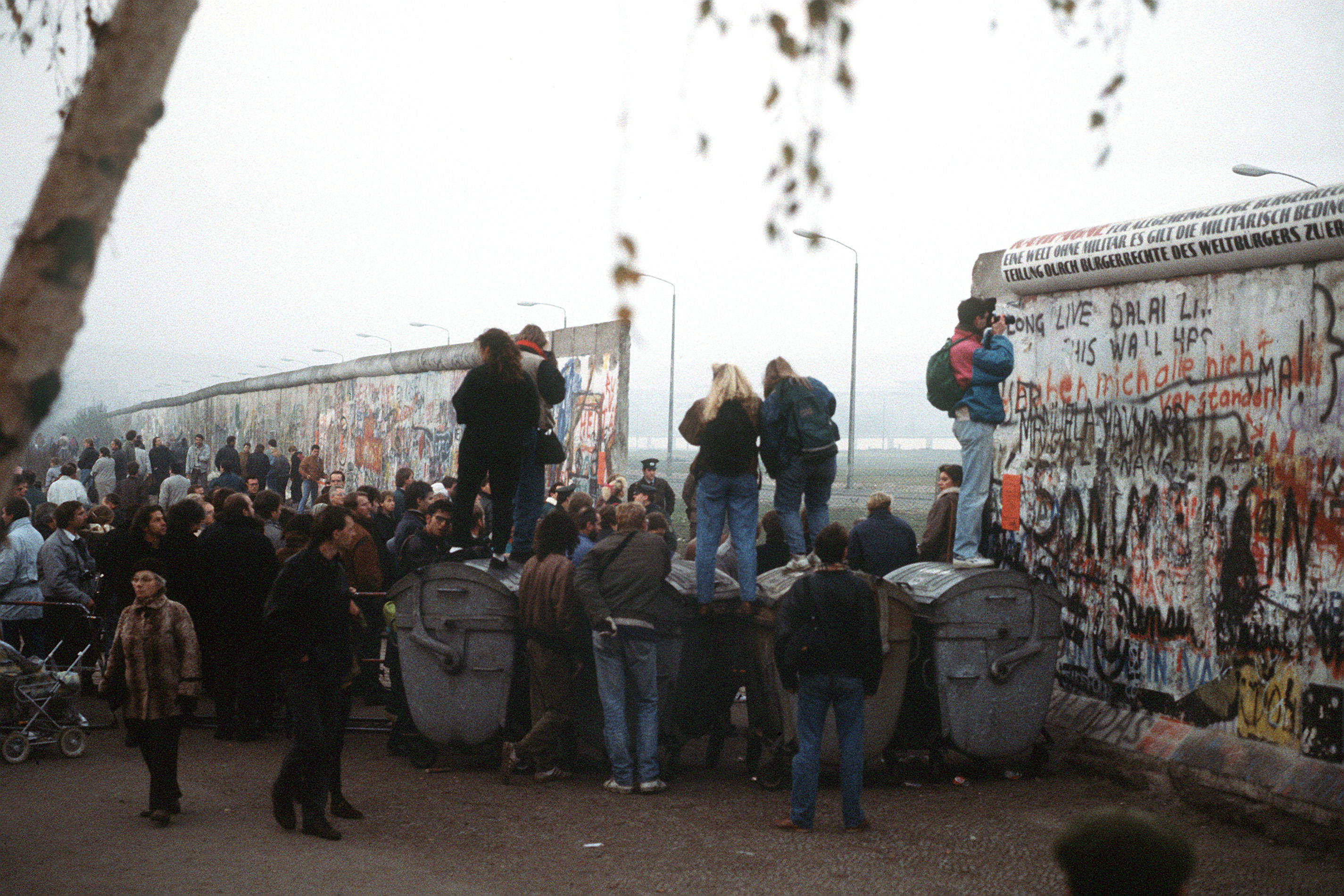
The Wall I saw in 1988 opened on November 9, 1989. Its physical dismantling took longer, but the political meaning of that night was immediate: a border that had defined the limits of millions of lives could no longer function as before. Germany reunified on October 3, 1990. The Warsaw Pact dissolved in 1991, and by the end of that year the Soviet Union itself had ceased to exist. These were connected developments, rather than interchangeable dates for one event. The Cold War ended through the transformations of 1989–1991, as the division of Europe broke down and one of the two superpowers disappeared. Later admissions to NATO and the European Union helped shape the settlement that followed. They were not what originally brought the Cold War to an end.
Reagan’s appeal at the Brandenburg Gate—“Mr. Gorbachev, tear down this wall!”—belongs to that history, though he delivered it on June 12, 1987, before my visit. Its force is undeniable. But the Wall’s collapse cannot be adequately explained as the fulfillment of an American president’s instruction. Polish workers organizing through Solidarity, Hungarian reforms and the opening of an escape route, East German demonstrators, Soviet economic difficulties, and Gorbachev’s willingness to allow change all entered the process. Reagan’s eventual diplomacy with Gorbachev matters alongside his public challenge. The ending involved resistance, negotiation, and decisions against renewed repression. Remembering only the victorious speech would leave much of the history, including the people who risked their lives within it, outside the frame.
The subsequent enlargement of Western institutions is often narrated from the perspective of what Moscow lost. That perspective deserves consideration, but it cannot be the only one. Poland, formerly a Soviet-dominated member of the Warsaw Pact, joined NATO in 1999. Lithuania, which had regained independence after Soviet annexation, joined in 2004; both entered the European Union in 2004. The EU and NATO served different purposes, one organizing political and economic integration, the other collective defense. Neither development can be understood solely as a Western advance across a map. These societies pursued membership with memories of their own vulnerability. Their choices matter as much to an account of European security as Russia’s objections.
September 11, 2001, marked another rupture, but it did not end a Cold War that had already ended a decade earlier. Nor did the attacks simply reopen the same confrontation. Al-Qaeda was a transnational jihadist organization, and the struggle that followed had different actors, ideologies, and theaters. Earlier wars in Afghanistan connected parts of this history to the Cold War’s consequences, without making the two conflicts identical. There was even a period of cooperation between Russia and the West against terrorism: NATO invoked its collective-defense provision after the attacks, and a NATO–Russia Council was established in 2002. Whatever one thinks of the policies that followed, that moment complicates the claim that an uninterrupted confrontation with Moscow continued unchanged after 1991.
Russia’s war against Ukraine makes the question of continuity more urgent. The seizure and annexation of Crimea in 2014, followed by the full-scale invasion in 2022, challenged the possibility that the Soviet Union’s former republics could determine their futures independently. Is Putin trying to recreate the USSR? The question captures a real anxiety, but the answer needs precision. His public claims about Ukraine place historical unity and Russia’s regional authority at their center. In his essay “On the Historical Unity of Russians and Ukrainians,” published on July 12, 2021, he argued that Ukraine’s true sovereignty was possible only in partnership with Russia. He also said that Ukraine’s future was for its citizens to decide. Read alongside the war, I understand his condition on sovereignty as an imperial claim: Ukraine’s independence becomes acceptable only within conditions established by its larger neighbor. It resembles the older demand for a subordinate sphere, even though the project is not a restoration of Soviet communist economics.
Ukraine cannot be reduced to the territory over which Russia and the West disagree. More than ninety percent of participating voters supported independence in its December 1991 referendum. In the 1994 Budapest Memorandum, Russia, the United States, and the United Kingdom reaffirmed respect for Ukraine’s sovereignty and existing borders in connection with its accession to the Treaty on the Non-Proliferation of Nuclear Weapons as a non-nuclear-weapon state. Those security assurances did not create the collective-defense obligations associated with NATO membership. They nevertheless included a clear undertaking to respect the country’s territorial integrity. The later violation by Russia is especially consequential because the promise concerned precisely the independent existence now being challenged.
Western policy can be questioned without treating that violation as inevitable. There is a serious strategic debate about NATO enlargement, the opportunities for a more inclusive European security order, and decisions that increased Russian suspicion. The alliance’s 2008 declaration that Ukraine and Georgia would eventually become members, without extending membership’s immediate protection, deserves scrutiny. It is reasonable to ask whether such promises increased exposure without establishing sufficient deterrence. Yet an account that grants Russia fears and historical memories while granting its neighbors neither would reproduce the hierarchy it claims merely to explain. A country’s desire to seek an alliance does not guarantee admission; another country’s objection does not confer ownership of its future.
This is where the word appeasement enters, carrying both historical weight and the danger of careless use. At Munich in 1938, Britain and France accepted the transfer of the Sudetenland to Nazi Germany through negotiations in which Czechoslovakia did not participate. The concession failed to satisfy Hitler’s ambitions, and the dismantling of Czechoslovakia followed. The warning concerns more than the fact that leaders spoke to a dictator. It concerns a settlement that sacrificed another country’s security in the hope that the aggressor would become satisfied. The people whose territory supplied the bargain were denied a meaningful voice in it. That feature of Munich deserves to remain vivid even when the circumstances of a later conflict differ substantially.
The disagreement between Truman and General Douglas MacArthur over Korea in 1951 shows how contested the accusation of appeasement can be. MacArthur invoked appeasement against a policy that refused to widen the war against China. Truman defended resistance to the invasion of South Korea while arguing that extending the conflict risked a much larger war. In his address of April 11, 1951, he presented limited war and a willingness to negotiate as parts of the same effort to stop aggression. Neither man was proposing simple indifference to the attack. Their disagreement concerned the means and limits of resistance. That distinction remains essential whenever prudence is dismissed as cowardice or escalation is treated as proof of moral seriousness.
Applied to Ukraine, appeasement becomes a useful question when it identifies what a proposed settlement would reward. Does it make territorial conquest a successful method of obtaining political concessions? Does it leave Ukraine able to defend itself, or dependent on another promise that its aggressor can disregard? Are Ukrainians participating in the decision, and what will happen if the agreement is broken? Ukrainians also have the right to choose painful compromises; those assessing the war from safety should be cautious about demanding sacrifices whose costs they do not bear. A ceasefire could save lives and create room for a durable settlement. It could also allow preparations for another attack. The difference lies in consent, credible protection, enforceable commitments, and the incentives the settlement creates. Calling every negotiation appeasement prevents examination of those details; calling every agreement peace can conceal their absence.
These concerns are concrete in October 2026. Reuters has reported renewed plans for negotiations alongside friction between the Trump administration and Kyiv, as well as an agreement easing American sanctions on Russian diesel. Washington has defended the diesel deal as a response to energy pressures and an incentive for diplomacy. Its consequences deserve scrutiny. If the invaded country is pressed to concede while the costs imposed on the invader diminish, I see a serious risk of appeasement: diplomacy may begin to reward the use of force. That judgment concerns the terms and direction of policy. Negotiating with Putin can be part of a legitimate effort to end the war. The decisive issue is whether the search for an agreement leaves Ukraine more secure or merely makes its vulnerability less inconvenient for others.
The Middle East complicates the comparison further because its conflicts cannot be gathered neatly into a confrontation between two camps. Israel’s security, Palestinian dispossession and aspirations to statehood, Iran’s regional ambitions, the interests of neighboring governments, and the actions of armed movements have histories and purposes that exceed their relationships with outside powers. Describing the region only as a field of proxy wars would repeat a Cold War habit: treating the people who live in a place as secondary actors in somebody else’s strategic drama. Outside support can prolong violence, but it does not account for every cause of it, and local actors can influence or frustrate the governments that support them.
Gaza makes the distance between an announced settlement and a livable peace painfully visible. The October 2025 ceasefire and the release of the remaining living Israeli hostages offered a possibility of recovery. A year later, reconstruction and a durable political arrangement remained stalled. Hamas had not disarmed, Israeli withdrawal remained unresolved, and Israeli strikes and widespread displacement continued. Those conditions require attention beyond the diplomatic label attached to them. Hamas’s attacks on civilians on October 7, 2023, and its hostage-taking must be condemned; Palestinian civilians cannot be made answerable for the organization’s crimes. Israel’s security concerns are real, and they do not remove the obligation to protect civilian life. Palestinian self-determination also belongs within a just settlement; indefinite occupation cannot supply it. A peace that leaves people without safety, political prospects, or the means to rebuild their homes remains radically incomplete.
The confrontation involving Iran raises a related question about the relationship between pressure and an attainable political outcome. The U.S.–Israeli war against Iran that began in February 2026 has been followed by deadlocked negotiations, a maritime blockade, and continuing fears of renewed attacks. Iran’s attacks on regional infrastructure have also exposed civilians beyond its borders to danger. Resistance to an authoritarian government does not, by itself, establish that every military option will improve security. A verifiable agreement limiting nuclear dangers could be a substantial achievement; its value would depend on its terms, inspections, and durability. Likewise, a display of force without a plausible account of what it can accomplish should not escape scrutiny simply because the government confronting it is repressive. The history of the Cold War offers ample reason to examine both the adversary and our own assumptions about what pressure can produce.
China’s position makes any simple return to the old map still less convincing. China had endured a devastating war against Japan, but the People’s Republic was established in 1949, after the Second World War. Its later relationship with the Soviet Union fractured, and the rapprochement with Washington associated with Nixon’s 1972 visit demonstrated that communist governments did not form an indivisible bloc. By 1988, China was already undergoing the reforms launched a decade earlier. My teenage division between two opposing worlds therefore obscured important differences even at the time. Beijing was pursuing a course shaped by its own history and interests, rather than occupying a permanent subordinate place in Moscow’s camp.
In 2026, China’s economic and technological scale is central to the international order. Its rise to the world’s second-largest economy at market exchange rates has involved an immense transformation in production, living standards, and its relationship with global markets. This creates a form of competition different from the comparatively limited economic integration between the United States and the Soviet Union. Strategic rivalry now runs through commercial relationships on which societies also depend. Any serious account must recognize Chinese achievements in industry, science, and education while remaining able to examine political power and restrictions on freedom. These judgments need not cancel one another. Chinese people are no more reducible to the decisions of their government than Russians, Americans, or Europeans are.
Are we, then, in another Cold War? I find the phrase useful when it draws attention to nuclear danger, competing security systems, hostile narratives, and struggles conducted through the suffering of other countries. I find it less useful when it implies that the alignments of the twentieth century have simply resumed, or that every government must fit into one of two permanent camps. The Soviet Union is gone; China occupies a different position; other states pursue interests that do not follow neatly from Washington’s, Moscow’s, or Beijing’s preferences. We live with unresolved Cold War legacies inside a changed distribution of power. The resemblance is sufficient to warrant vigilance, but too incomplete to relieve us of the work of understanding the present.
IV. The view from the platform
What troubles me most about the memory of Berlin is how permanent the Wall appeared. I saw it in 1988, and a year later the political structure that sustained it was coming apart. History had been moving while I was looking at the concrete. That distance between what seems immovable and what is already changing should make us cautious about both despair and confidence. An oppressive order can be more fragile than it looks. A freer order can also be less secure than those who inherit it assume.
At fifteen, I recognized something important without understanding everything around it. I was right to be disturbed by a government’s effort to prevent its citizens from leaving, and right to value the freedoms that made my own journey possible. I also mistook a narrow view for a sufficient knowledge of the people beyond it. The work of growing older has involved keeping the first recognition while correcting the second. It asks me to defend freedom without granting innocence to everyone who claims to defend it, and to understand another society without excusing the power that constrains its inhabitants.
The question of responsibility for the Cold War remains worth asking because responsibility disappears too easily into the language of necessity. Leaders describe domination as security, intervention as liberation, and concessions made at someone else’s expense as the unavoidable price of peace. Sometimes the circumstances are terrible and every available choice carries a cost. That is precisely when the language needs examination. We should ask whose security is being protected, whose freedom is being negotiated, and who will live with the consequences after the speeches and agreements have been forgotten.
I think again of the steps beside the Wall. I could climb them, look across, come down, and eventually return to Barcelona. Someone born a short distance away could be denied the journey that I experienced as an ordinary part of being young. I did not yet know enough to explain the history that had placed us on different sides. I knew that the difference mattered. Whatever settlement we imagine for Ukraine, whatever peace we seek in the Middle East, whatever relationship develops between the great powers, I want to keep that person’s freedom within the picture: the life being decided while others discuss the map.
© Francesc Borrull, 2026
Sources
The historical discussion draws on adapted excerpts from the work of Melvyn P. Leffler, Odd Arne Westad, Deborah Welch Larson, Thomas A. Bailey, John Lewis Gaddis, and George C. Herring, together with primary documents. The comparisons with contemporary conflicts are my own interpretation. Contemporary references reflect reporting available as of October 2026.
Further Reading
- John Lewis Gaddis, The Cold War: A New History (2005). The starting point I would suggest for readers seeking an accessible overview of the conflict, its major turning points, and its eventual resolution.
- Melvyn P. Leffler, The Specter of Communism: The United States and the Origins of the Cold War, 1917–1953 (1994). A concise examination of how ideology, insecurity, and American perceptions contributed to the confrontation.
- Odd Arne Westad, The Global Cold War: Third World Interventions and the Making of Our Times (2005). This widens the perspective beyond Europe and examines how superpower intervention shaped societies elsewhere. It complements a concern with the people whose countries became arenas for someone else’s strategic struggle.
- Mary Elise Sarotte, Not One Inch: America, Russia, and the Making of Post-Cold War Stalemate (2021). Its examination of NATO enlargement and diplomacy after the Wall fell provides a useful bridge between my historical discussion and the questions surrounding Russia and Ukraine. It was published before the 2022 invasion.


