
By Francesc Borrull · May 18, 2026
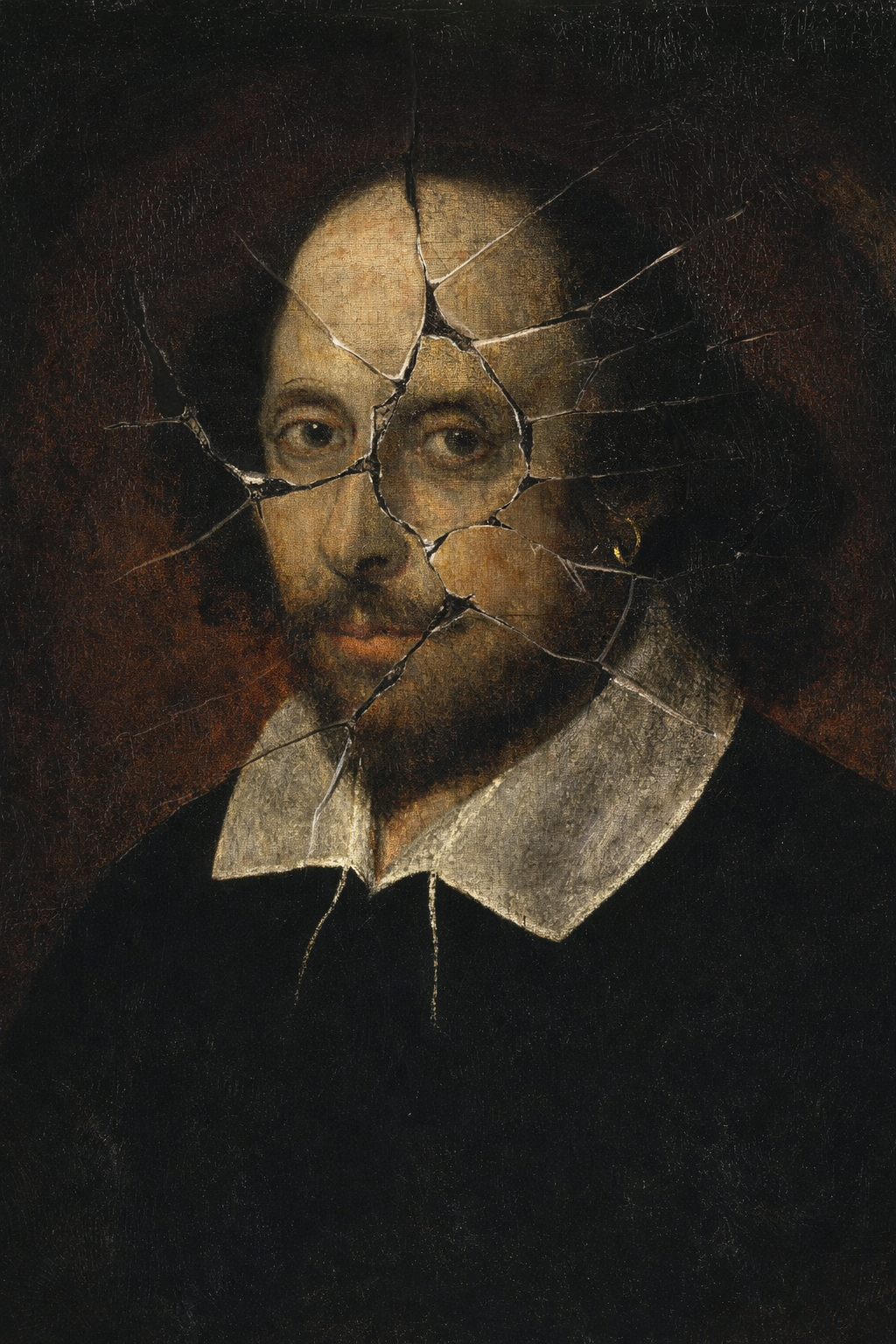
There is a temptation, when approaching Shakespearean tragedy, to think in terms of fall: the fall of kings, the fall of heroes, the fall from greatness into ruin. But this language, though convenient, is misleading. It implies a clean break—a stable peak followed by a sudden, jagged plunge.
Shakespeare offers something far more unsettling.
His tragedies do not depict collapse as an external event, but as an internal structure—already present, already active, already waiting. What we witness is not the destruction of a stable self, but the gradual revelation that the self was never stable to begin with.
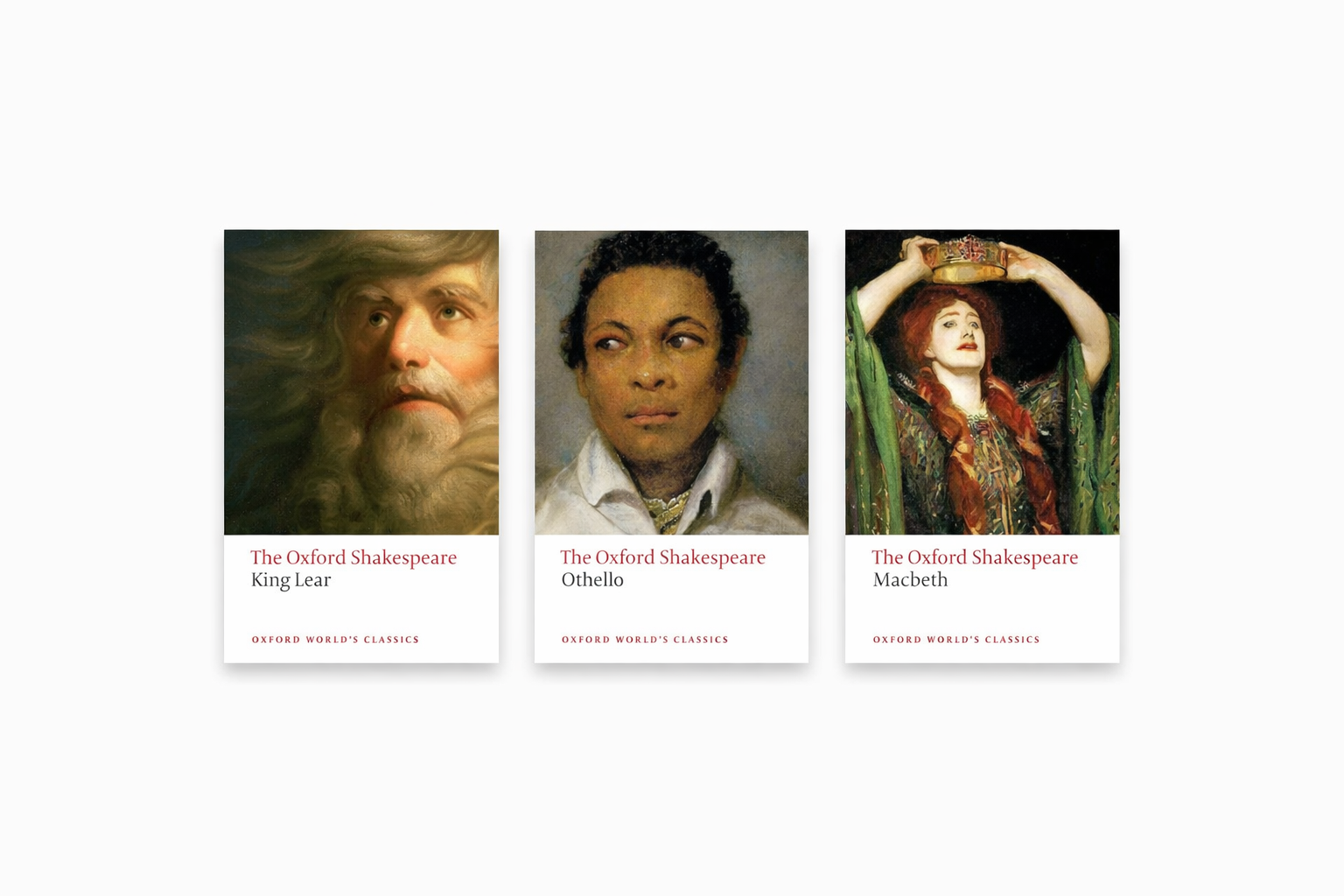
Nowhere is this more evident than in three of his greatest plays: King Lear, Othello, and Macbeth. Taken together, they form a coherent philosophical unit: three distinct pathways into moral and psychological ruin. Each begins from a different point—perception, judgment, and will—and each arrives at the same end: the irreversible disintegration of the moral self. What unites them is not merely collapse, but a movement toward what might be called tragic lucidity: a clarity that arrives only when it can no longer alter the course of events.
I. King Lear — Blindness and the Desire for Love
In King Lear, the tragedy begins not with action, but with misrecognition. Lear’s fatal error is not cruelty, nor even pride in its simplest form. It is something more insidious: the inability to distinguish between truth and performance.
By demanding a public declaration of love, Lear unwittingly converts a private bond into a performance—an economy where flattery is the only currency. Language becomes spectacle, sincerity becomes invisible, and exaggeration is rewarded as truth. Cordelia’s refusal to participate in this economy is read not as integrity, but as absence.
Lear cannot see—not because truth is hidden, but because he has redefined what counts as truth.
This blindness is not merely emotional; it is epistemological. He lacks the capacity to perceive reality as it is. The consequences are immediate and devastating: the division of the kingdom, the banishment of loyalty, the empowerment of falsehood.
What follows is a movement not simply toward suffering, but toward knowledge. Stripped of power, exposed to the elements, and driven into madness, Lear begins—slowly, painfully—to see. Recognition comes, but it comes too late. The moral world he misread cannot be restored by insight alone.
In one of the play’s starkest moments of clarity, Lear can only say:
“I did her wrong.” (Act I, Scene V)
Lear’s tragedy lies in this cruel paradox: he achieves clarity only when clarity has lost its power to save him.
II. Othello — The Fragility of Trust
If Lear’s failure is one of perception, Othello’s is one of judgment.
At the center of Othello lies a simple but devastating fact: Othello entrusts his interpretation of reality to another man. Iago does not fabricate an entirely false world; he operates by redirecting Othello’s trust, by positioning himself as the mediator between appearance and meaning.
Othello, a figure of strength and clarity in the public sphere, becomes fatally dependent in the private one. His error is not that he doubts, but that he resolves doubt too quickly. Once belief takes hold, it hardens into certainty.
The tragedy is not uncertainty—it is false certainty.
Desdemona’s innocence is not hidden; it is misread. Every gesture becomes evidence, every silence confirmation. The interpretive framework closes in on itself, sealing Othello inside a system of self-reinforcing error.
When the truth finally emerges, it does so with brutal clarity. But, as in Lear, recognition arrives too late to undo the consequences of action. What follows is not merely remorse, but tragic lucidity: Othello sees, at last, the structure of his own deception.
What remains is not redemption, but a final attempt at self-understanding:
“Then must you speak
Of one that loved not wisely but too well.”
(Act V, Scene II)
III. Macbeth — The Seduction of Action
With Macbeth, we enter a different territory altogether. There is no fundamental misreading of reality, no reliance on another’s interpretation. Macbeth knows.
From the beginning, he understands the moral weight of what he contemplates. He recognizes Duncan’s virtue, acknowledges the injustice of regicide, and anticipates the consequences of his actions. And yet, he proceeds.
Here, the tragedy is not blindness or misinterpretation, but will.
Macbeth chooses to act against his own knowledge. The first crime is the decisive one: it fractures the moral order within the self. Every subsequent crime is less a choice than a consequence—a grim momentum dictated by that first, decisive transgression. What begins as hesitation hardens into necessity.
What follows is not an ascent into power, but a descent into emptiness. Macbeth does not become more sovereign; he becomes more hollow. His interior life erodes, his moral vocabulary thins, and his language begins to fail him.
In the end, language itself collapses. The famous “sound and fury” is not merely a reflection on life, but the final alignment between Macbeth’s inner emptiness and his speech. In one of the most devastating moments in Shakespeare, this collapse finds its full expression:
“…a tale
told by an idiot, full of sound and fury,
Signifying nothing.”
(Act V, Scene V)
IV. Three Paths to Ruin
Taken together, these three plays outline a map of moral collapse:
- In King Lear, the failure lies in perception—the inability to recognize truth.
- In Othello, the failure lies in judgment—the surrender of interpretive authority.
- In Macbeth, the failure lies in will—the decision to act against moral knowledge.
These categories are analytically distinct, yet in practice they bleed into one another: misperception distorts judgment, and corrupted judgment prepares the ground for destructive action.
Shakespeare isolates each element, intensifies it, and follows it to its logical conclusion. The result is not variation for its own sake, but clarity: three distinct mechanisms, one shared outcome.
V. The Fragility of the Moral Self
What emerges from this triad is a profoundly unsettling vision of human nature. The moral self is not a stable entity, not a fixed core resistant to pressure. It is contingent, vulnerable, and susceptible to distortion.
Shakespeare does not present evil as an external force imposed upon the individual. He locates it within the ordinary operations of the mind: in the way we see, the way we interpret, and the way we choose.
This is what gives these plays their enduring power. They do not ask us to contemplate the fate of kings, but the structure of our own inner lives. The distance between their world and ours is far smaller than we might wish to believe.
Conclusion
In the end, these figures do not fall because they are exceptional. They fall because they are human—and because what destroys them lies already within.
Their tragedies are not warnings about power, but revelations about fragility. They show us, with unparalleled precision, how easily the moral self can fracture, and how irreversible that fracture can become.
The question is no longer why they collapse, but why we assume we will not.
Shakespeare does not dramatize catastrophe. He anatomizes it.
© Francesc Borrull, 2026
 Francesc Borrull