
Francesc Borrull · June 29, 2026
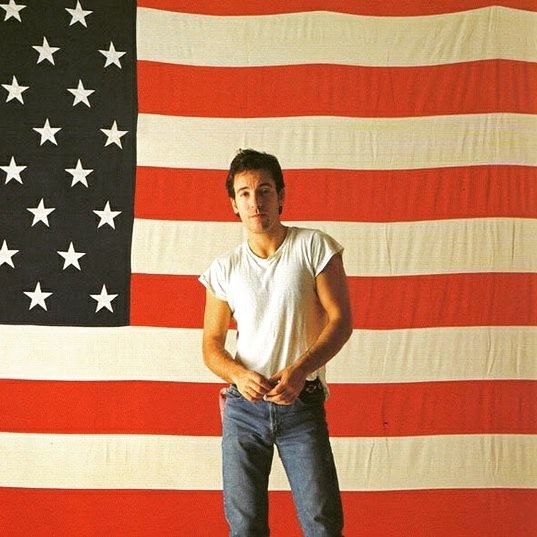
The idea for this essay came to me while listening to Born in the U.S.A. one afternoon. I have heard the album countless times, but this time my attention drifted toward the famous cover image: Bruce Springsteen standing in front of a massive American flag, back turned to the camera, wearing blue jeans and a red cap tucked into his pocket. Few images in popular music are as instantly recognizable. And yet, the image has always carried an ambiguity. Some viewers even interpreted the photograph as Springsteen “pissing on the flag,” a misunderstanding that says as much about American politics as it does about rock photography.
That moment made me realize something interesting: the American flag appears again and again in popular music imagery. Sometimes it signals pride or identity; sometimes it is used ironically, or even aggressively, as a critique of the nation itself. Over the decades musicians have repeatedly returned to the flag as a visual symbol—altering it, distorting it, reclaiming it, or questioning it.
Rather than telling a single story about America, these covers turn the flag into a canvas upon which different generations project their anxieties, dreams, contradictions, and cultural debates.
Below are ten examples—spanning more than forty years—where the American flag becomes a central visual element in the artwork. Taken together, they reveal how music and imagery intersect with politics, identity, and cultural mythology.
1 There’s a Riot Goin’ On — Sly & The Family Stone (1971)
Released in 1971, There’s a Riot Goin’ On is one of the darkest and most influential albums in the history of funk and soul music. Sly Stone had previously embodied a utopian vision of interracial harmony with hits like “Everyday People,” but by the early 1970s that optimism had eroded. The United States was deep in the Vietnam War, the civil rights movement had fractured, and urban unrest had shaken the country. Musically, the album reflects that atmosphere: the grooves are murky, the rhythms slow and heavy, and the production deliberately muddy, as if the music itself were sinking into disillusionment.
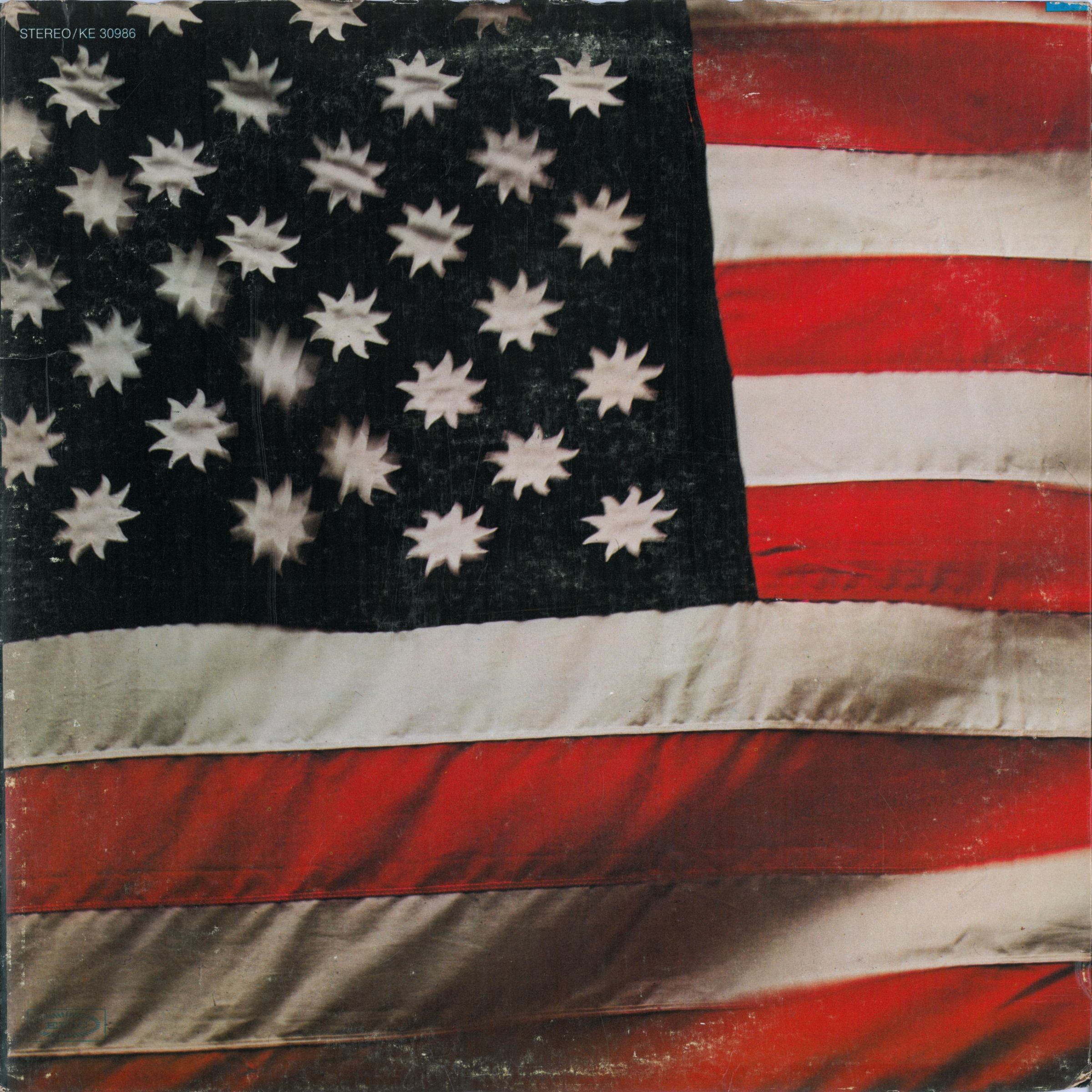
The album cover captures that mood perfectly. Instead of the traditional stars of the American flag, the design replaces them with suns—an unsettling transformation that subtly destabilizes the national symbol. The flag remains recognizable, but something about it feels altered, almost uneasy. In that sense, the image becomes a visual metaphor for the album’s emotional landscape. America is still there, but the promise attached to it seems uncertain.
Within the broader cultural context of the early 1970s, the cover reads almost like a commentary on the fragmentation of the American dream. It neither glorifies nor destroys the flag; instead, it transforms it. That transformation mirrors the music itself, which bends funk and soul into something darker and more introspective. More than fifty years later, There’s a Riot Goin’ On remains a powerful reminder that even the most familiar national symbols can carry complex, contradictory meanings.
2 American Pie — Don McLean (1971)
Also released in 1971, Don McLean’s American Pie occupies a very different musical territory. Where Sly Stone turned inward and confrontational, McLean offered a sprawling folk-rock meditation on American cultural history. The title track—an eight-minute epic filled with enigmatic references—became one of the most famous songs of the twentieth century. Its lyrics evoke the loss of innocence in American music, beginning with the 1959 plane crash that killed Buddy Holly, Ritchie Valens, and the Big Bopper.
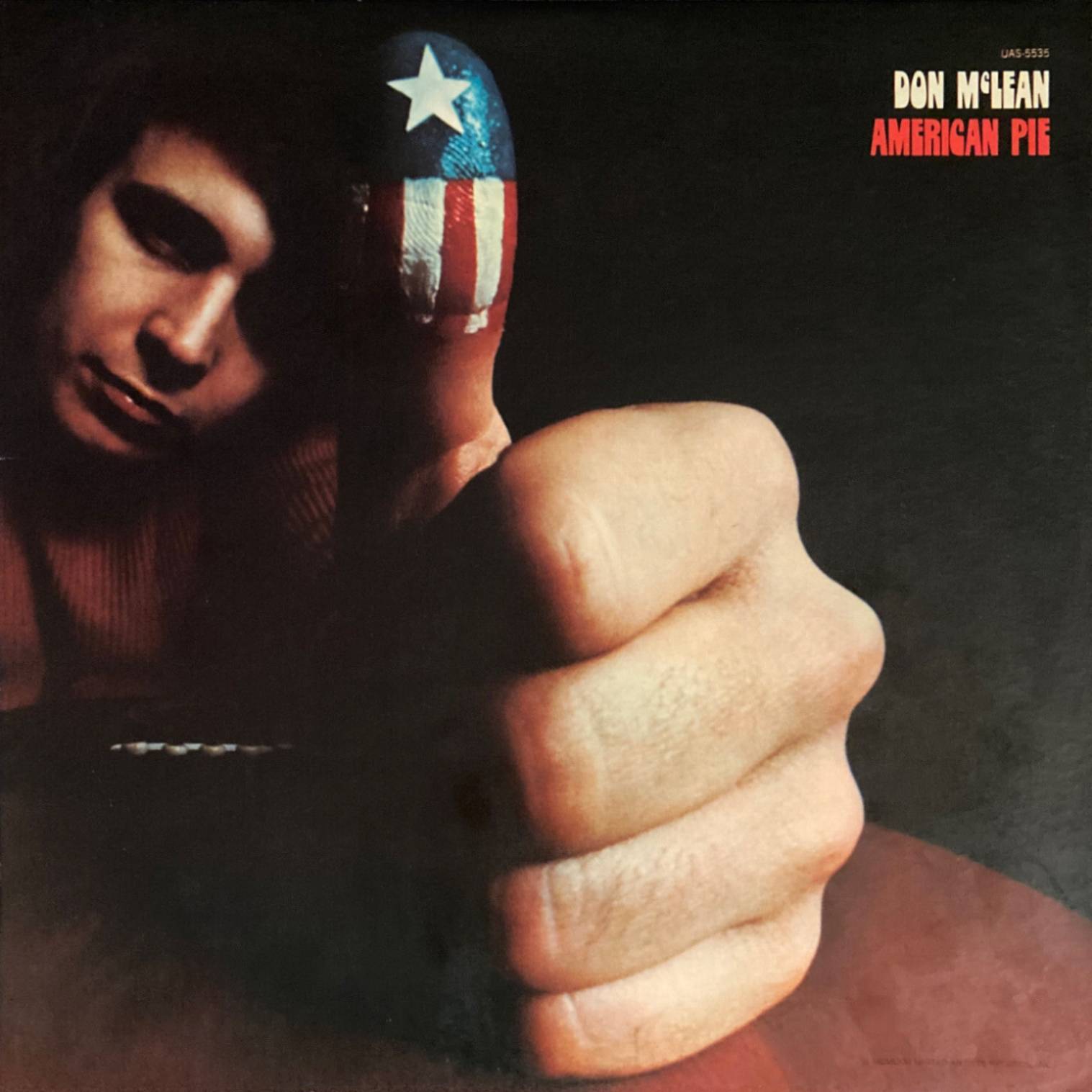
The album cover reflects that reflective tone. A small American flag appears in the artwork, subtle and understated rather than dominant. Unlike the darker reinterpretation seen in Sly & The Family Stone’s album, here the flag functions almost like a quiet emblem of nostalgia. It evokes a memory of an earlier America—one tied to rock and roll, youth culture, and a simpler vision of national identity.
Musically, McLean’s album blends folk storytelling with pop accessibility. The songs move between personal reflection and broader cultural commentary, suggesting that American identity is deeply intertwined with its music. Here, the flag on the cover operates less as a political symbol than as a cultural one. It represents a shared mythology, a sense of collective memory tied to songs, artists, and moments that define generations.
Seen from today’s perspective, American Pie captures the moment when nostalgia itself became part of American pop culture. The flag, quietly placed within the imagery, signals not triumph but remembrance.
3 Born in the U.S.A. — Bruce Springsteen (1984)
Few album covers in the history of popular music are as iconic—or as misunderstood—as Bruce Springsteen’s Born in the U.S.A. Released in 1984, the record became a commercial phenomenon, producing seven hit singles and transforming Springsteen into one of the most recognizable rock artists in the world. Musically, the album blends the thunderous energy of arena rock with deeply personal narratives about working-class American life. Beneath the anthemic production lies a series of songs about unemployment, war, economic struggle, and the quiet dignity of ordinary people trying to navigate a changing nation.
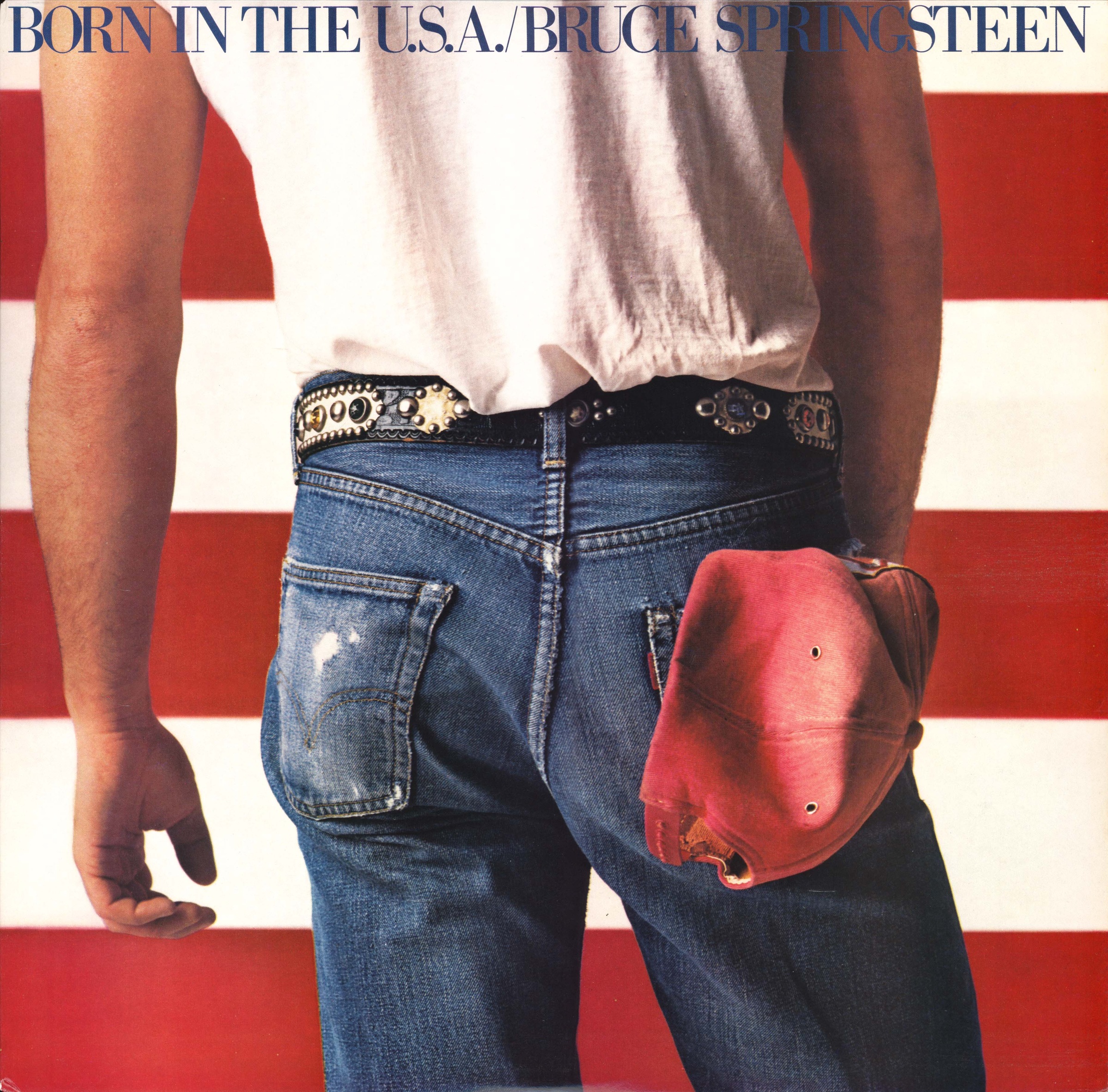
The cover image, photographed by Annie Leibovitz, is deceptively simple but visually powerful. It features Springsteen standing before a giant American flag, photographed from behind. He wears faded blue jeans, and a red baseball cap—tucked into his back pocket—becomes an unexpectedly important detail. The visual palette is unmistakably patriotic: blue denim against the red and white stripes of the flag. Yet the pose itself invites interpretation. The viewer sees only Springsteen’s back, his stance ambiguous, almost confrontational. Some observers even believed the image suggested he was urinating on the flag, an interpretation that says more about political anxieties than about the photograph itself.
That ambiguity soon spilled into American politics. During the 1984 presidential campaign, Ronald Reagan publicly invoked Springsteen as an example of American optimism, apparently assuming the song Born in the U.S.A. was a straightforward patriotic anthem. In reality, the lyrics tell a far more painful story: a Vietnam veteran returning home to find himself abandoned by the very country he served. Springsteen responded to the political appropriation by reminding audiences—sometimes from the stage itself—that his songs were about those Americans who had been left behind by economic and political systems.
Seen in this light, the flag on the cover becomes a symbol of contradiction rather than simple patriotism. It represents both pride and protest, belonging and alienation. Springsteen’s music has always been rooted in a profound attachment to the American landscape—the small towns, factories, highways, and working families that populate his songs—but that attachment has never been blind. The Born in the U.S.A. cover captures that tension perfectly: a man standing before the national symbol, neither saluting it nor rejecting it, but confronting it.
4 America — Prince (1985, 12-inch single)
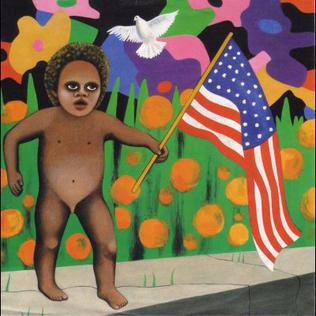
Prince released “America” in 1985 during the same creative period that produced the album Around the World in a Day. The song itself is an exuberant blend of rock, funk, and pop energy, driven by a relentless rhythm and a celebratory chorus. In its extended 12-inch version, the track becomes a sprawling jam that stretches beyond twenty minutes, showcasing Prince’s virtuosic musicianship and the tight interplay of his band.
The single’s artwork incorporates a stylized version of the American flag, filtered through Prince’s distinctive psychedelic aesthetic. Rather than presenting the flag in a traditional patriotic context, the design feels playful, colorful, and slightly surreal—reflecting the eclectic spirit of the Around the World in a Day era. Prince was never interested in simple categories, and his approach to national symbolism reflects that.
Lyrically, the song itself contains layers of irony and commentary. On the surface, it sounds like a joyful celebration of American life, but beneath the upbeat rhythm there is a subtle critique of social inequality and political complacency. Prince often used exuberance as a form of commentary, blending celebration and satire in ways that invited multiple interpretations.
In this context, the American flag becomes part of a larger artistic palette rather than a fixed ideological statement. Prince treats the symbol as something flexible—something that can be remixed and reimagined just like music itself. The result is a fascinating example of how pop imagery can transform national symbols into expressions of creativity and cultural identity.

5 Amorica — The Black Crowes (1994)
When Amorica was released in 1994, it immediately drew attention for one of the most controversial album covers of the decade: a close-up photograph of a woman wearing a bikini patterned after the American flag. The image—originally taken from a 1970s issue of Hustler magazine—sparked intense debate about sexuality, censorship, and the commercialization of patriotic imagery. Some retailers refused to carry the album with the original artwork, forcing the band’s label to issue a censored version of the cover.
The title itself adds another layer of meaning. By altering “America” into “Amorica,” the band plays with language in a way that mirrors the provocative imagery. The Spanish word “amor”—meaning love—sits at the heart of the altered spelling, subtly linking the national symbol to themes of desire and sensuality. The title and cover operate together: both transform the familiar idea of America into something more ambiguous, playful, and provocative.
Musically, Amorica represents a high point in the Black Crowes’ blend of blues-rock, Southern rock, and improvisational jam-band energy. Songs like “Wiser Time” and “High Head Blues” showcase the band’s deep connection to the traditions of American rock and blues. Their sound draws heavily from the lineage of artists such as the Rolling Stones and the Allman Brothers Band, combining gritty guitar riffs with extended grooves and soulful vocals.
This creates an intriguing cultural tension between sound and image. The music celebrates the heritage of American rock, rooted in blues and Southern musical traditions, while the cover reframes the national symbol through a deliberately erotic lens. The flag becomes intertwined with themes of desire, rebellion, and excess—suggesting that American identity itself is inseparable from the myths and contradictions embedded in its popular culture.
The controversy surrounding the artwork ultimately demonstrates how powerful the American flag remains as a cultural symbol. Even in a context of playful provocation, its presence can trigger intense reactions. Amorica illustrates how album art can challenge viewers to reconsider familiar symbols, turning a national emblem into a site of cultural debate about identity, sexuality, and freedom of expression.

6 Die for the Government — Anti-Flag (1996)
The punk band Anti-Flag leaves little ambiguity about its intentions. Their 1996 album Die for the Government presents an upside-down American flag on the cover—an internationally recognized signal of distress. Within the visual language of protest movements, this inversion communicates that the nation itself is in crisis.
Musically, the album embodies the raw energy and urgency of political punk rock. Fast tempos, shouted vocals, and aggressive guitar riffs drive songs that criticize militarism, nationalism, and economic inequality. The band emerged from Pittsburgh’s punk scene, drawing inspiration from earlier politically engaged groups such as the Clash and Dead Kennedys.
The upside-down flag reinforces the album’s message: patriotism should not be blind loyalty but a willingness to confront injustice. By reversing the symbol, Anti-Flag transforms the flag from an emblem of unity into a sign of alarm. The image demands attention and forces viewers to reconsider their relationship to national identity.
Within the broader context of American music, punk has often served as a space for radical critique. The visual imagery of Die for the Government reflects that tradition. It reminds us that cultural symbols are not static; they can be inverted, challenged, and reclaimed as part of political discourse.
7 Generation Swine — Mötley Crüe (1997)
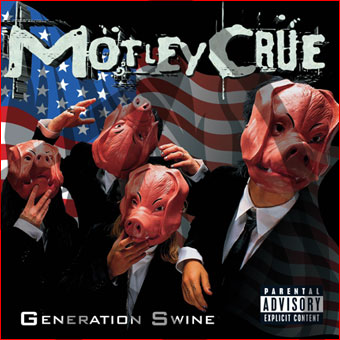
Released in 1997, Generation Swine marked a stylistic departure for Mötley Crüe. Known primarily for their glam-metal excess during the 1980s, the band experimented with industrial textures and darker production on this album. The musical landscape of the late 1990s had shifted dramatically, and the band’s attempt to reinvent itself reflects the broader turbulence of the era.
The cover artwork presents a distorted version of the American flag, fragmented and digitally manipulated. The image resembles a corrupted file or a glitched broadcast—an aesthetic that mirrors the album’s sonic experimentation. Rather than appearing stable and pristine, the flag seems fractured and unstable.
This visual distortion can be interpreted as a commentary on the changing cultural climate of the 1990s. The optimism associated with earlier decades had given way to a more cynical, media-saturated environment. Technology, globalization, and shifting social dynamics were reshaping American identity.
In this context, the altered flag symbolizes a nation navigating uncertainty. It suggests that the symbols of national unity are themselves subject to distortion in an age of rapid change. Whether intentional or not, the cover reflects the anxieties of a generation grappling with the end of the twentieth century.
8 Stankonia — OutKast (2000)
OutKast’s Stankonia, released in 2000, is widely regarded as one of the most innovative hip-hop albums ever recorded. André 3000 and Big Boi fused Southern rap with funk, electronic music, and experimental production techniques. Tracks like “B.O.B.” and “Ms. Jackson” expanded the sonic possibilities of hip-hop while addressing themes ranging from relationships to political consciousness.
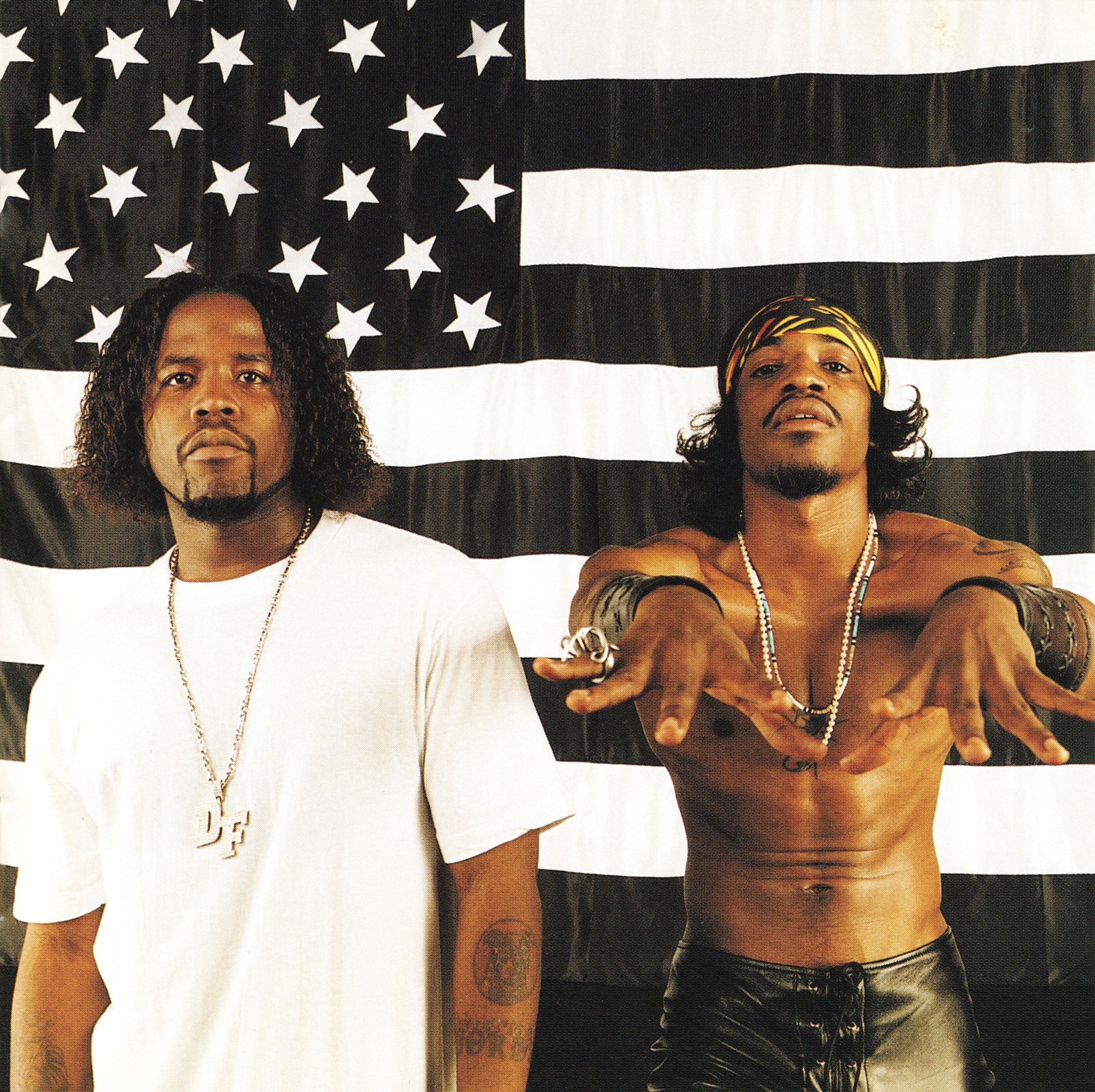
The album cover features the duo posing before a black-and-white American flag. The absence of color immediately alters the meaning of the symbol. Without the familiar red, white, and blue palette, the flag becomes abstract—almost graphic in its stark contrast.
This reinterpretation reflects the album’s broader cultural message. OutKast represents a generation of artists redefining what American identity looks like. Emerging from Atlanta’s vibrant music scene, they challenged the coastal dominance of New York and Los Angeles within hip-hop culture.
The flag behind them becomes a backdrop for that transformation. It suggests that the idea of America is not fixed but continually reshaped by new voices and perspectives. By placing themselves before the symbol, OutKast implicitly claim their place within the national narrative—while simultaneously redefining it.
9 Amerika — Rammstein (2004)
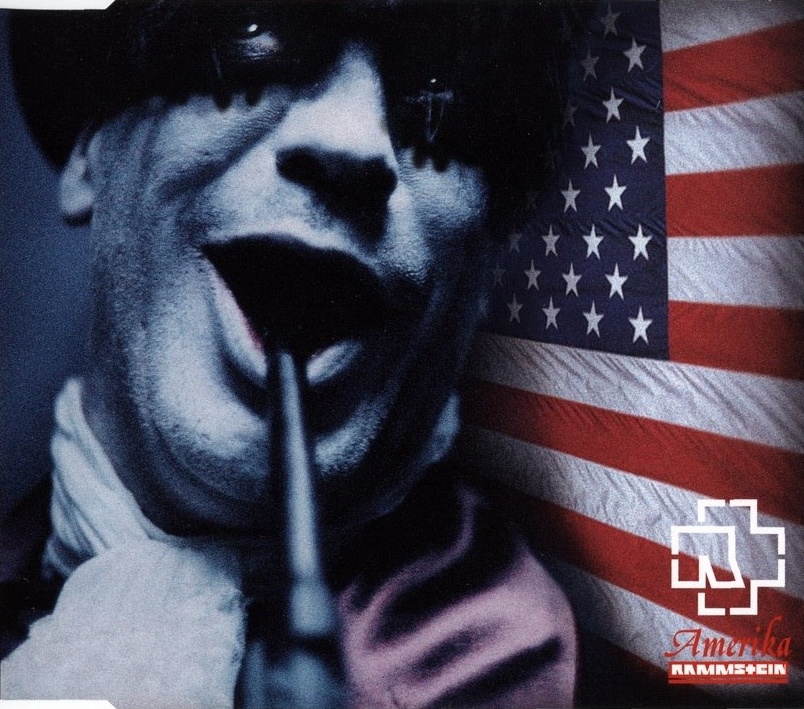
When the German industrial metal band Rammstein released “Amerika” in 2004, they did so with unmistakable irony. The song critiques the global dominance of American culture, repeating the line “We’re all living in Amerika.” The accompanying imagery often features the band planting the American flag in surreal settings, including the moon.
Musically, the track combines heavy guitar riffs with electronic elements and a deliberately catchy chorus. The contrast between the song’s playful melody and its critical lyrics creates a form of satire. Rammstein has long used theatrical imagery and provocative symbolism to explore political themes.
For a European band, the American flag carries a different meaning than it does for domestic artists. It represents not only a nation but a global cultural force—one that shapes music, film, fashion, and media across the world. By placing the flag in exaggerated contexts, Rammstein highlights the reach of that influence.
The cover imagery thus becomes a commentary on globalization. It suggests that American culture has become a kind of universal language, exported and consumed far beyond its borders. At the same time, the satire reminds listeners that cultural dominance can provoke both admiration and skepticism.

10 Long. Live. A$AP — A$AP Rocky (2013)
Released in 2013, Long. Live. A$AP marked the mainstream breakthrough of Harlem rapper A$AP. The album blends hip-hop with elements of electronic music, Houston-style chopped-and-screwed production, and atmospheric cloud-rap textures. Songs like “Goldie” and “F***in’ Problems” helped define the sound of early-2010s hip-hop.
The cover image shows Rocky draped in a black-and-white American flag, echoing the monochrome aesthetic seen in OutKast’s Stankonia. The absence of color once again transforms the symbol into something more abstract and stylistic.
Within hip-hop culture, clothing and imagery often function as powerful statements of identity. By wearing the flag, Rocky reclaims the symbol as part of a contemporary urban aesthetic. The image suggests that national identity is not limited to traditional patriotic imagery but can be reinterpreted through fashion, art, and music.
The result is both stylish and symbolic. The flag becomes part of the visual language of modern hip-hop—a reminder that cultural influence flows through cities, subcultures, and artistic communities as much as through political institutions.
Where OutKast’s monochrome flag reads as a stark historical statement about identity and belonging, Rocky’s version feels closer to high-fashion iconography, reflecting the fusion of hip-hop, luxury branding, and visual aesthetics that defined the early 2010s.
Conclusion
Looking across these ten covers, one thing becomes clear: the American flag in popular music is never just decoration. Each artist approaches the symbol differently, reflecting the political climate, cultural tensions, and artistic sensibilities of their time.
In the early 1970s, artists like Sly & The Family Stone and Don McLean used the flag to grapple with disillusionment and nostalgia. By the 1980s, Bruce Springsteen and Prince were exploring the complicated relationship between patriotism and critique. The 1990s brought provocation and rebellion, from the Black Crowes’ controversial imagery to the overt protest of punk bands like Anti-Flag. As the new millennium arrived, artists like OutKast and A$AP Rocky reimagined the flag through the lens of hip-hop culture, while international bands such as Rammstein used it to comment on America’s global influence.
From a cultural studies perspective, these covers demonstrate how national symbols evolve within popular culture. The flag becomes a site of negotiation—a place where identity, politics, and art intersect. Musicians reinterpret it, challenge it, and sometimes celebrate it, turning a familiar image into a powerful form of commentary.
Perhaps that is why the American flag continues to appear on album covers decade after decade. Like music itself, it remains open to reinterpretation. Each generation inherits the same flag, yet no generation sees quite the same America.
© Francesc Borrull, 2026

