
Francesc Borrull · July 4, 2026
There are anniversaries that ask very little of us. They invite ceremony, repetition, a few familiar words, perhaps a public display of gratitude before life resumes its ordinary rhythm. But there are other anniversaries that ask for something deeper. They do not merely invite us to remember an event; they ask us to reconsider the meaning of the event we have inherited. The 250th anniversary of the Declaration of Independence belongs to that second category. It is not simply a patriotic milestone, nor merely a historical commemoration. It is an invitation to ask, with seriousness and humility, what kind of nation was imagined in 1776, what kind of nation has actually emerged since then, and what kind of nation we are still capable of becoming.
What we celebrate on July 4th is not the completion of the American system. The Constitution would not be written until 1787. The Bill of Rights would come later still. The Civil War, Reconstruction, women’s suffrage, civil rights, the expansion of citizenship, and the long unfinished struggle to make the promise of liberty more than an abstraction were all still ahead. The Declaration did not give the United States a finished political structure. It did something more elemental, and perhaps more audacious: it announced that a people who had been subjects of a crown would claim the right to govern themselves.
That distinction matters. The Declaration did not begin with a fully formed nation-state calmly explaining its administrative preferences. It began with thirteen colonies, different in history, economy, religion, culture, and political interest, making a collective claim before the world. They declared themselves “free and independent states,” a phrase that reminds us how fragile unity was at the beginning. The United States did not enter history as an obvious, natural, seamless whole. It had to be imagined, argued into being, defended, revised, and held together across generations. Unity was not given. It was constructed.
And because it was constructed, it has always required maintenance.
This is one of the reasons I keep returning to Abraham Lincoln when I think about the meaning of American citizenship. Lincoln understood that the Union was not merely a convenient arrangement among states. It was the condition under which the American experiment could continue. Without Union, the promise of self-government would fracture into competing sovereignties, each free to abandon the larger moral and political project whenever it became inconvenient. Lincoln’s insistence that the nation must remain one and indivisible was therefore not only a constitutional argument. It was a philosophical one. If the United States could dissolve whenever part of it rejected the result of self-government, then the experiment itself would have failed at its most basic level.
Yet unity, by itself, is not enough. A nation can be united under coercion, under fear, under bureaucracy, under habit, or under force. The American question has always been more difficult than mere unity. The challenge has been to create a nation strong enough to endure, but limited enough to preserve liberty; energetic enough to govern, but restrained enough not to become oppressive; unified enough to act, but plural enough to protect the local, the individual, and the dissenting voice. That tension is not an accidental flaw in the American system. It is part of the design.
This is where federalism becomes so important. When I first began studying the debates around the Constitution more carefully, especially through the arguments of The Federalist Papers and the objections of the Anti-Federalists, I realized that the American system is not built on simplicity. It is built on tension. The Federalists argued for a stronger national government because the loose arrangement under the Articles of Confederation had proved too weak to provide stability, coordination, and authority across a vast and growing territory. The Anti-Federalists feared that the new federal government might become too distant from the people, too concentrated in its power, and too capable of threatening the liberties it claimed to protect. They lost the ratification debate, but their resistance helped produce one of the most important protections in American constitutional life: the Bill of Rights.
That outcome reveals something essential. The American system did not emerge from one side simply defeating the other. It emerged from pressure, compromise, suspicion, argument, and adjustment. Federalism, at its best, is not a technical arrangement only lawyers and political scientists should care about. It is one of the central mechanisms by which liberty and authority are kept in relation to one another. The federal government has powers that belong properly to the nation as a whole; the states retain powers closer to the local lives of citizens; and the individual person remains protected by rights that neither level of government should be allowed to violate. In that sense, federalism is not simply a division of labor. It is a discipline of power.
The same principle appears in the separation of powers. The Constitution does not trust power to purify itself. It does not assume that good intentions are enough. It divides power because human beings are fallible, ambitious, partial, and tempted by authority. Congress legislates, the President executes, the courts interpret, and each branch, in different ways, checks the others. This system can be slow, frustrating, and imperfect; at times it can seem almost designed to disappoint anyone who wants immediate action. But that slowness is not always a defect. Sometimes it is a safeguard. A republic that values liberty must make power work through friction.
For me, this is one of the most reassuring features of the American system. The Constitution was never meant to be a frozen relic, admired from a distance as if it belonged to a museum of national origins. It created a framework capable of continuity and change. The Bill of Rights itself proves that the original Constitution was not treated as the final word. The later amendments prove it again and again. The system contains within itself the mechanisms of adaptation: amendment, interpretation, election, debate, reform, and renewal. Nothing about this means that progress is automatic, or that the system always corrects itself quickly, or that citizens can afford complacency. But it does mean that the American experiment was designed with movement in mind.
That idea matters to me deeply: the republic is not a finished object, but a living structure. It endures not because it never changes, but because it can change without ceasing to be itself. It can absorb conflict, argument, disappointment, reform, and expansion because its deepest principles are not static commands but governing commitments: liberty, representation, consent, equality before the law, limited government, ordered freedom, and the dignity of the citizen. The task of each generation is not to embalm those principles, but to understand them well enough to apply them under new conditions.
This is also why I hesitate to reduce citizenship to ideology. Public life often rewards quick labels, but labels can flatten the moral complexity of citizenship. What interests me more is the deeper architecture of the American experiment: the need for union without domination, liberty without fragmentation, government without tyranny, rights without civic selfishness, and disagreement without national dissolution. These are not easy balances to maintain. They require institutions, but they also require habits of mind. They require citizens who can live with complexity without becoming cynical, and who can love their country without pretending that love requires blindness.
To love a country seriously is not to confuse it with perfection. In fact, the opposite may be true. Serious patriotism begins when affection and judgment are allowed to coexist. It remembers the beauty of the founding promise, but it does not forget the exclusions, contradictions, and failures that accompanied it. It honors the courage of self-government, but it also recognizes how long and uneven the struggle has been to extend the blessings of liberty to all who live under its authority. The point is not to choose between gratitude and criticism, as if maturity required only one of them. The point is to hold them together. A country worthy of love is not one that has never failed. It is one whose deepest principles give its people the language, the tools, and the responsibility to confront failure.
That responsibility is the heart of self-government. The United States is often called a democracy, and in ordinary language that is understandable, but technically it is more precise to say that it is a constitutional republic with democratic foundations. We do not vote directly on every law, every appointment, every treaty, or every public decision. We elect representatives, executives, and other officials who exercise authority on our behalf, within constitutional limits and under the pressure of future accountability. The people do not rule by gathering every morning to decide every question. They rule by establishing institutions, choosing leaders, protecting rights, demanding accountability, and removing those who no longer deserve public trust.
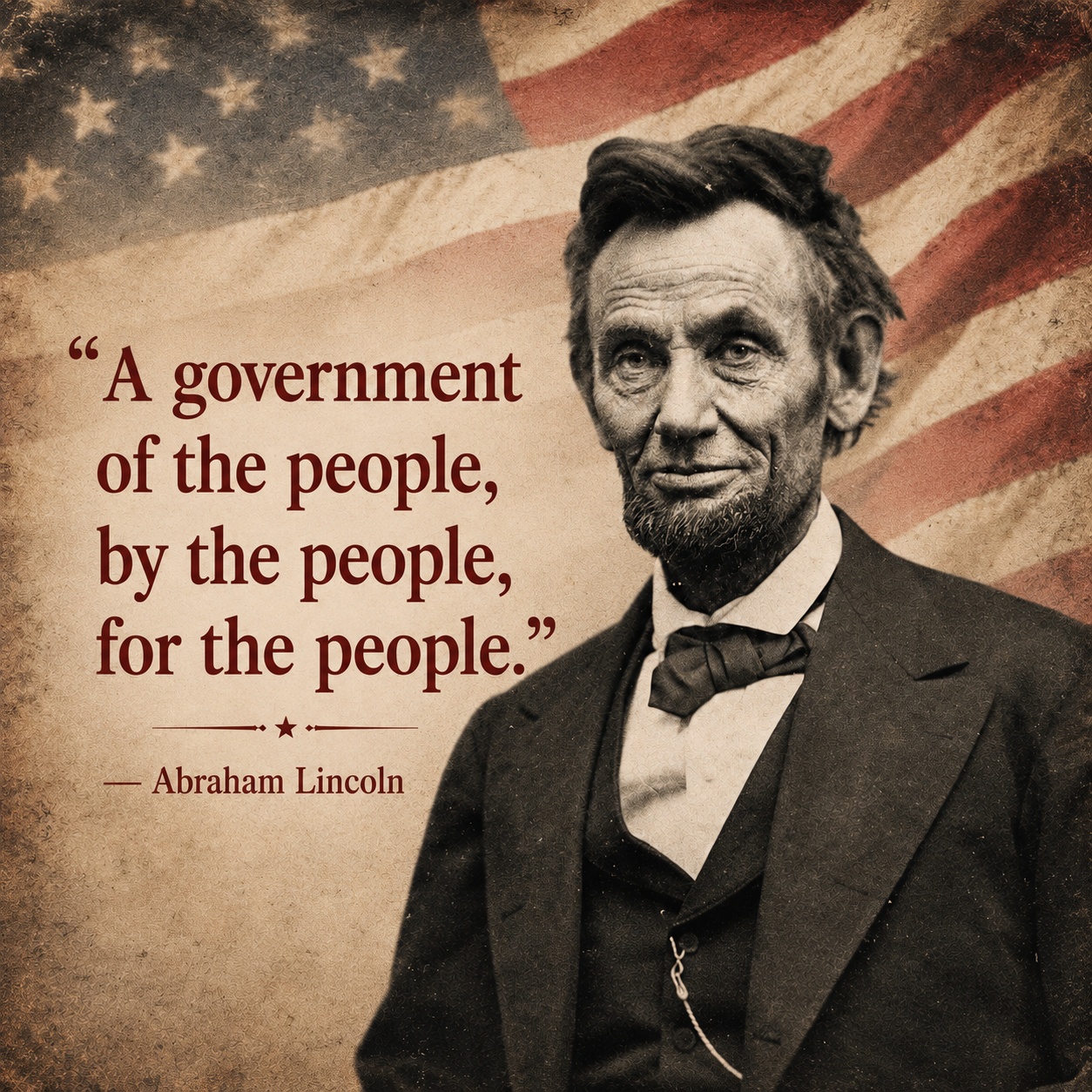
That is why “We the People” may be the most powerful phrase in the Constitution. It locates sovereignty not in a monarch, not in a dynasty, not in bloodline, not in inherited privilege, but in the people themselves. This was, and remains, revolutionary. A British colony became a Republic. Subjects became citizens. Authority no longer descended from a crown; it arose, at least in principle, from consent. Lincoln later gave this idea its most memorable democratic formulation at Gettysburg: “government of the people, by the people, for the people.” The phrase endures because it captures the moral center of the American experiment: the government is not something alien standing above the people. It is ours, and because it is ours, we are responsible for it.
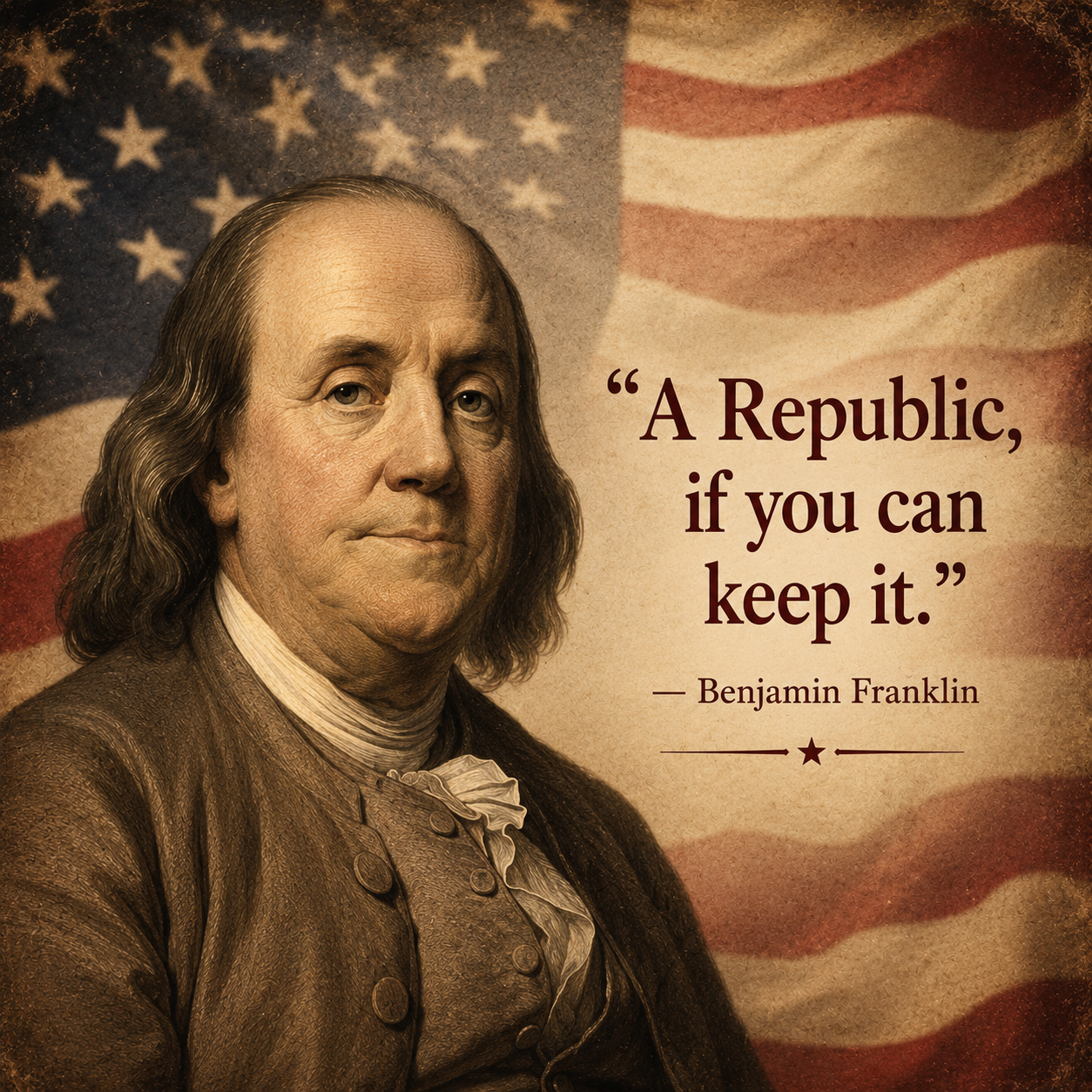
This is also the meaning behind Benjamin Franklin’s famous warning at the close of the Constitutional Convention. Asked what kind of government had been created, Franklin is remembered as answering, “A republic, if you can keep it.” The brilliance of that answer lies in its conditional form. A republic can be designed, but not guaranteed. It can be founded, but not kept automatically. It depends on laws and institutions, yes, but also on restraint, education, virtue, judgment, memory, and vigilance. The Constitution can create offices; it cannot make citizens wise. It can distribute power; it cannot ensure that the people will always recognize wisdom, courage, moderation, or integrity when they see them.
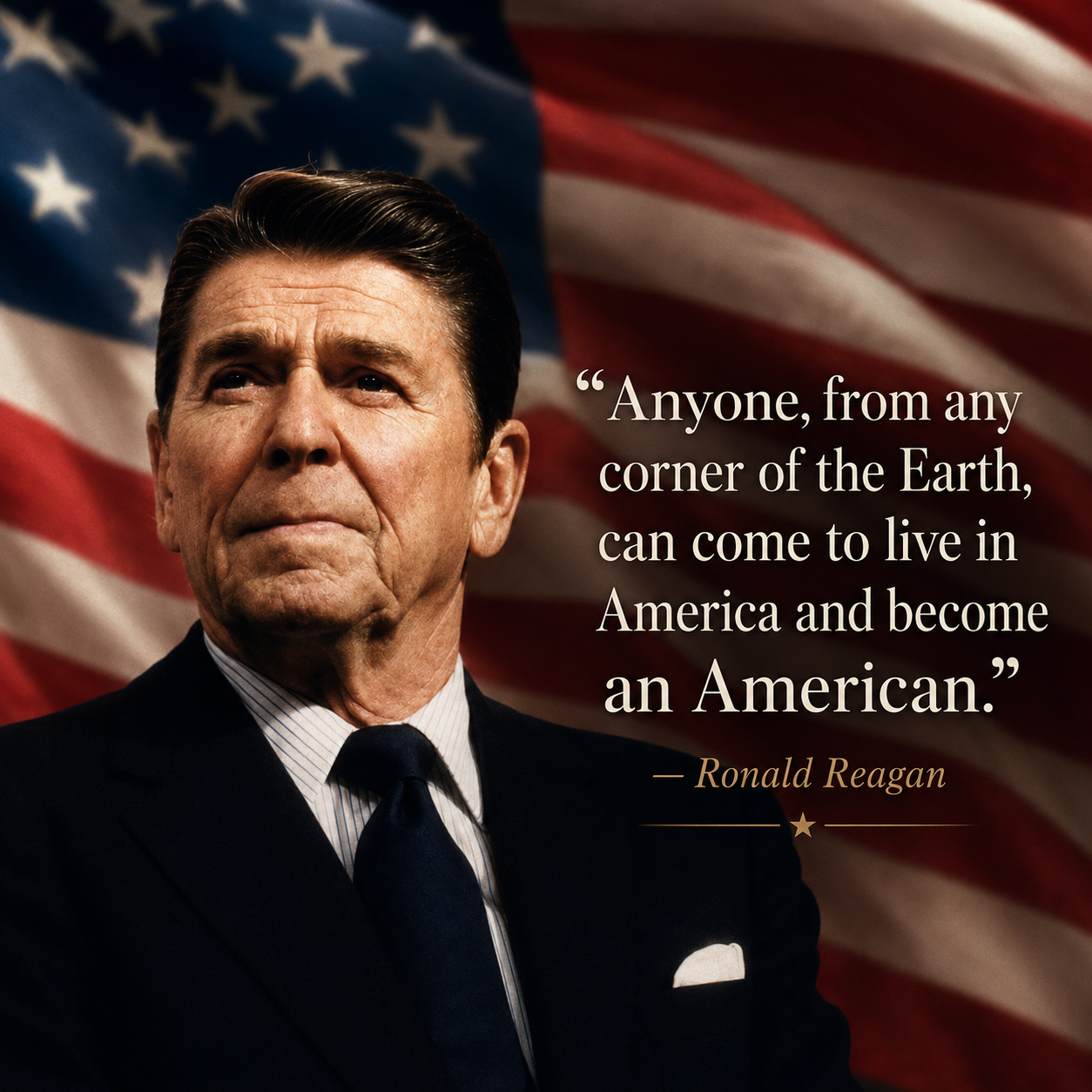
That is where the anniversary becomes personal for me. I was not born in the United States. I came here from another country, built a life here, became a citizen, and learned, over time, that American identity is not simply inherited. It can be entered. It can be chosen. Ronald Reagan once expressed this idea by quoting a letter he had received: a person may go live in France, Germany, Turkey, or Japan without becoming French, German, Turkish, or Japanese in the same way, but someone “from any corner of the Earth” can come to America and become an American. Whether one treats that statement as political rhetoric, national aspiration, or civic ideal, I understand emotionally what it means. I came to live in America, and now I am an American.
That fact still moves me. Citizenship, for me, is not an abstraction printed on a document. It is a moral belonging. It means that the history of this country, with all its grandeur and contradiction, is no longer only someone else’s inheritance. It is also mine. The Declaration, the Constitution, the Civil War, the amendments, the immigrant story, the arguments over federal power and individual liberty, the long struggle over who counts fully as part of “the people”—all of this belongs to me now not because I was born into it, but because I entered into its obligations. To become an American is not merely to receive rights. It is to accept responsibility for a republic that depends, finally, on the judgment of its citizens.
This is why leadership matters so much to me. Not celebrity. Not performance. Not noise. Leadership. A republic depends on people capable of choosing men and women who can think beyond appetite, beyond resentment, beyond spectacle, beyond the immediate reward of applause. Policies matter, of course. Competence matters. Character matters. But beneath all of that lies a more fundamental question: what kind of mind are we entrusting with power? Does this person understand limits? Does this person respect institutions? Does this person know the difference between strength and domination, confidence and vanity, conviction and fanaticism? Does this person possess enough self-command to exercise public authority without becoming intoxicated by it?
These questions are not separate from citizenship. They are citizenship. A republic does not ask the people simply to have opinions. It asks them to exercise judgment. It asks them to distinguish seriousness from performance, courage from aggression, prudence from weakness, and patriotism from mere display. It asks them to recognize that liberty can be endangered not only by foreign enemies or obvious tyrants, but also by carelessness, exhaustion, ignorance, cynicism, and the temptation to treat politics as entertainment rather than self-government.
At 250 years, then, I do not find myself celebrating American perfection. I find myself celebrating American possibility. The United States began as an audacious claim: that a people could govern themselves, that authority could rest on consent, that rights did not come from kings, and that a republic could be built without a dynasty at its center. That claim has been tested repeatedly, and it will continue to be tested. But perhaps that is the nature of the American experiment. It is not a finished monument. It is an unfinished discipline.
On this July 4th, I feel gratitude, but not complacency. I feel pride, but not blindness. I feel affection for the country that allowed me to become part of it, but also a sober awareness that the republic is never kept once and for all. It is kept in classrooms, courtrooms, town halls, elections, military service, public offices, private conversations, jury rooms, school boards, libraries, newspapers, peaceful protests, naturalization ceremonies, and ordinary acts of civic attention. It is kept whenever citizens remember that freedom is not merely permission to do whatever one wants, but the shared responsibility of sustaining a political order in which liberty can belong to all.
America has no king. That is not a small thing. No family owns the future of the country. No dynasty possesses the people. The republic belongs, in principle and in burden, to those who inherit it, enter it, argue over it, improve it, defend it, and pass it on. That is why the 250th anniversary of the United States should not only send us backward into memory, but forward into obligation. The question is not only what the founders created, or what Lincoln preserved, or what earlier generations amended, expanded, and repaired. The question is what we, the people, will be worthy of keeping.
The strength of this republic will not depend solely on its institutions, its laws, or its leaders. It will depend on the quality of judgment of its people.
Happy Fourth of July to you all, and may God bless the United States of America.
© Francesc Borrull, 2026
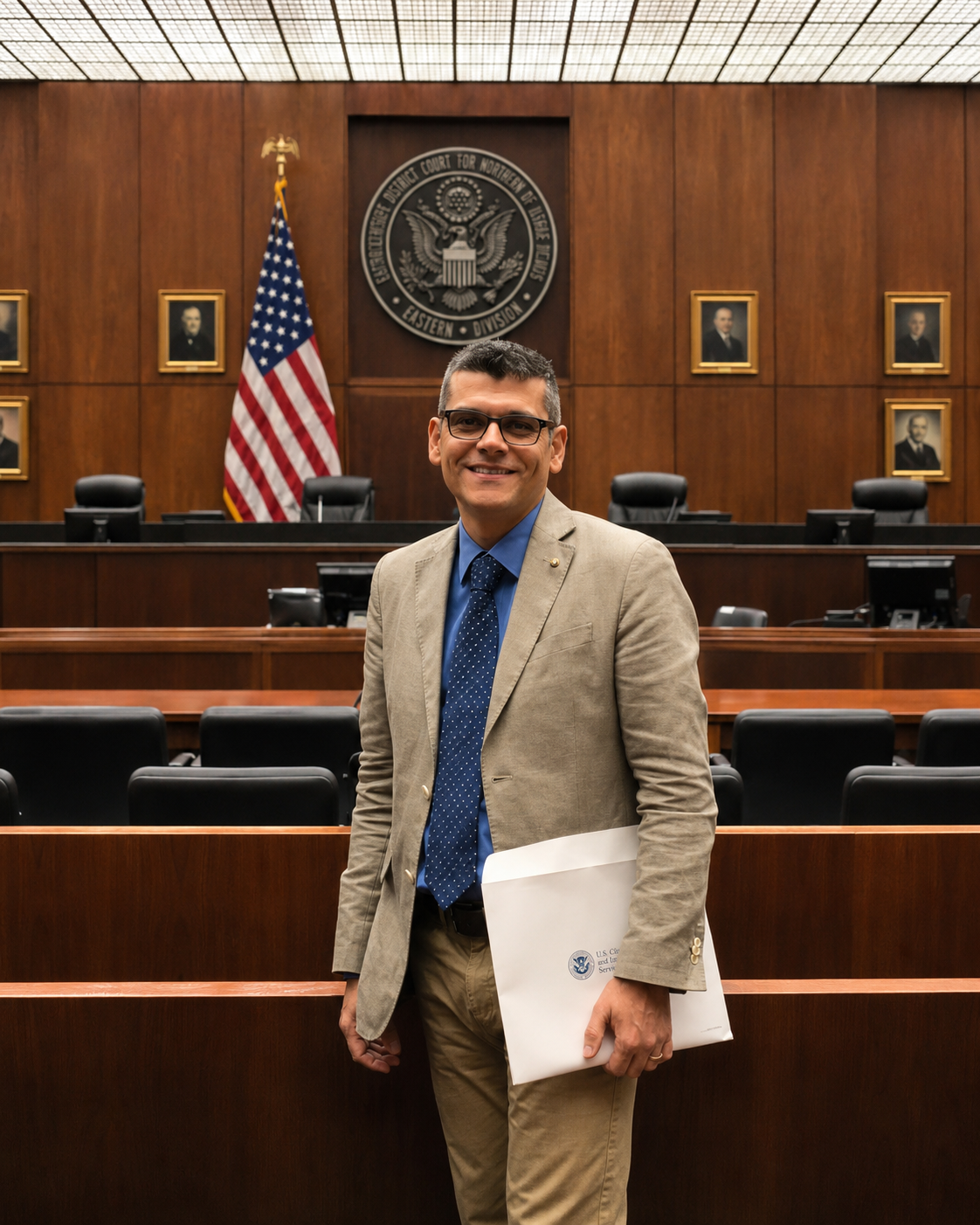
as a U.S. citizen.

