
By Francesc Borrull · July 13, 2026
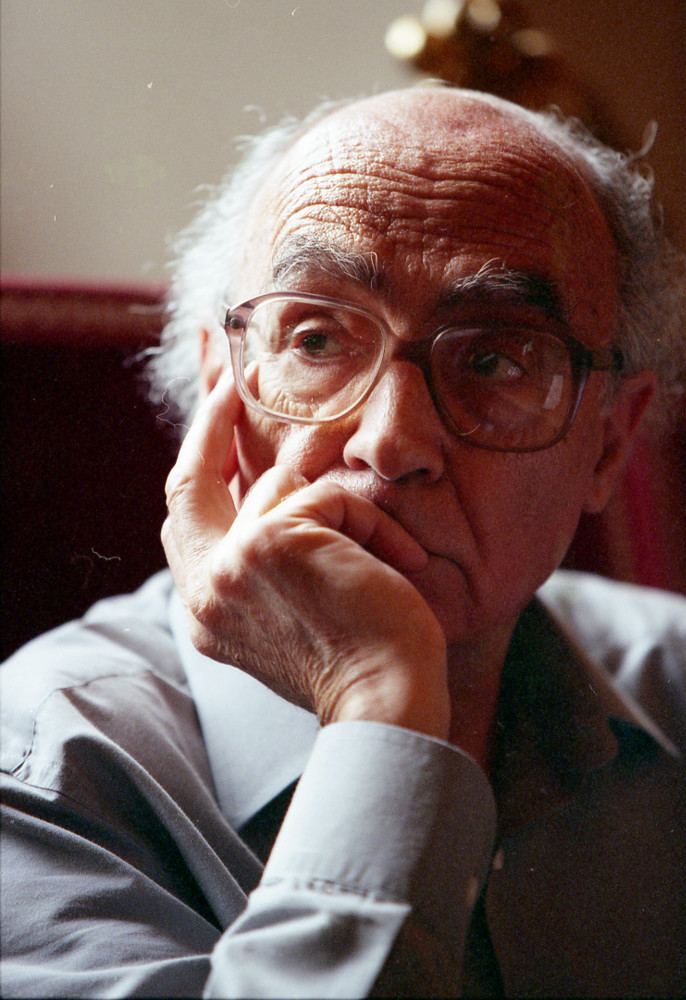
There are writers one reads for plot, writers one reads for style, and writers one reads because they alter the moral atmosphere of the room. José Saramago belongs to that last category.
Saramago, the Portuguese novelist who received the Nobel Prize in Literature in 1998, is one of the essential European writers of the late twentieth century. He was born in Portugal in 1922, came from humble rural origins, worked for many years before becoming internationally famous, and eventually became one of those rare writers whose name stands for an entire moral and philosophical universe. His novels are immediately recognizable: long flowing sentences, almost no conventional dialogue punctuation, fables that begin with impossible premises, and a deep distrust of power, dogma, bureaucracy, and human complacency.
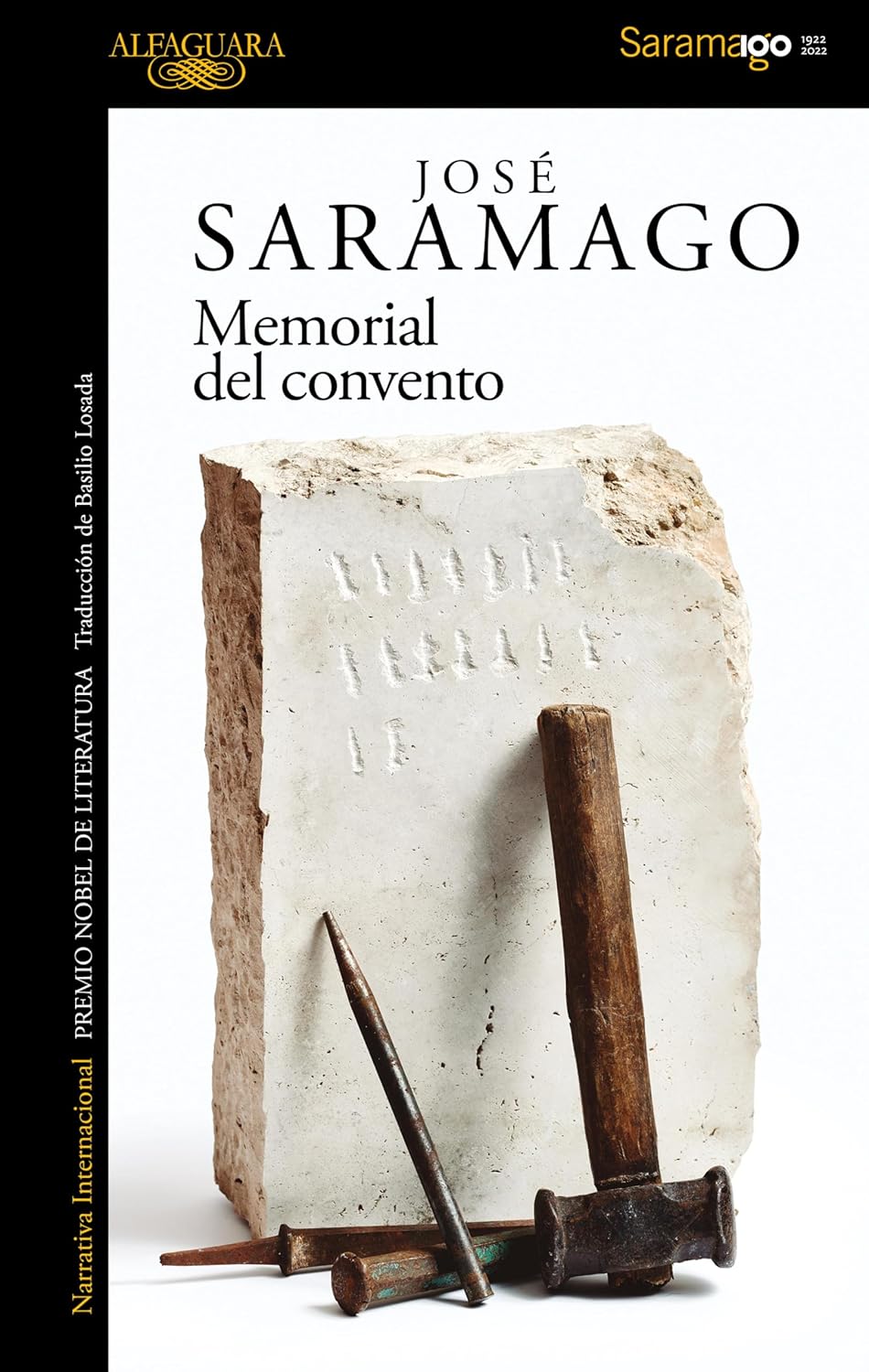
For me, Saramago also belongs to a personal memory. I read him often when I was living in Barcelona, always in those beautiful Alfaguara Spanish translations that seemed, at the time, almost inseparable from his literary identity. Even now, I cannot entirely separate Saramago’s voice from those austere covers: the white fields, the black borders, and the strange objects arranged like visual parables before the novel had even begun. Saramago himself had a strong connection to Spain. In 1988, he married the Spanish journalist and translator Pilar del Río, and he spent much of the later part of his life in Lanzarote. He also wrote regularly for El País, commenting on politics, culture, religion, and the absurdities of modern life with the same moral sharpness that animates his fiction.
That connection matters to me because Saramago was not a novelist sealed off from the world. He was a public conscience: philosophical, but never abstract in the sterile sense; political, but never reducible to slogans; imaginative, but always returning through imagination to the human being under pressure. It is partly for that reason that I want to return to him now.
I am drawn to novels that take human beings seriously—books in which men and women struggle with conscience, suffering, love, dignity, betrayal, faith, memory, history, and the difficult work of becoming fully human. I admire ambition, but only when it serves life rather than abstraction; even when a novel becomes philosophical or symbolic, I want people inside the ideas, not ideas replacing people. Saramago matters because he repeatedly creates precisely that pressure.
He is not merely “difficult.” He is not merely “experimental.” He is not merely “European” in some intimidating high-cultural sense. At his best, he is a novelist of moral pressure. He asks what human beings become when institutions fail, when history crushes the poor, when religion becomes power, when democracy becomes theater, when bureaucracy erases individuality, when death stops working, when language itself changes reality.
For readers who know his name but are uncertain where to begin, this is my personal doorway into Saramago: ten novels named in English for those who read him in English, and also in Spanish because the Spanish translations were the way I entered his world. Readers approaching him through other languages will find that his work has traveled widely and often remarkably well. And of course, if you can read Portuguese, that is the ideal path. Nothing quite replaces the original voice.
But however one enters, the important thing is to enter.
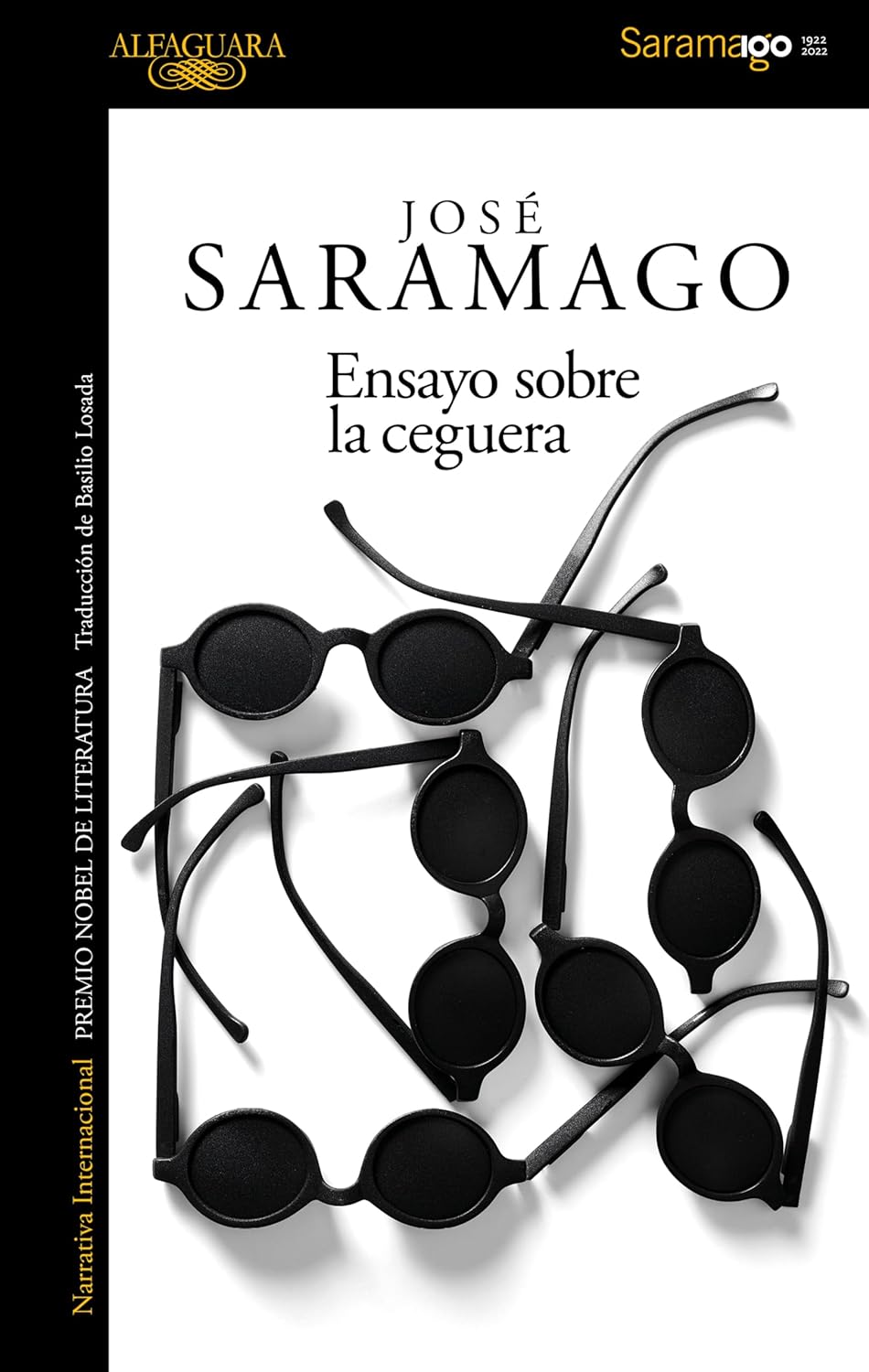
1. Blindness / Ensayo sobre la ceguera
This is probably the essential Saramago novel, and the one I would recommend first to almost anyone with a serious literary temperament.
The premise is terrifyingly simple: an epidemic of blindness spreads through a city. But this is not really a novel about blindness as a medical condition. It is a novel about civilization stripped of its costume. When people lose sight, they also lose the fragile systems that keep society functioning: order, hygiene, law, manners, shame, responsibility. The result is one of the most brutal moral laboratories in modern fiction.
What makes Blindness / Ensayo sobre la ceguera so powerful is that Saramago does not merely ask, “What would happen if everyone went blind?” He asks something far more disturbing: How much of our humanity depends on being seen by others? What remains of dignity when no one is watching? What is compassion when survival itself becomes humiliating?
This is a dark novel, sometimes almost unbearable, but it is not nihilistic. Its greatness lies in the fact that it descends into degradation without surrendering the possibility of moral courage. It belongs in conversation with Kafka, Camus, Orwell, and Dostoevsky, but it is also unmistakably Saramago: allegorical, physical, political, intimate, and devastating.
It takes human beings seriously under the most extreme pressure imaginable.
2. The Year of the Death of Ricardo Reis / El año de la muerte de Ricardo Reis
If Blindness / Ensayo sobre la ceguera is the moral catastrophe, The Year of the Death of Ricardo Reis / El año de la muerte de Ricardo Reis is the melancholic masterpiece.
This novel imagines the return to Lisbon of Ricardo Reis, one of Fernando Pessoa’s famous heteronyms, after Pessoa’s death. The premise alone is literary gold: a fictional poet returns to a city haunted by history, while the ghost of his creator wanders in and out of the book. But the novel is not merely clever. It is atmospheric, political, and deeply elegiac.
Lisbon becomes a city of rain, cafés, newspapers, hotel rooms, and ghosts. Fascism rises in Europe. History advances. Ricardo Reis observes, hesitates, desires, withdraws. The novel asks what it means to live aesthetically while the world burns. Can one remain detached from history? Can one be merely a spectator? Is melancholy a form of wisdom, or a form of evasion?
This is one of the reasons Saramago is great: he can write a novel that is intellectually intricate and still profoundly human. The book is literary without becoming a puzzle box. It is philosophical without losing weather, streets, bodies, desire, fatigue, and time.
For readers who love Pessoa, Lisbon, European history, and the problem of the observing self, The Year of the Death of Ricardo Reis / El año de la muerte de Ricardo Reis is essential.
3. Baltasar and Blimunda / Memorial del convento
At the center of this immense historical novel stand Baltasar and Blimunda, two unforgettable figures whose love gives human scale to a world of monarchy, Church power, forced labor, religious spectacle, and impossible dreams. Around them, Saramago builds a vast world of kings, priests, workers, visionaries, machinery, bodies, hunger, faith, and exploitation. The construction of the convent becomes a symbol of power: the powerful dream, while the poor carry the stones.
But the novel is not only an indictment. It is also magical, sensual, comic, and tender. Saramago’s imagination here is immense. He exposes the cruelty of historical power while giving ordinary lives epic weight. That phrase matters to me because it is at the center of what I seek in literature: books that understand that ordinary people are not small simply because history treats them as disposable.
Baltasar and Blimunda / Memorial del convento is one of Saramago’s great answers to official history. It asks us to look again. The monuments were not built by kings alone, but by anonymous hands, anonymous backs, and anonymous suffering. Literature restores the names history erases.
4. The Gospel According to Jesus Christ / El Evangelio según Jesucristo
Saramago’s Jesus is a human being placed inside a cosmic drama he did not choose. That premise, more than the novel’s controversy, gives the book its moral force.
The Gospel According to Jesus Christ / El Evangelio según Jesucristo retells the life of Jesus from a radically human perspective. It is irreverent, yes, and deeply critical of religious power, but it is not merely an attack on Christianity. It is a profound meditation on innocence, obedience, suffering, destiny, and the terrible burden of being used by history.
Saramago’s Jesus is not a theological abstraction. He is a man whose life has been claimed by forces larger than himself, and the novel presses against the moral consequences of that claim. What kind of God requires suffering? What happens when faith becomes obedience to power? Can a human life belong to itself when it has been claimed by divine or historical necessity?
For readers who care about religion as literature, myth as moral structure, and the human cost of sacred narratives, this is a major work. It belongs beside the great modern attempts to reimagine inherited religious stories not in order to mock them cheaply, but to recover the trembling human being inside them.
This is exactly the kind of philosophical novel I admire: ideas are everywhere, but they do not replace people. They press upon people, wound them, and demand a response.
5. All the Names / Todos los nombres
The genius of All the Names is that it turns paperwork into metaphysics.
The protagonist, don José, is a low-level clerk in a Central Registry. He lives a small bureaucratic life among files, names, records, and procedures. One day, he becomes obsessed with the file of an unknown woman and begins to search for her. From this premise, Saramago creates a haunting meditation on anonymity, identity, bureaucracy, loneliness, and the mysterious human hunger to know another person.
A name in a registry is not a person, and yet the absence of a name can feel like a second death. Bureaucracy claims to preserve identity, but it often reduces human beings to entries, dates, certificates, and classifications.
The novel confronts the distance between a recorded identity and an inhabited life. Bureaucracy may preserve names, dates, and certificates while understanding almost nothing about the person to whom they belong, and don José’s search becomes an attempt to recover a human existence from the document that has flattened it.
This is Saramago at his quietest and strangest. The book may not have the apocalyptic force of Blindness / Ensayo sobre la ceguera, but it possesses a deep interior sadness. It reveals the moral and emotional poverty of a world that records everything and understands almost nothing.
6. Raised from the Ground / Levantado del suelo
This may be the hidden treasure of the list.
Raised from the Ground / Levantado del suelo tells the story of generations of Portuguese peasants, especially in the Alentejo, under poverty, exploitation, and political oppression. It is a novel of land, hunger, labor, family, endurance, and awakening. It culminates in the historical movement toward liberation associated with Portugal’s Carnation Revolution.
For me, this is deeply appealing because it connects literature with the dignity of those whom history often ignores. Saramago does here for Portuguese rural life what the great moral realists do for their own worlds: he gives the poor not sentimental pity, but historical and existential weight.
This is not merely a political novel. It is a novel about inheritance: inherited poverty, inherited fear, inherited submission, but also inherited resistance. It asks how people learn to stand up after generations of being bent down.
The title itself, Raised from the Ground / Levantado del suelo, contains the movement of the book: from the ground, from the earth, from humiliation, from burial, toward standing. That powerful image connects directly with Tolstoy, Galdós, Steinbeck, Mann, Dostoevsky, and Eliot—the literature I most admire, which does not decorate suffering but enters it.
7. The History of the Siege of Lisbon / Historia del cerco de Lisboa
This one has a special appeal for anyone who loves language, editing, translation, and the dangerous power of a single word.
In The History of the Siege of Lisbon / Historia del cerco de Lisboa, a proofreader changes a word in a historical text. That alteration opens a new reality, or at least a new way of imagining history. The premise is brilliant because it turns the act of reading and correcting into an existential and historical rebellion.
For someone with my background in literature and translation, this is almost irresistible. Translators and editors know that language is never neutral. A small change can alter emphasis, causality, responsibility, even truth. Saramago builds an entire novel out of that awareness.
But again, the book is not only a metafictional game. It is also about love, solitude, history, and the possibility of rewriting one’s own life.
The novel questions who owns history and what becomes possible when an official narrative is disturbed. At the same time, the proofreader’s alteration of the past becomes inseparable from a more intimate transformation: after spending his life correcting the words of others, he begins to imagine that he might author his own existence.
This is Saramago at his most intellectually playful, but the play has human consequence.
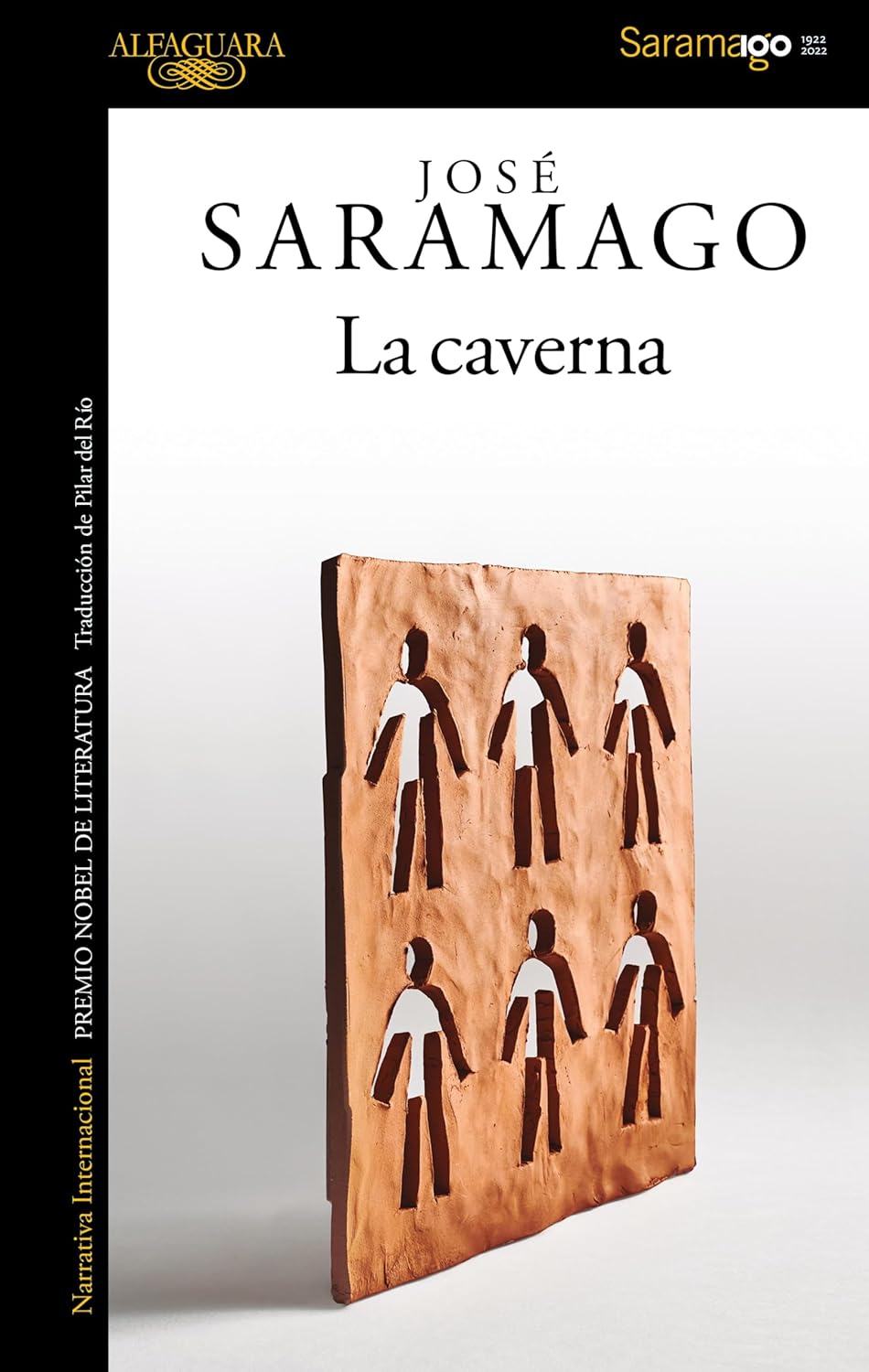
8. The Cave / La caverna
The Cave / La caverna begins from Plato but moves directly into modern consumer capitalism.
The novel centers on a potter and his family in a world increasingly dominated by a vast commercial complex known as the Center. The old forms of labor, craft, and human relation are being replaced by artificial abundance, mass consumption, and managed desire. Saramago takes the Platonic myth of the cave and brings it into the age of shopping centers, surveillance, and spiritual emptiness.
This is one of the Saramago novels that may speak especially clearly to contemporary readers. We live in a world that constantly offers simulations of life: screens, brands, curated identities, endless consumption, false needs. Saramago asks whether we can still distinguish reality from shadow, work from production, community from management, home from enclosure.
What makes The Cave / La caverna moving is that its critique is rooted in ordinary life. A potter is not merely a symbol. He is a worker, a father, a person whose skill and dignity are being made obsolete by a system that no longer recognizes human value unless it can be sold.
This is not an abstract denunciation of capitalism. It is a novel about what systems do to souls, families, habits, bodies, and homes.
9. Death with Interruptions / Las intermitencias de la muerte
In a certain country, people stop dying.
At first, this sounds like a blessing. But Saramago quickly reveals the absurd consequences. Families, hospitals, governments, funeral homes, religious institutions, and insurance systems all depend, in one way or another, on death continuing to function. When death stops, society does not become paradise. It becomes confused, bureaucratic, grotesque, and morally exposed.
Death with Interruptions / Las intermitencias de la muerte is one of Saramago’s great philosophical fables. It asks what death means not only biologically, but socially, spiritually, economically, and emotionally. We say that we fear death, but the novel suggests that human life may be intelligible only because death gives it shape.
There is also a surprising tenderness in the book, especially as the abstract premise becomes more intimate. Saramago often begins with a collective impossibility and gradually brings us back to the individual human being. That movement is one of his signatures.
This is not the Saramago novel I would read first, but it is a beautiful example of his late style: ironic, speculative, humane, and quietly profound.
10. Seeing / Ensayo sobre la lucidez
This novel is often described as a companion to Blindness / Ensayo sobre la ceguera, and it should probably be read after it.
Here the impossible premise is political: in an election, an overwhelming number of citizens cast blank ballots. The government interprets this not as democratic expression but as a threat. From there, Saramago builds a sharp critique of power, fear, legitimacy, and the fragility of democratic institutions.
Seeing / Ensayo sobre la lucidez feels especially relevant in our own age, when governments and institutions often praise democracy only as long as people choose within acceptable boundaries. Saramago is interested in what happens when citizens refuse the political script and become unreadable to power. In that moment, silence, blankness, and refusal cease to look passive; they become politically explosive precisely because authority can no longer classify or control them.
This is Saramago the political moralist. But again, his politics are not merely programmatic. He is interested in the mechanisms by which authority protects itself, manufactures enemies, and turns civic ambiguity into criminal suspicion.
For readers of Orwell and Camus, this is a fascinating book. It does not replace Blindness / Ensayo sobre la ceguera, but it extends its moral universe into democracy, state power, and collective resistance.
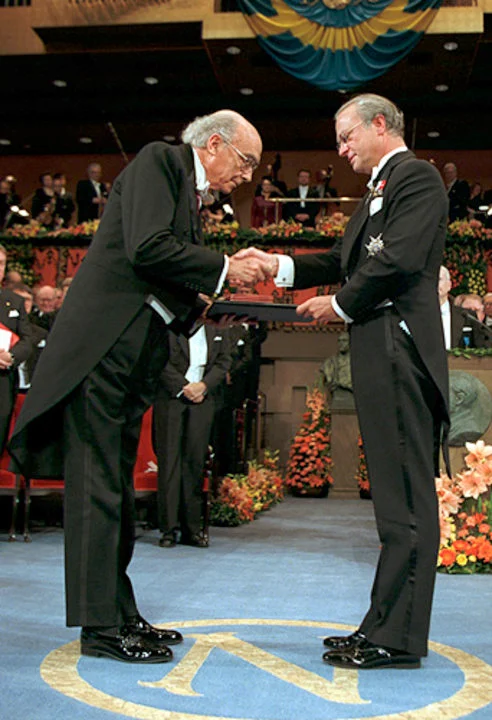
Copyright © FLT-Pica 1998
Why Saramago, and why now?
Saramago is not always easy. His sentences can be long, his punctuation can feel strange at first, and his narrators interrupt, digress, provoke, joke, and accuse. He does not write the kind of fiction that disappears politely in your hands. He asks you to adjust your breathing to his rhythm.
Once you enter that rhythm, however, something remarkable happens: you begin to understand that the style is not an ornament but a worldview. Saramago’s prose flows the way thought flows, the way history flows, the way moral consequence flows—without neat borders, without clean separations, without the comforting illusion that one life is ever entirely separate from another.
That is why I am inviting readers to enter his world, and why those of us who have already read him should return. Some writers are exhausted after one reading. Saramago is not. His novels continue to work upon us long after their premises have been understood; they do not merely surprise us, but accuse us, accompany us, disturb us, and sometimes enlarge us.
For my own literary life, and perhaps for any reader who wants fiction to do more than entertain, this is the reason to read Saramago rather than merely admire him from a distance. He belongs to the tradition of writers who enlarge the moral imagination—not because they comfort us, give us heroes, or solve the world, but because they make evasion more difficult. That, perhaps, is the highest compliment I can give a novelist.
For readers entering his work for the first time, I would begin with Blindness / Ensayo sobre la ceguera, then move to The Year of the Death of Ricardo Reis / El año de la muerte de Ricardo Reis, Baltasar and Blimunda / Memorial del convento, The Gospel According to Jesus Christ / El Evangelio según Jesucristo, All the Names / Todos los nombres, and Raised from the Ground / Levantado del suelo. Those six form my personal Saramago canon. Together, they contain the central fire of his work: moral collapse, history, faith, bureaucracy, poverty, dignity, and the strange, stubborn endurance of human beings.
I do not read to be dazzled. I read to see more clearly. Saramago, paradoxically, may be one of the great novelists of blindness because he teaches us how much we refuse to see.
He is not background reading or literary decoration. He is a writer to read when one wants literature to matter, and that is why he belongs on my shelf, in my memory, and in the deeper architecture of my reading life.
© Francesc Borrull, 2026

