
By Francesc Borrull · June 15, 2026
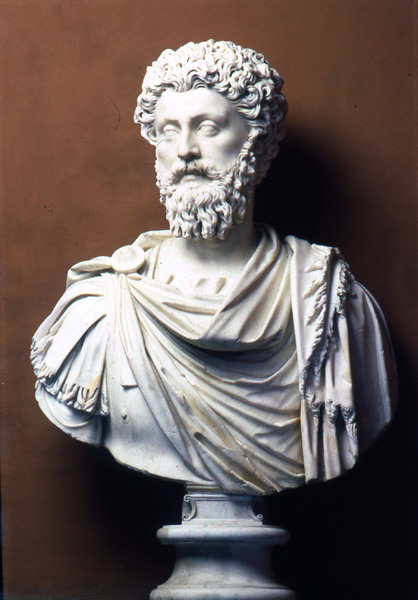
I. Opening Encounter: Reading What Was Not Written for You
There is a particular kind of discomfort that arises when reading Meditations for the first time—a sensation not of difficulty, but of misalignment. The text resists the expectations we bring to books. It does not orient the reader, does not establish a thesis, does not unfold according to any visible structure. There is no argument to follow, no narrative to inhabit, no rhetorical progression designed to guide attention from beginning to end. Instead, one encounters fragments: short entries, often abrupt, sometimes repetitive, occasionally obscure.
At first glance, this can feel like a failure of form. The absence of development, the lack of connective tissue, the refusal to guide the reader—these seem like deficiencies when measured against the standards of philosophical writing shaped by Plato or Aristotle, where argument proceeds through deliberate structure. But this initial judgment quickly reveals itself as misplaced.
Meditations is not a work that has lost its structure; it is a text that never possessed one in the conventional sense. It is a private record, composed intermittently, without editorial revision, without the anticipation of readers. The absence of structure is not accidental—it is the trace of its origin.
To read Meditations, therefore, is to enter a space that was not prepared for us. We are not its intended audience. We are, at best, witnesses—reading over the shoulder of a man engaged in an ongoing act of self-correction.
And this produces a fundamental shift in how the text must be approached. We do not read Marcus Aurelius in order to understand what he thought. We read him in order to observe how he attempts to think.
That distinction is decisive. Because what unfolds across the text is not a system, but a process; not conclusions, but attempts; not doctrine, but discipline. And the apparent disorder of the text begins to reveal itself as something far more demanding: the visible difficulty of sustaining philosophical clarity in the midst of life.
Marcus Aurelius writes not as a philosopher removed from the world, but as the central figure within it. From 161 to 180 CE, he governed the Roman Empire at a moment when its vast territorial expanse demanded constant attention: military campaigns along the Danube frontier, administrative burdens, and the slow, invisible pressure of plague. He was, in the most literal sense, the most powerful man in the known world.
And yet the Meditations record none of this power as something to be exercised. Instead, they document a sustained effort to withdraw from it.
This is the first and perhaps most decisive paradox of the text: that the individual who commands the external world turns, in writing, almost exclusively toward the regulation of his own interior. The empire, with all its demands, appears only as background pressure—never as a domain of mastery.
In this sense, the Meditations are not the reflections of a ruler, but the discipline of a man attempting to ensure that power does not become confusion. The greater the external authority, the more necessary the internal constraint.
II. What This Book Is: A Practice, Not a Treatise
The modern reader, trained by centuries of systematic philosophy, instinctively seeks coherence. Faced with fragmentation, the impulse is to reconstruct—to extract themes, impose order, rebuild Stoicism as a conceptual system from scattered pieces. Much of the secondary literature proceeds in precisely this way.
But such an approach risks distorting the nature of the work, because Meditations is not Stoicism explained. It is Stoicism performed.
Where Seneca writes with rhetorical intention and Epictetus teaches through structured discourse, Marcus writes without pedagogical ambition. His writing is not addressed outward. It is directed inward, and therefore it obeys a different logic—one governed not by persuasion, but by necessity.
The most visible feature of this logic is repetition. Ideas recur. Phrases reappear. The same insight is reformulated across different entries, sometimes almost verbatim, sometimes with slight variation. At first, this repetition appears redundant. But over time, its function becomes clear: Marcus is not trying to communicate ideas; he is trying to stabilize them within himself.
To understand a Stoic principle is easy. To maintain it—hour after hour, day after day, under pressure, in fatigue, in irritation, in positions of power—is exceptionally difficult. The text reveals this difficulty without concealment.
Each fragment marks a moment of lapse and return. An irritation has occurred, a distraction has taken hold, a moment of vanity or frustration has disturbed equilibrium. Writing becomes the corrective gesture through which the mind attempts to realign itself.
This is why Meditations does not progress. It returns.
And in that return, philosophy appears not as knowledge accumulated, but as effort sustained.
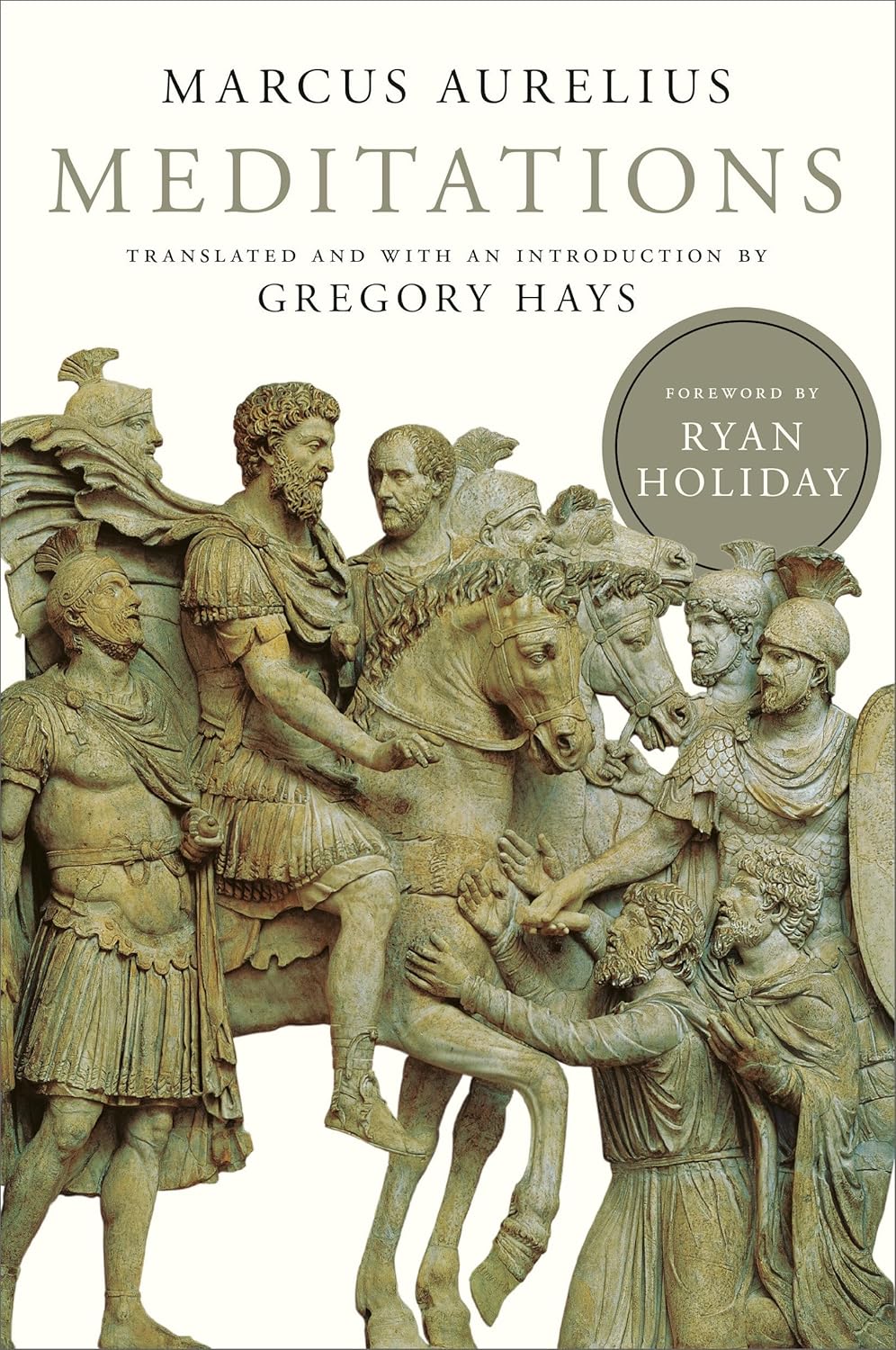
III. The Hegemonikon: Governance as Inner Discipline
At the center of Marcus’s reflections lies a concept that governs the entire text, whether explicitly named or not: the hegemonikon, the ruling faculty.
Everything else—body, possessions, reputation, status, even the duration of one’s life—belongs to what Stoicism designates as externals. These are subject to forces beyond control. They may be preferred or dispreferred, but they do not define us. What defines us is how we judge them.
This distinction, simple in formulation, becomes radical in implication, because it relocates the entire problem of life from the external world to the internal act of judgment.
Marcus returns repeatedly to the idea that disturbance does not arise from events themselves, but from the judgments we attach to them.
The claim appears almost deceptively straightforward. But its consequences are severe. It implies that emotional disturbance is not imposed from outside, but generated within. The event does not contain the disturbance; the judgment does.
And this is where the work of the hegemonikon begins.
The mind receives impressions—events, words, actions—and immediately forms interpretations. These interpretations generate emotional responses: anger, fear, resentment, desire. The Stoic task is not to eliminate impressions, which would be impossible, but to intervene at the level of judgment. To pause. To examine. To refuse assent where the judgment is false or exaggerated.
But what becomes increasingly clear in Meditations is that this work does not become easier through understanding. Knowledge does not eliminate difficulty. It merely clarifies the task.
The ruling faculty must operate continuously. Each new situation presents a new test. Each lapse requires correction. The mind does not naturally remain in alignment; it must be governed.
And governance, in this sense, is not a singular act of control, but a discipline sustained over time—less an assertion of power than a form of vigilance.
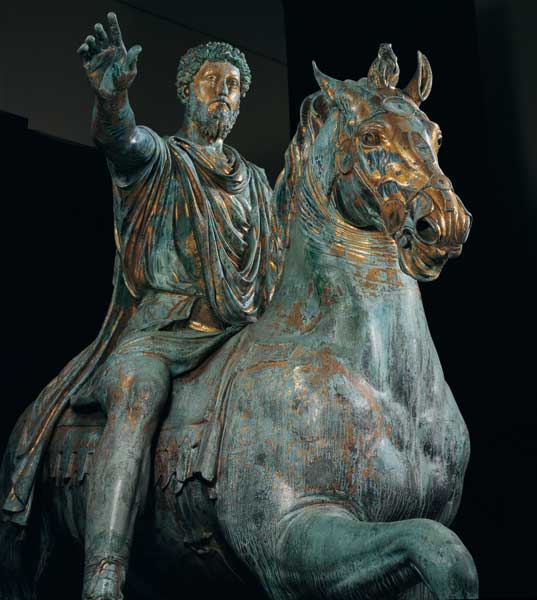
IV. Power and Its Dissolution: The Emperor Without Privilege
If there is a tension that gives Meditations its peculiar intensity, it lies in the contrast between Marcus’s external position and his internal preoccupations.
He is emperor—the apex of political power. And yet, power occupies almost no positive space in his reflections. When it appears, it appears only to be diminished, reduced, stripped of illusion.
“Alexander and his mule driver both died.” (Meditations, VI.24)
The sentence collapses hierarchy into equivalence. Whatever distinctions exist in life—rank, status, achievement—are erased by the same end. This is not merely a reflection on mortality; it is a deliberate act of philosophical leveling.
Marcus systematically places power within the framework of time. And within that framework, power dissolves. Fame becomes noise. Legacy becomes forgetting. The structures that define human importance reveal themselves as temporary arrangements with no enduring substance.
This produces a radical inversion. Power, which appears to grant control, is revealed as one more external—unstable, contingent, ultimately indifferent. The emperor, in this sense, possesses no more essential control than any other human being.
And this recognition is not theoretical. It is ethical, because if power does not define value, then value must be located elsewhere—in the only domain that remains when all externals are removed: the conduct of the self.
V. Time and Urgency: The Ethics of Finitude
Marcus returns repeatedly to the compression of time, not as a metaphysical curiosity, but as an ethical instrument.
“You could leave life right now.” (Meditations, II.11)
The force of the sentence lies in its immediacy. It collapses the illusion of duration. It eliminates the comfort of postponement.
The problem, for Marcus, is not that life is short. It is that we behave as if it were long. We defer what matters. We postpone action. We allow ourselves to be absorbed in trivial concerns under the assumption that there will always be time.
Against this, Marcus proposes a recalibration.
If life is finite—and it is—then its value cannot lie in accumulation. It must lie in use. Time becomes a moral resource, not a neutral medium. To waste it is not inefficiency; it is misalignment.
And yet, the repetition of mortality throughout the text reveals something essential: this awareness does not remain stable. It must be reintroduced. Again and again.
Mortality is not an insight once gained. It is a perspective that must be actively maintained.
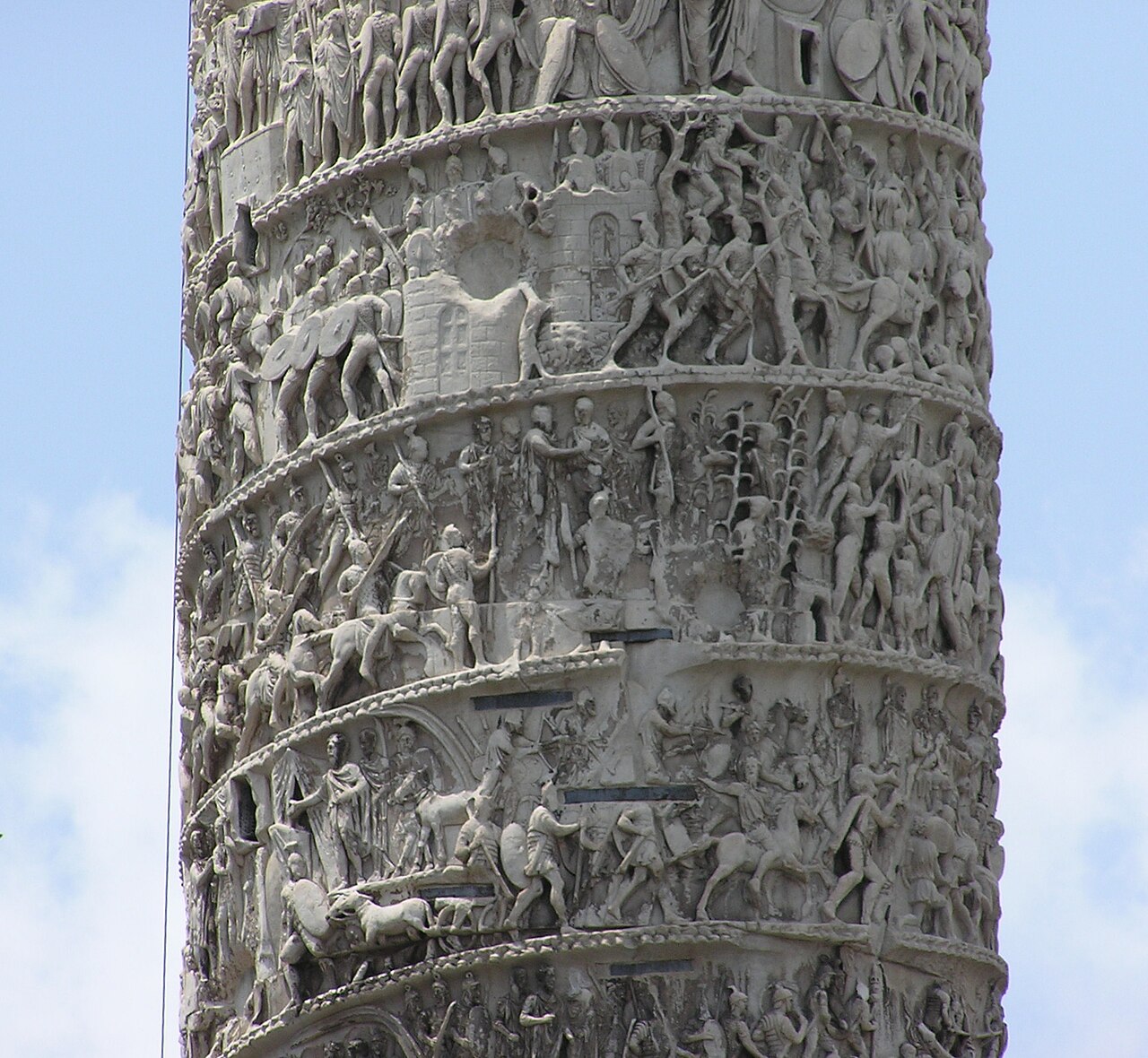
VI. Other People: Friction as Ethical Testing Ground
The difficulty of Stoicism emerges most clearly in relation to others.
Marcus does not approach human interaction with optimism or idealization. He anticipates friction with striking directness:
“The people I deal with today will be meddling, ungrateful, arrogant, dishonest, jealous, and surly.” (Meditations, II.1)
This is not cynicism. It is preparation.
Other people are not obstacles to philosophy; they are its testing ground. It is in interaction—especially difficult interaction—that the principles of Stoicism are either maintained or abandoned.
The core distinction remains: what others do is not within our control. What is within our control is how we respond.
But this distinction becomes most difficult precisely when it matters most—when insulted, wronged, or treated unjustly. In these moments, the impulse is to mirror behavior, to allow external actions to dictate internal response.
Marcus refuses this.
“The best revenge is not to be like [your enemy].” (Meditations, VI.6)
The statement is not moral decoration. It is a demand placed upon the ruling faculty at the moment of pressure.
VII. Logos: Order Beyond the Self
If the hegemonikon defines the inner domain of control, logos defines the structure within which that control must operate.
The resistance begins with the word itself: λόγος cannot be reduced to “reason” without loss. Its semantic range includes speech, account, proportion, articulation, and order, and in Marcus it operates simultaneously as the rational capacity within the human being and the rational structure of the cosmos itself.
This duality is decisive.
The same word names what thinks within us and what orders reality beyond us. The implication is profound: human rationality is not independent—it is participatory. To think correctly is not merely to think clearly, but to align one’s judgments with an order that precedes and exceeds the self.
This is why the Stoic ethical demand is not simply “be rational” in a psychological sense. It is a demand for alignment. To live according to reason is to bring one’s inner discourse into harmony with the structure of reality itself.
VIII. The Texture of the Text: Fragment, Language, and Resistance
The fragmentary form of Meditations is not simply structural—it is linguistic. Each entry is not only a thought, but an intervention in language itself.
The resistance is already present at the level of language. The Greek term hegemonikon encodes philosophical precision through grammar itself: as a neuter substantivized form in Greek, it transforms what might appear as a quality into a function—not the “self,” but the “governing element.”
Similarly, logos resists reduction because it operates across multiple domains simultaneously. It is at once cognitive, linguistic, and cosmological.
This creates a text in which meaning is not fixed but activated. Terms gather semantic pressure. They shift slightly depending on context, but retain a core continuity that binds inner and outer order.
The fragment, in this sense, is not incomplete thought. It is concentrated thought.
Each entry isolates a moment in which language attempts to correct perception—to strip away illusion, exaggeration, and distortion. Marcus repeatedly reduces phenomena to their simplest descriptions: fame becomes noise, luxury becomes material, death becomes dissolution.
These reductions are not stylistic quirks. They are exercises in linguistic alignment. They attempt to restore a correspondence between word and thing.
And this is where the reader encounters resistance.
The text cannot be consumed passively. It demands engagement, repetition, return. Each fragment must be entered individually, and its force often emerges only through recurrence.
Form and function converge.
IX. Modern Readings and the Loss of Friction
Modern approaches to Meditations often seek to render its insights immediately usable. They translate its reflections into frameworks that translate its demands into psychological well-being, emphasizing emotional regulation, clarity of thought, and practical application.
Such readings are not without value. They make the text accessible and underscore its continuing relevance. But in doing so, they risk altering its fundamental character.
Because Meditations is not a guide to ease.
It does not offer stability as a condition to be achieved, nor clarity as something that can be secured once and for all. What it records, instead, is the repeated difficulty of maintaining alignment—the effort required to think correctly in the face of distraction, fatigue, and pressure.
To convert this effort into technique is to remove its resistance. It is to transform discipline into something manageable, repeatable, and ultimately reassuring.
But nothing in Marcus is reassuring in that sense.
The text does not resolve difficulty. It preserves it.
And it is precisely this resistance—this refusal to become easy—that constitutes its enduring force.
X. How to Read Meditations: Return Instead of Completion
Meditations is not a book that can be finished.
It is a book that must be returned to.
Its meaning does not emerge through linear progression, but through recurrence. A passage read casually acquires force under pressure. A sentence encountered once becomes decisive when revisited.
The text becomes less a source of knowledge than a mirror.
And in that mirror, one begins to observe not Marcus, but oneself.
XI. Closing Reflection: Continuation Without Resolution
In the end, Meditations does not resolve the question of how to live. It sustains it.
Marcus does not present himself as a sage, but as a practitioner. He fails, corrects, repeats. There is no final state, no completed transformation, only continuation.
And in that continuation, there emerges a form of strength that does not depend on success or permanence, but on clarity, discipline, and the refusal to abandon the effort.
© Francesc Borrull, 2026

